
Ultimate Engineer’s Guide to PCB Coating Failures: Mechanisms, Prevention & Reliability Insights
Published: April 2026 | Reading time: ~24 min
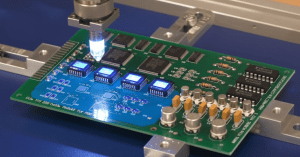
Over two decades of working with conformal coatings, encapsulants, and selective coating systems, I’ve seen nearly every way a PCB coating can fail — from blistering and delamination during thermal cycling, to chemical cracking under solvent exposure. A well‑controlled coating process is your last defense between functional reliability and expensive field returns.
PCB coatings are meant to protect assemblies against humidity, dust, and chemical contamination. But when they fail, the results are often worse than having no coating at all. This article unpacks every critical aspect of PCB coating failures — what causes them, how to detect them, and which design, material, and process decisions will keep your boards field‑worthy for years.
Fundamentals of PCB Coating Failures
A PCB conformal coating is a thin polymeric film — typically 25 to 75 µm — that covers the assembled board to insulate and protect components from harsh environments. Common families include acrylics, silicones, urethanes, epoxies, and parylenes. Each has specific trade‑offs in dielectric strength, chemical resistance, and flexibility. When a coating fails, one or more of these intended protections no longer function.
Fundamental failure categories:
-
- Adhesion failure — coating lifts, delaminates, or peels from the substrate.
-
- Chemical degradation — softening, discoloration, or dissolution under solvents or vapors.
-
- Thermo‑mechanical stress — cracking or crazing after temperature shock or vibration.
-
- Incomplete coverage — shadowing, voids, or thin spots exposing copper or solder joints.
-
- Electrical leakage paths — ion migration or moisture infiltration under coating films.
Most coating failures stem from the interaction between three elements: surface energy and cleanliness of the PCB, coating chemistry, and process environment (temperature, humidity, and cure schedule).
When PCB Coating Failures Matter & Decision Matrix
Not every assembly needs coating, but when field conditions include condensation cycles, airborne contaminants, or voltages >60V across small gaps, conformal coating reliability becomes mission‑critical. The decision to apply — or requalify — coating should be based on quantitative risk and environment severity classification such as IPC‑9592 or IEC‑60068‑2.
Below is a simplified decision matrix used in aerospace and industrial applications:
| Application Environment | Typical Risk Level | Recommended Action |
|---|---|---|
| Controlled indoor (office, lab) | Low | No coating or optional acrylic dip |
| Industrial (humidity 60–90%, dust) | Medium | Spray acrylic or urethane coating, qualified adhesion test |
| Outdoor/Marine | High | Silicone or parylene coating; humidity & salt mist testing required |
| Automotive under‑hood | Extreme | Silicone/parylene hybrid with thermal aging validation 1000h @125 °C |
Even a 2% manufacturing defect rate in coating adhesion can result in a 5–10× increase in field failure rate if boards operate in high humidity or corrosive air. Therefore, the decision to use a coating is as much reliability‑driven as cost‑driven.
Standards, IPC/UL/RoHS Compliance
Conformal coating specifications are tightly coupled to IPC and UL standards. Failure to comply not only affects performance but also product certification.
-
- IPC‑CC‑830C: Qualification and Performance of Electrical Insulating Coating Materials.
-
- IPC‑A‑610H: Acceptability of Electronic Assemblies — defines coating coverage and workmanship criteria.
-
- IEC‑61086: Coating material specifications and test requirements.
-
- UL 746E: Flammability and dielectric testing for polymeric materials in electronics.
-
- RoHS & REACH: Prohibit certain solvents and heavy metal catalysts in coatings.
A compliant coating process should include documented material traceability, cross‑hatch adhesion testing, and verified cure schedules. Many OEMs require in‑process inspection under UV light defined by IPC‑CC‑830 to verify 100% area coverage.
For details on environmental stress validation, see PCB testing fundamentals.
Technical Performance Metrics
Understanding numeric coating performance values helps quantify margin and compare materials objectively.
| Property | Typical Range | Relevance to Failures |
|---|---|---|
| Dielectric Strength | 1,000–3,000 V/mil | Low values can cause leakage or arcing under contamination. |
| Water Vapor Transmission Rate | 10⁻² – 10⁻⁴ g·mm/m²·day | Lower is better; high WVTR accelerates corrosion. |
| Adhesion (cross‑hatch test) | Class 5B (no detachment) | Poor adhesion causes delamination during reflow or aging. |
| Thermal Expansion Coefficient (CTE) | 40–250 ppm/°C | Mismatched CTE drives micro‑cracks near component leads. |
| Operating Temperature Range | −65 °C … +150 °C | Below or above limits leads to brittleness or softening. |
| Thickness Uniformity | ±15% | Non‑uniform films leave gaps and cause early breakdowns. |
All process validation data should include cross‑section inspection and adhesion strength correlation to ensure that field reliability aligns with laboratory metrics.
Failure Modes & Root Cause
Coating failure diagnosis typically involves optical microscopy, FTIR or DSC thermal analysis, and sometimes SEM cross‑sections of coating‑to‑pad interfaces. Below are the ten most common modes encountered in production and field service:
1. Poor Adhesion or Delamination
Usually caused by contaminated surfaces (flux residues, silicones, fingerprints) or insufficient surface energy. Plasma cleaning or ionized‑air blow‑off prior to coating often solves adhesion issues.
2. Bubbles and Voids
Entrapped solvent or moisture expands during cure. Controlled viscosity, vacuum de‑airing, and proper spray head maintenance are essential.
3. Cracking & Crazing
Often from thermal shock or CTE mismatch. Urethanes and acrylics are more prone when coated over large BGAs. Use softer silicone for high thermal stress environments.
4. Blistering
Moisture trapped between coating and board expands during temperature ramp‑up, forming bubbles. Proper prebake (100 °C, 1 h) eliminates internal moisture before coating.
5. Tackiness / Under‑Cure
Improper catalyst ratio or incomplete UV cure leaves the surface sticky, attracting dust and ionic contamination.
6. Coverage Gaps / Shadowing
Stencil masks, tall components, or surface geometry can block spray access. Selective coating programs must include shadow check routines using 3D vision inspection.
7. Contamination Under Coating
Flux or ionic contaminants left under coating layers may cause electrochemical migration (ECM). Conductivity across 0.5 mm traces can increase by 100× after 500h 85 °C/85 %RH exposure if residues aren’t cleaned.
8. Discoloration or Chemical Attack
Exposure to VOCs, ozone, or UV light can embrittle certain acrylics. Material spec must match environmental exposure category per ASTM G154.
9. Outgassing and Siloxane Bloom
Silicone‑based materials may release low‑molecular‑weight chains, leading to contact failures in connectors or relays. Always post‑cure silicone coatings and avoid enclosed systems where volatiles cannot escape.
10. Mis‑Cure Between Layers
Multi‑pass coatings can form weak interlayers if more than 8h elapse before second coating. A light solvent wipe re‑activates surface for strong bonding.
Comprehensive root‑cause analysis often leverages reliability analysis services such as ionic contamination testing (ROSE), electrochemical migration mapping, or accelerated humidity aging. Measuring leakage current growth provides early signatures of coating breakdown long before visible failure.
Cost Drivers & Optimization
The cost impact of coating is multi‑dimensional. A typical selective coating line adds 5–12% to assembly cost, but can reduce warranty claims by 30–60%. Major cost drivers include:
-
- Material cost: from $0.03–$0.15 per cm² depending on chemistry and thickness.
-
- Masking labor: manual tape and plug operations can consume 40–60% of total coating labor time.
-
- Cure time: long air‑dry cycles consume WIP space; UV cure reduces cycle time to minutes but demands tight control.
-
- Rework rate: late discovery of missed areas leads to costly stripping/recoat cycles.
Optimization strategies:
-
- Design boards for coating — minimize deep cavities and undercuts to reduce masking.
-
- Use automated selective coating robots with 3D vision feedback.
-
- Qualify fast‑cure UV materials to reduce bake ovens and energy cost.
-
- Adopt inline UV inspection for early defect detection before final cure.
Depending on product lifecycle expectations, the ROI of high‑end coatings (parylene vapor deposition) can be justified if preventing a single field return offsets added processing cost.
Emerging Technologies Around PCB Coating Failures
The next generation of coating technologies is addressing failure mechanisms at the molecular level. Key emerging directions include:
-
- Low‑VOC & solventless materials: Compliant with RoHS/REACH and reduce trapped moisture risk.
-
- Plasma polymerized nanocoatings: Ultra‑thin (<100 nm) films offering uniformity without traditional masking, proven in high‑frequency devices.
-
- UV‑LED hybrid curing: Reduces thermal stress and energy, ensuring consistent hardness gradient through thickness.
-
- Smart coatings with built‑in self‑healing agents: Incorporate microcapsules that release monomers upon crack formation.
-
- AI‑based inspection analytics: Deep learning models now flag coating voids <2 mm with >98% accuracy compared with traditional camera systems.
As these technologies mature, they aim to eliminate classic PCB coating failure modes, enabling thinner, lighter, and more sustainable protection layers.
Expert FAQ on PCB Coating Failures
-
- What is the most common cause of coating failure?
Contamination on PCB surfaces prior to coating — typically flux residue or moisture.
- What is the most common cause of coating failure?
-
- How can you test coating adhesion?
Use cross‑hatch adhesion per ASTM D3359. A Class 5B rating (no flaking) is ideal.
- How can you test coating adhesion?
-
- What inspection methods detect thin spots?
UV fluorescence inspection and thickness measurement via eddy current probes or confocal microscopy.
- What inspection methods detect thin spots?
-
- Are bubbles always a defect?
Small, closed micro‑bubbles may not affect performance, but interconnected or surface‑breaking voids are major defects.
- Are bubbles always a defect?
-
- How much coating thickness is enough?
Acrylic/urethane coatings: 25–75 µm; silicone: 50–200 µm depending on environment class per IPC‑CC‑830.
- How much coating thickness is enough?
-
- Can conformal coating be reworked?
Yes, via chemical stripping or localized mechanical removal followed by recoat — provided the coating chemistry allows full re‑adhesion.
- Can conformal coating be reworked?
-
- Why does coating turn yellow after aging?
UV or thermal oxidation of the polymer — select UV‑stable formulations or add stabilizers.
- Why does coating turn yellow after aging?
-
- How does conformal coating affect reflow profile?
Coating is always post‑reflow; pre‑reflow coatings may decompose or char.
- How does conformal coating affect reflow profile?
-
- What corrosion test proves coating reliability?
85 °C/85 %RH test for 1000 h plus mixed flowing gas (MFG) testing per ASTM B845.
- What corrosion test proves coating reliability?
-
- How to qualify a new coating material?
Run full IPC‑CC‑830 Class B qualification — including thermal shock, dielectric breakdown, moisture insulation resistance, and fungus resistance.
- How to qualify a new coating material?
Conclusion & Call‑to‑Action
PCB coating failures represent one of the top three field reliability challenges, alongside solder joint cracking and connector fretting. Most failures are avoidable through disciplined surface preparation, material compatibility testing, and continuous inspection control.
As electronics move into more aggressive environments — from automotive engine bays to outdoor IoT nodes — coating reliability becomes non‑negotiable. Building a robust qualification workflow and performing periodic accelerated testing ensure coatings continue to perform throughout product life.
For deeper analyses or to benchmark your current coating process against best‑in‑class reliability laboratories, you can explore WellCircuits’ applied expertise in surface chemistry, cleanliness verification, and reliability modeling. The company’s 20‑year track record with IPC and automotive qualification programs brings engineering rigor to every coating decision.
-
- Key takeaways about PCB coating failures:
-
- Surface cleanliness is the #1 determinant of coating adhesion and lifespan.
-
- Thermal, chemical, and mechanical stresses define which resin chemistry to choose.
-
- IPC‑CC‑830 qualification testing is mandatory for critical and safety electronics.
-
- Automated inspection and process monitoring reduce hidden coating defects dramatically.
-
- Emerging nanocoatings and plasma deposition promise near‑zero shadow defects and uniform protection.
Related Resources