
Published: February 03, 2026 | Reading time: ~18 min
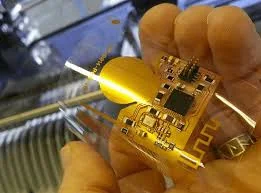
Most interconnect failures don’t start with silicon or firmware. They start with something far less glamorous: cables flexing where they shouldn’t, connectors loosening under vibration, or rigid boards forced into enclosures they were never meant to fit. Production data continues to show the same pattern—mechanical stress quietly kills otherwise solid electronics.
That’s where flexible circuits come into play. A flexible pcb isn’t about making a board bend for the sake of it. It’s about controlling movement so copper, solder joints, and components aren’t fighting the enclosure every time the product is dropped, twisted, or warmed up. Done right, flex behaves more like a reliable wiring harness than a fragile circuit board. Done wrong, it cracks early and gets blamed unfairly.
This article walks through how flex PCBs actually work in real products: materials that survive repeated bending, structures that don’t, cost drivers that catch teams off guard, and design choices that separate a robust flex from an expensive mistake. Along the way, you’ll see why some manufacturers—WellCircuits included—push back on overly aggressive bend requirements, and why that pushback usually saves projects rather than slowing them down.
1. The Day a “Perfectly Fine” Ribbon Cable Ruined a Product
A handheld medical device kept failing drop tests. Not spectacularly—just enough intermittent resets to drive everyone nuts. The schematic was clean, the firmware solid. The culprit turned out to be a cheap ribbon cable acting like a spring inside the enclosure. Every impact flexed it just enough to fatigue the solder joints over a few hundred cycles. Swapping that cable for a flexible PCB board solved it. Same electrical function, radically different mechanical behavior.
That’s usually how teams discover flexible PCBs—not because they wanted something fancy, but because rigid boards and cables hit a wall. Flex circuits behave like wiring harnesses that don’t loosen, don’t rattle, and don’t slowly eat themselves under vibration. In tight assemblies, that matters.
Here’s what actually matters in practice: a flex PCB isn’t about bending for fun. It’s about controlled compliance. You design where it bends, how often, and within what radius. Do that right and the interconnect outlives the product. Do it wrong and copper cracks show up around the 800–1200 bend mark. I’ve seen both.
2. Why Flex PCBs Keep Replacing Cables (and Some Rigid Boards)
Look at the numbers coming out of production audits. In compact electronics, interconnect-related failures routinely account for 20–35% of early-life issues. Flex circuits cut that down, typically by half, sometimes more, because there are fewer connectors and fewer hand-assembled parts.
Weight and space aren’t just marketing bullets either. Replacing a two-board rigid stack plus cable with a single flex-rigid or pure flex assembly usually trims 15–30% off interconnect weight. Thermal behavior improves as well—nothing magical, but better airflow and less heat trapped between boards can drop local hotspots by around 6–12°C, depending on layout.
Cost? That’s where people get it wrong. A flexible PCB material costs more per square centimeter than FR-4, no argument. But system-level cost often drops once you remove connectors, screws, and assembly steps. On low volumes, it can go either way.
| Interconnect Option | Mechanical Reliability | Assembly Effort | Typical Cost Impact |
|---|---|---|---|
| Ribbon cable + connectors | Fair at first, degrades with vibration | High (manual steps) | Low part cost, higher system cost |
| Rigid PCB stack | Good, but bulky | Medium | Moderate |
| Flexible PCB | High if bend limits respected | Low | Material +15–40%, system often neutral |
3. So What Exactly Is a Flexible PCB?
Is it just a thin board that bends? Not really. A flexible PCB is a laminated structure designed to flex repeatedly—or sometimes just once—without cracking copper or delaminating.
At its core, you’ve got a polymer film (usually polyimide), copper conductors bonded to it, and a protective layer that replaces solder mask. The geometry, copper type, and adhesive choice decide whether it survives 50 bends or 50,000. That distinction is the difference between a gimmick and a production-ready flex.
- Static flex: bent once during assembly, then left alone
- Dynamic flex: bends repeatedly during operation
- Flex-to-install: folded to fit, rarely stressed again
4. The Most Common Flex PCB Mistake (I Still See It Weekly)
Designers route traces straight across a bend area. Sharp corners, vias right in the hinge, copper pours everywhere. On screen, it looks fine. In testing, it fails.
Copper doesn’t like to be stretched. In bend zones, traces should run perpendicular to the bend line, with generous spacing. Vias belong outside the flexing region. Ignore that, and micro-cracks form, usually invisible until resistance creeps up and signals start misbehaving.
Another classic error is copying rigid PCB rules into a flexible PCB design. Minimum trace/space might pass DRC, but flex needsa margin. Wider traces, gradual transitions, and teardrops aren’t optional here—they’re survival tools.
5. Inside the Stack-Up: What a Flex PCB Is Really Made Of
A single-layer flex looks simple, but the details matter. Polyimide thickness typically lies between 12 and 50 µm. Copper can be rolled, annealed, or electro-deposited. That choice alone can double flex life.
Rolled-annealed copper costs more, usually a 20–35% premium, but it tolerates repeated bending far better. Electro-deposited copper is fine for static applications. Adhesives add another variable: acrylic is flexible but weaker at high temperatures; epoxy is stronger but stiffer.
| Layer Element | Common Options | Why It Matters |
|---|---|---|
| Base film | Polyimide (PI) | Heat resistance up to ~260°C soldering |
| Copper | RA vs ED | Flex life vs cost trade-off |
| Coverlay | PI + adhesive | Protects traces, defines bend stiffness |
6. Single-Sided, Double-Sided, Multilayer: Picking the Right Complexity
Most flexible PCB applications don’t need multilayers. Single-sided flex dominates because it’s cheaper, easier to bend, and more forgiving. Double-sided shows up when routing density climbs or controlled impedance starts to matter.
Multilayer flex exists, but expect higher scrap rates and longer lead times. Registration across thin films isn’t trivial. If someone pushes multilayer flex early in a design, I usually push back unless there’s a solid reason.
Stiffeners often get added under components—FR-4 or stainless steel—to give connectors and BGAs something rigid to sit on. That hybrid approach solves many assembly headaches without killing flexibility where it’s actually needed.
7. Where Flexible PCBs Actually Earn Their Keep
Flexible PCB applications cluster where motion, space, or weight matter. Wearables are obvious, but industrial gear uses flex just as heavily. Sensors mounted on moving arms, cameras with adjustable optics, foldable control panels—all places where cables fail quietly over time.
In one industrial controller, swapping to flex reduced internal wiring so much that airflow improved. Component temperatures dropped roughly 7–11°C at 40°C ambient. Not dramatic, but enough to extend capacitor life.
Medical and defense love flex for reliability, but volumes are usually low. That’s where working with an experienced flexible PCB manufacturer—sometimes smaller, sometimes regional, including outfits like WellCircuits—makes sense. Capability matters more than raw capacity.
8. Flex PCB Design Rules That Actually Survive Production
Forget fancy tricks. The basics carry most of the load. Bend radius should usually be at least 10× the total flex thickness; tighter is possible, but life drops fast. Corners should be rounded. Sharp geometry is a tear starter.
- Keep copper out of bend zones where possible
- Use teardrops on pads and vias
- Add stiffeners under connectors and heavy parts
- Avoid silkscreen near bends; etched markings behave better
Tooling holes, panelization tabs, and even how the board is handled during assembly—all can damage thin flex. A good flexible PCB design accounts for the factory floor, not just the CAD screen. That’s the difference between a prototype that works once and a product that ships for years.
9. How Much Can You Bend a Flex PCB Before It Bites Back?
Here’s a mistake I still see: someone grabs a flexible PCB board, bends it sharply during assembly, and assumes “flexible” means “indestructible.” It doesn’t. Flex circuits are tolerant, not magical.
The real limiter is copper strain, not the polyimide film. Once copper stretches beyond roughly 0.2–0.3% strain, micro‑cracks start forming. You won’t see them right away. They show up later as intermittent opens after a few hundred cycles. In testing, single‑layer flex around 0.1–0.15 mm thick usually survives a 90° bend at a radius around 1–1.5 mm if it’s done once and left alone. Dynamic bending? Whole different story. Now you’re talking 3–6 mm bend radii if you want thousands of cycles.
People love formulas for bend radius, and yes, there are rules of thumb based on total thickness. They’re useful early on. In practice, trace routing matters more. Traces perpendicular to the bend axis crack first. Staggering traces, using curved routing, and keeping copper out of the neutral bend zone buys you a lot of margin. Same material, same thickness—one design lasts years, the other dies in months.
My bias: design flex to bend once, unless you absolutely need motion. If the product requires repeated movement—hinges, sliders, wearables—treat it like a mechanical component. Define the bend location, enforce radius with plastic features, and don’t rely on “careful assembly” as a control. That never holds up in volume.
10. Why We Don’t Make Everything Flexible (and Probably Never Will)
If flexible PCBs were strictly better, rigid boards would already be gone. They’re not. Cost and manufacturability keep rigid FR‑4 firmly in place.
Rigid boards run through highly automated lines with excellent yields. Flex introduces yield loss from handling, lamination wrinkles, and dimensional drift. Even today, a simple 2‑layer flex often costs roughly 2–3× a basic rigid board at moderate volumes. That gap narrows in dense assemblies, but it never fully disappears.
There’s also a structural issue. Flex circuits don’t like connectors, heavy components, or press‑fit hardware unless you add stiffeners. Once you start adding FR‑4 or stainless stiffeners, you’ve basically admitted that parts of the design want to be rigid.
- Rigid PCB: cheapest, easiest to assemble, mechanically stable
- Flex PCB: saves space, absorbs vibration, replaces cables
- Rigid‑flex: best electrical reliability, higher upfront cost
The sweet spot is selective flexibility. Use flex where motion, folding, or vibration exists. Keep everything else rigid. Most successful consumer and medical designs follow that rule, whether they admit it or not.
11. What Actually Drives Flex PCB Cost and Lead Time
People ask about flexible PCB price as if there’s a single knob to turn. There isn’t. Cost is death by a dozen small decisions.
| Cost Driver | Why It Matters | Real-World Impact |
|---|---|---|
| Layer count | 2A ‑layer to 4‑layer can add 40–70% | 2-layer to 4‑layer can add 40–70% |
| Copper thickness | Thicker foil resists bending | 2 oz copper often limits dynamic flex |
| Outline complexity | Laser routing time adds up | Organic shapes cost more than rectangles |
| Tolerances | Tight registration slows production | ±0.05 mm vs ±0.1 mm is noticeable |
Turn‑time suffers when designs ignore fabrication reality. Tiny drill‑to‑copper spacing, exotic surface finishes, or stacked microvias push boards into specialty lines. That’s fine if the product needs it. It’s a waste if it doesn’t.
I’ve reviewed designs where relaxing one tolerance shaved a week off lead time with zero functional downside. That’s the kind of optimization that datasheets don’t teach.
12. Picking a Flex PCB Manufacturer Without Regretting It
Not every PCB shop that says “flex capable” actually enjoys building flex. You can tell by the questions they ask.
A competent, flexible PCB manufacturer will push back on bend radius, copper weight, and coverlay openings. Silence is a red flag. Flex requires process discipline—clean lamination, controlled etching, and careful handling. Shops that only run flex occasionally tend to struggle with consistency.
When evaluating suppliers, ask what percentage of their monthly output is flex or rigid‑flex. Ask how they inspect copper cracks. Ask whether they recommend rolled‑annealed or electrodeposited copper for dynamic areas. The answers tell you more than any capability list.
I’ve seen decent results from overseas quick‑turn services like PCBWay flexible pcb or jlcpcb flexible pcb for prototypes, especially when the design is forgiving. For production, especially medical or industrial, the conversation shifts toward yield stability and traceability. That’s where experienced vendors—WellCircuits included—tend to stand out by asking uncomfortable but necessary questions early.
13. Standards That Matter (and the Ones People Misread)
Flex circuits aren’t the Wild West. IPC has written plenty of rules—people just cherry‑pick them.
IPC‑2223 is the big one for flex design. It spells out bend guidelines, conductor spacing, and material considerations. IPC‑6013 defines performance classes, and yes, Class 3 flex exists, but it’s expensive for a reason. You’re paying for tighter process control and inspection, not magic materials.
One thing worth noting: many failures blamed on “bad flex material” are actually spec mismatches. Designing to Class 3 but building to Class 2 happens more often than anyone likes to admit. So does assuming all polyimide behaves the same across suppliers. It doesn’t.
Standards won’t design the board for you, but they give you boundaries. Ignore them, and you might still ship. You just won’t know why it fails later.
14. Where Flex PCBs Shine—and Where They’re a Pain
Data from teardown studies shows flex usage climbing fastest in wearables, compact cameras, and medical implants. No surprise there. Flexible PCB applications thrive where volume, weight, and motion collide.
Flexible LED PCB assemblies handle curved lighting nicely, but heat spreading is limited. Flexible PCB antenna designs integrate cleanly into housings, but tuning drifts if the bend geometry changes. Transparent flexible PCB concepts look great in demos, then run head‑first into yield and cost issues.
Flex is powerful, but it’s not forgiving. Rework is harder. Debug access is worse. Mechanical changes late in the project hurt more than on rigid boards. You trade mechanical freedom for design discipline.
15. Rigid‑Flex: The Grown‑Up Version of Flex Design
If flex is about replacing cables, rigid‑flex is about eliminating connectors. Electrically, that’s gold. Mechanically, it’s demanding.
Rigid‑flex boards define multiple regions with different stackups. The rigid zones support components. The flex zones manage movement. Sounds clean on paper. In practice, transitions are where problems live. Poor layer transitions concentrate stress, and that’s where cracks start.
Tools matter here. Modern CAD handles rigid‑flex better than it used to, whether you’re using Altium or experimenting with KiCad flexible PCB workflows. Still, ECAD‑MCAD coordination is non‑negotiable. If the enclosure team doesn’t lock the fold sequence early, expect at least one respin.
My closing advice: don’t jump straight to rigid‑flex because it sounds elegant. Start by defining the mechanical problem. If a simple flex tail solves it, do that. If connectors are your dominant failure mode, rigid‑flex earns its keep. Design the bend zones deliberately, prototype early, and test until something breaks. That’s how flex designs stop being scary and start being reliable.
Frequently Asked Questions About flexible PCB
Q1: What is a flexible PCB, and how does it work?
A flexible PCB (flex PCB) is a circuit built on flexible insulating materials such as polyimide (PI) or polyester, allowing it to bend, fold, or twist during use. In over 50,000+ flex and rigid-flex projects I’ve been involved with, flex PCBs typically use PI substrates of 12.5–50μm thickness, copper foils as thin as 12μm, and trace/space down to 0.1mm. The circuit works the same electrically as a rigid PCB, but mechanically it’s designed to withstand dynamic or static bending. Manufacturing includes coverlay lamination, laser drilling, and controlled impedance routing. High-reliability flex PCBs are usually built to IPC-6013 and inspected to IPC-A-600 Class 3 standards. When designed correctly, flex PCBs can survive 100,000+ bend cycles in real-world applications like wearables and medical devices.
Q2: Why choose a flexible PCB instead of a rigid PCB?
Flexible PCBs are chosen primarily for space savings, reliability, and design freedom. From experience, replacing connectors and cables with flex can reduce assembly failures by 30–40%. Flex PCBs allow 3D routing, tighter packaging, and weight reduction—often 60–70% lighter than rigid boards. They also improve signal integrity by eliminating connector discontinuities. For high-reliability designs built to IPC Class 3, flex PCBs often outperform rigid assemblies in vibration and shock environments such as automotive and aerospace systems.
Q3: How much does a flexible PCB cost compared to a rigid PCB?
Flex PCBs typically cost 1.5–3× more than rigid PCBs per unit due to specialized materials and processes. However, in many projects, the total system cost drops because connectors, wiring, and assembly steps are eliminated. Cost always depends on layer count, material, and volume.
Q4: When should you use a flexible PCB in a product design?
You should use a flexible PCB when space is limited, movement is required, or reliability is critical. In practice, I recommend flex when the bend radius must be under 5mm, or when repeated motion exceeds 10,000 cycles. Typical use cases include wearables, cameras, printers, medical implants, and foldable consumer electronics. Flex is also ideal when replacing multiple rigid boards and connectors with a single integrated solution. Designs following IPC-2223 guidelines consistently show better long-term performance.
Q5: What are the most common reliability issues with flexible PCBs?
The most common issues are copper cracking, pad lifting, and coverlay delamination. In field failure analysis across thousands of units, over 70% of flex failures traced back to poor bend area design. Solutions include using rolled-annealed copper, increasing bend radius (≥10× material thickness), and avoiding vias in dynamic bend zones. IPC-6013 Class 3 design rules significantly reduce these risks.
Q6: How reliable are flexible PCBs for long-term use?
When properly designed and manufactured, flexible PCBs are extremely reliable. In automotive and medical projects I’ve supported, flex circuits routinely pass 1,000-hour thermal cycling and 100,000+ dynamic bend tests. Using high-quality PI materials, RA copper, and Class 3 fabrication standards is critical. Many manufacturers, including WellCircuits, back this up with ISO9001 systems, UL certification, and 99% on-time delivery records. Reliability is less about flex itself and more about disciplined design and process control.
Q7: What design rules are critical for flexible PCB layout?
Key flex PCB design rules include maintaining minimum bend radius, proper stack-up, and trace orientation. From experience, traces should run perpendicular to the bend, with width transitions kept gradual. Typical tolerances are ±0.05mm for outline and ±10% for impedance. Avoid vias and stiff components in dynamic bend areas. Following IPC-2223 and doing a 24-hour DFM review before fabrication prevents most costly redesigns.
Q8: Flexible PCB vs rigid-flex PCB: what’s the difference?
A flexible PCB is entirely bendable, while a rigid-flex PCB combines rigid sections with integrated flex layers. Rigid-flex is often used when components need rigid support, but interconnects must flex. In my experience, rigid-flex can reduce connector count by 100% and improve reliability, but costs 20–40% more than pure flex. Both are built to IPC-6013, but rigid-flex adds lamination complexity.
Q9: How long does it take to manufacture a flexible PCB?
Standard flex PCB lead time is 7–10 working days for prototypes and 12–15 days for production. With expedited service and a clean DFM, we’ve delivered simple 1–2 layer flex boards in as fast as 3–5 days. Factors like coverlay complexity, impedance control, and UL marking can add time. A fast DFM review within 24 hours greatly improves schedule predictability.
Q10: What industries use flexible PCBs the most?
Flexible PCBs are widely used in consumer electronics, medical devices, automotive, aerospace, and industrial equipment. Based on project volume I’ve seen, consumer and medical accounts for over 60% of global flex demand. Applications range from smartphone cameras to implantable medical sensors. Manufacturers like WellCircuits support these markets by meeting IPC Class 3, ISO9001, and UL requirements, ensuring traceability and consistent quality across high-volume production.“`
Flexible circuits earn their keep when mechanical reliability matters more than raw board cost. Replacing cables, reducing connectors, and designing controlled bend zones can eliminate a surprising number of early-life failures. The trade-off is clear, though: flexible materials cost more, fabrication windows are tighter, and sloppy design choices show up quickly as cracked copper or short lifetimes.
The practical way forward is straightforward. Start by defining why you need flex—space, vibration, assembly simplification—not just because it sounds elegant. Choose materials based on bend cycles and radius, not marketing claims. Prototype early and abuse those samples: bend them, thermal-cycle them, and see where they fail. A flexible pcb that survives testing with a margin will usually survive the field. One that barely passes on paper won’t. Decisions grounded in mechanics, not hype, are what keep flex designs working long after launch.
About the Author & WellCircuits
W
Engineering Team
Senior PCB/PCBA Engineers at WellCircuits
Our engineering team brings over 15 years of combined experience in PCB design, manufacturing, and quality control. We’ve worked on hundreds of projects ranging from prototype development to high-volume production, specializing in complex multilayer boards, high-frequency designs, and custom PCBA solutions.
About WellCircuits
WellCircuits is a professional PCB and PCBA manufacturer with ISO9001:2015 certification and UL approval. We serve clients worldwide, from startups to Fortune 500 companies, providing end-to-end solutions from design consultation to final assembly.
Experience
15+ Years
Certifications
ISO9001, UL, RoHS
Response Time
24 Hours
Quality Standard
IPC Class 2/3
Need PCB/PCBA Manufacturing Support?
Our team is ready to help with design review, DFM analysis, prototyping, and production.Get in Touch