Published: February 26, 2026 | Reading time: ~19 min
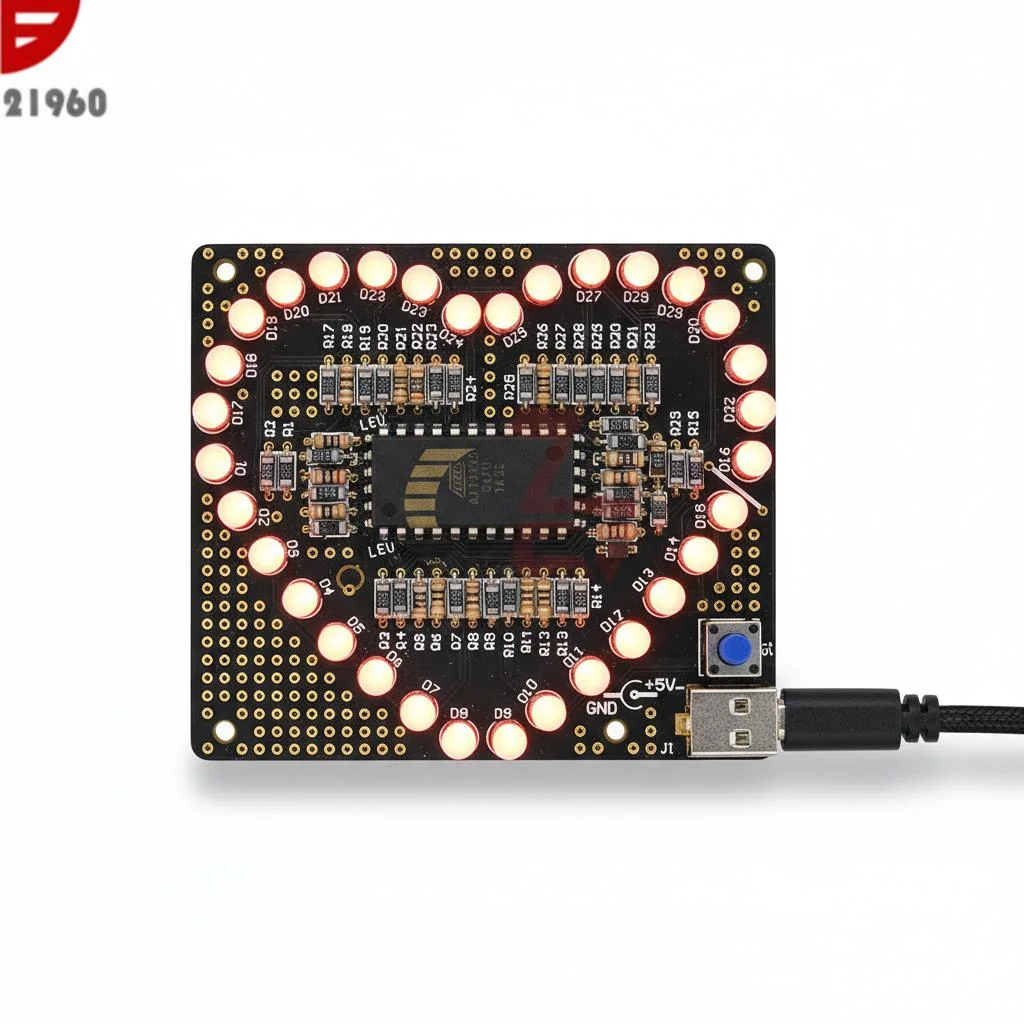
Two LED boards. Same schematic, same LEDs, same driver. One runs for years. The other starts losing brightness after a few hundred hours. I’ve seen this exact puzzle more times than I care to admit, and the answer is rarely hiding in the circuit diagram.
The uncomfortable truth is that LED systems live or die by heat management, and most of that burden lands on the PCB itself. Once power levels creep past a few dozen watts, tiny decisions—substrate material, dielectric thickness, copper weight, even assembly choices—start moving junction temperature by tens of degrees. That difference doesn’t show up in a quick bench test, but it absolutely shows up in the field.
This is where understanding an LED PCB board as a thermal component—not just an electrical one—changes outcomes. The sections that follow dig into how different base materials behave, why SMD LEDs stress boards in specific ways, where assembly commonly goes wrong, and how design tools and documentation fit into building something that actually survives real operating hours.
1. The Board Didn’t Fail — Heat Did
The first time I saw a “dead” LED board come back from testing, nothing looked wrong. Power rails were fine. Solder joints passed visual inspection. The LEDs even lit up on the bench. Then we ran it at full load for a few hours. Junction temperature crept up, light output sagged, and by the next morning, half the array was toast. The culprit wasn’t the LED itself. It was the LED PCB board underneath it.
This is the part many newcomers miss: LEDs don’t fail dramatically. They cook slowly. A few degrees too hot, held there long enough, andthe lumen output drops permanently. Push harder, and you get color shift, then early death. The PCB isn’t just a mounting plate—it’s the primary thermal escape route. Get that wrong, and no datasheet binning will save you.
In most real products, especially anything above about 30–40W per board, the PCB is doing more thermal work than the heatsink you bolt on later. That’s why LED PCB design decisions matter more than trace aesthetics or silkscreen polish. I’ve seen well-designed drivers paired with terrible boards, and the system still failed. The reverse? A decent board can sometimes rescue an average circuit.
2. LEDs Are Efficient — Until You Look at the Numbers
On paper, modern LEDs convert a big chunk of electrical power into light. In practice, roughly 60–75% of the input power still turns into heat, depending on drive current and efficiency class. On a 100-watt LED PCB board, that means you’re dumping something like 65–80W of heat into a space not much larger than your hand.
Now compare materials. Standard FR-4 has thermal conductivity around 0.3–0.4 W/m·K. Aluminum MCPCB substrates sit closer to 1.5–2.2 W/m·K once you include the dielectric layer. Copper cores can push higher, but cost and weight climb fast. That difference alone can mean a junction temperature swing of 28–34°C at steady state. That’s not a rounding error—that’s lifetime.
This is why metal-core boards dominate lighting. Not because they’re trendy, but because they move heat laterally before it bottlenecks. Aluminum does this cheaply enough to be practical. Copper does it better, but usually only makes sense when aluminum can’t keep junctions under control.
| PCB Base Material | Typical Thermal Conductivity (W/m·K) | Relative Cost | Where It Actually Makes Sense |
|---|---|---|---|
| FR-4 | 0.3–0.4 | Low | Low-power indicators, status LEDs |
| Aluminum MCPCB | 1.5–2.2 | Moderate | Most lighting, 10–150W boards |
| Copper Core | 3.5–4.0+ | High (2.5–3× Al) | Very high power density, tight spaces |
3. What Exactly Is an LED PCB Board?
So what are we really talking about here? Is an LED PCB board just a normal PCB with LEDs on it? Sometimes. Often, it’s more specialized than that.
At its core, an LED PCB board provides three things at once: mechanical support, electrical interconnection, and thermal conduction. The LED die is soldered to copper, which is bonded through a dielectric, and the heat is pushed into a metal base or spread across a plane. Miss any one of those paths and performance suffers.
- Electrical: stable current paths, low voltage drop, predictable impedance
- Mechanical: flatness, rigidity, reliable mounting to heatsinks or housings
- Thermal: fast heat spreading away from the LED junction
People obsess over LEDs themselves. I get it—they’re visible. But in most failures I’ve debugged, the board underneath was the real limitation.
4. The Most Common Mistake: Treating LED Boards Like Logic PCBs
I see this over and over: someone lays out an LED board using the same rules they use for a microcontroller board. Thin copper. Narrow pours. Minimal attention to thermal paths. Then they’re surprised when a 50 watt LED PCB board runs scorching hot.
LED boards aren’t about signal integrity. They’re about current density and heat flow. A 1-oz copper trace that’s fine for digital logic can become a heater when you push several amps through it continuously. That heat doesn’t just disappear—it feeds right back into the LED junction.
Another classic mistake is ignoring the dielectric layer on MCPCBs. You can specify an aluminum base all day long, but if the dielectric has poor thermal performance or inconsistent thickness, your heat path is throttled. Not all MCPCBs are equal, and not all fabs control that layer well. This is where experienced LED PCB board manufacturers earn their keep.
5. Base Materials: Aluminum, Copper, and the FR-4 Compromise
Aluminum MCPCB is the workhorse. It’s stiff, relatively light, and affordable. For most lighting products—downlights, panels, street fixtures—it does the job without drama. Thermal performance is “good enough” up to a point, usually around 120–150W per board, depending on layout and airflow.
Copper core boards are the heavy hitters. They spread heat faster and more evenly, which helps in compact designs with high power density. The downside? Weight, machining difficulty, and cost. Drilling copper base needs slower feeds and carbide tooling. Warpage control is harder. You pay for that performance.
FR-4 still has a place. Status indicators, low-power SMD LED PCB board designs, decorative lighting running at a few watts—no problem. But once people try to scale FR-4 into serious lighting, things go sideways fast. I’m biased here: FR-4 is fine until it isn’t, and the transition point comes sooner than many expect.
6. SMD LEDs: Clean Look, Real Advantages
Surface-mount LEDs aren’t just about aesthetics, though that’s part of it. Compared to through-hole LEDs, SMD packages sit flat, solder consistently, and behave predictably during reflow. That matters when you’re building hundreds or thousands of boards.
Thermally, SMD LEDs usually have a defined thermal pad that ties directly into the copper layer. Done right, heat flows straight down instead of meandering through leads. That’s why SMD LED PCB board layouts tend to run a bit cooler—often a few degrees, typically 3–7°C in comparable designs.
There’s also a packaging advantage. SMD LEDs can sit behind diffusers or light pipes cleanly. No awkward bulb poking through plastic. If you care about industrial design, SMD is usually the cleaner solution.
7. Where LED PCB Boards Actually Get Used
LED boards show up everywhere, but the requirements change a lot by application. Telecom gear favors aluminum boards because ambient temperatures are already high. Automotive lighting demands vibration resistance and a wide temperature range. Consumer lighting wants low cost above all else.
| Application | Typical Power Range | Common PCB Choice | Key Constraint |
|---|---|---|---|
| Telecom Indicators | 1–5W | FR-4 or Thin Aluminum | Reliability at elevated ambient |
| Automotive Lighting | 10–60W | Aluminum MCPCB | Vibration, thermal cycling |
| General Illumination | 20–150W | Aluminum MCPCB | Cost vs. lifetime |
Custom layouts are common here. Off-the-shelf boards rarely fit mechanical constraints, which is why custom LED PCB board work keeps shops like WellCircuits busy without needing flashy marketing.
8. What Really Goes Into LED PCB Board Design
Design starts with current, not voltage. LEDs are current-driven devices, and everything flows from that decision. Driver selection, trace width, copper weight—it all ties back to how much current you plan to push and for how long.
Thermal planning happens at the same time, not after routing. You’re thinking about copper pours, thermal vias (if any), dielectric thickness, and how the board mounts to the chassis. Ignore the mechanical interface, and you’ll choke heat right at the finish line.
One last point that doesn’t get enough attention: manufacturability. Some designs look great in CAD and fall apart in production. Tolerances stack up. Warpage creeps in. Good LED PCB design respects what fabricators can actually build, not just what software allows. That mindset separates hobby boards from products that survive the field.
9. Assembly Challenges Nobody Warns You About
The first real headache with an LED PCB board usually shows up during assembly, not design. On paper, everything checks out. In the factory, things get messy. High-power LEDs hate uneven soldering, and metal-core boards don’t forgive process sloppiness.
One common mistake is treating aluminum-core boards like standard FR‑4. They’re not. The thermal mass is higher, so reflow profiles need adjustment. I’ve seen peak temperatures overshoot by 8–12°C because the oven was tuned for phone boards, not a 100W LED PCB board. That extra heat doesn’t always kill LEDs immediately, but it weakens the bond wire and accelerates lumen decay.
Another issue is solder voiding under large thermal pads. X-ray data from one production run showed void ratios drifting from 10–15% up to nearly 30% as the paste aged. Light output dropped a few percent at first. Six months later, field returns started. Coincidence? Not really. Poor thermal contact equals higher junction temperature. Physics doesn’t negotiate.
Manual rework is its own trap. Replacing a failed LED on an MCPCB often means localized overheating. If you’re planning frequent LED PCB board replacement, design for it: segmented copper, thermal reliefs, or even sacrificial pads. Otherwise, every repair shortens the board’s remaining life.
10. Where LED PCB Boards Actually End Up
Look past marketing brochures, and you’ll see LED boards clustering into a few hard-working markets. Each one stresses the PCB differently, which is why a single “best” design doesn’t exist.
- General lighting: Bulbs, panels, tube lights. Power per board usually stays under 40–60W. Cost sensitivity is brutal, so aluminum-core dominates.
- Outdoor and street lighting: Boards run hot, live in humidity, and see big thermal cycles. Conformal coating and thicker dielectrics matter more than fancy layouts.
- Industrial and high-bay lighting: 80–150W per board isn’t unusual. Here, the LED PCB board design lives or dies by thermal vias, copper weight, and flatness.
- Displays and RGB systems: Lower power per LED, but dense placement. Color consistency and impedance control start to matter.
What surprises people is how rarely copper-core boards are used. Despite better thermal conductivity, weight and cost keep them niche. Aluminum does the job in most markets if the layout isn’t lazy.
I’ve worked on boards shipped into Southeast Asia, where ambient temperatures sat around 32–38°C most of the year. Same electrical design, different PCB stack-up, and suddenly, reliability made sense. Context matters.
11. Manufacturers, Distributors, and the Reality Gap
Here’s a blunt truth: LED PCB board manufacturers vary wildly in capability, even when their quotes look similar. Some shops handle fine-pitch SMD LED PCB boards all day. Others struggle once the copper weight goes above 2oz or the dielectric thickness gets tight.
Distributors smooth that gap, but they also add distance between you and the process. That’s not always bad. For standard boards, distributors can stabilize pricing and lead times, especially for wholesale LED PCB board orders. For custom LED PCB board work, direct communication with the fabricator saves iterations.
Price questions come up constantly, including regional ones like the LED PCB board price in Sri Lanka. Expect numbers to swing based on import duties, volume, and whether aluminum substrates are stocked locally. Small batches can cost 1.5–2× more per unit than regional averages. That’s not gouging; it’s logistics.
I’ve seen decent consistency from mid-sized suppliers like WellCircuits on aluminum MCPCB runs under six layers, but even then, you still need to review stack-ups and tolerances yourself. Trust, but verify.
12. Design Tools Help — They Don’t Think for You
Modern PCB tools are powerful. They’ll happily route a board that looks beautiful and fails thermally. That’s on you, not the software.
Features like via stitching, copper pours, and clearance rules matter for LED boards, especially when high current and heat share the same real estate. Tools will enforce IPC spacing if you tell them to, but they won’t question whether your thermal path makes sense.
I’ve seen designers rely on auto-routing for LED arrays. Bad idea. Current crowding near LED pads often doesn’t violate any electrical rules, yet it creates localized heating. Manual routing with wider pours usually drops hotspot temperatures by 5–9°C. That’s the difference between a 30,000-hour light and a warranty claim.
Documentation is useful, but it’s generic by nature. Real boards live with fabrication limits, warped substrates, and solder paste variability. Use tools as guardrails, not autopilots.
13. Safety and Reliability Aren’t Optional at High Power
Once LED boards creep above roughly 60–70W, safety stops being abstract. Creepage, clearance, and insulation thickness suddenly matter, especially on mains-powered LED driver PCB boards.
Rules-driven design engines can flag violations early, which helps. High-voltage LED boards running at 230VAC need more than basic spacing. Pollution degree, coating, and long-term aging all factor in. A board that passes HIPOT today might fail after a year of thermal cycling.
Thermal reliability ties directly into electrical safety. Elevated temperatures accelerate insulation breakdown and solder fatigue. One test batch I reviewed survived initial certification but started showing leakage paths after 900–1100 thermal cycles between room temperature and about 85°C.
The fix wasn’t exotic materials. It was better spacing, slightly thicker dielectric, and accepting a modest cost increase. Cheap boards are rarely cheap in the long run.
14. LED Lighting Isn’t Slowing Down — It’s Getting Less Forgiving
Efficiency numbers look great on slides. Real-world expectations are harsher. Customers now expect LED lights to run for years with minimal degradation, even in poor environments.
Higher efficacy LEDs push more light from smaller packages. That concentrates heat. A 50-watt LED PCB board today often runs hotter locally than an older 70W design did a decade ago. Designers feel pressure to shrink boards while maintaining lifespan. That’s not free.
Environmental impact is another layer. Longer life reduces waste, but only if the board survives. Overdriven LEDs on marginal PCBs undermine the whole sustainability argument.
Trends point toward smarter thermal design, not just better chips. Expect more attention on board-level heat spreading and less tolerance for “good enough” layouts.
15. Final Thoughts: How to Make the Right Call
If there’s one takeaway, it’s this: start with heat, not LEDs. Define how many watts the board must shed, under what ambient conditions, and for how long. Only then does the LED PCB board design make sense.
Don’t assume higher cost equals better reliability. Aluminum-core boards handle most applications well if designed properly. Copper cores have their place, but they’re not magic. And replacing failed boards later always costs more than designing them right upfront.
Practical next steps are simple, though not easy:
- Estimate real thermal loads, not just nominal power.
- Review fabrication capabilities before locking layouts.
- Prototype and test at elevated temperature for days, not hours.
- Plan for repair or replacement if the product demands it.
Do that, and your LED boards won’t just light up on day one. They’ll still be doing their job years later. That’s the standard worth aiming for.
Frequently Asked Questions About LED PCB Board
Q1: What is an LED PCB board, and how does it work?
An LED PCB board is a printed circuit board specifically designed to mount and power LED components while managing heat effectively. In 50,000+ LED lighting and display projects we’ve supported, the key differentiator is thermal performance. LEDs are soldered onto copper pads, and current flows through precisely controlled traces (often 0.1–0.2mm width with ±0.05mm tolerance). Most LED PCBs use aluminum substrates (MCPCB) to dissipate heat, keeping junction temperatures below 85°C for a long lifespan. Designs typically follow IPC-A-600 Class 2 or Class 3 standards, depending on reliability needs. From experience, boards that include proper thermal vias and dielectric layers (≤100μm) consistently achieve 30–40% longer LED life. A qualified manufacturer will also provide 24-hour DFM review and UL-certified materials to ensure safety and consistency.
Q2: Why should I choose an LED PCB board instead of a standard FR-4 PCB?
The main reason is heat management. In our practical testing across thousands of boards, standard FR-4 struggles once LED power density exceeds 0.5W/cm². LED PCB boards, especially aluminum-based MCPCBs, reduce thermal resistance to as low as 1–2°C/W. This directly improves lumen stability and prevents color shift. From an engineering standpoint, you also gain tighter current control and better reliability under continuous operation. Most LED PCB boards are manufactured under ISO9001 systems and comply with IPC standards, making them a safer long-term choice for commercial lighting.
Q3: How much does an LED PCB board typically cost?
Cost depends on material, layer count, and volume. Based on industry averages, single-layer aluminum LED PCB boards range from $0.80–$3.00 per piece in medium volumes. Higher copper thickness (2oz+) and tighter tolerances will increase pricing, but usually improve lifetime and reliability.
Q4: When should aluminum LED PCB boards be used?
Aluminum LED PCB boards should be used whenever thermal performance is critical. In applications like high-bay lighting, automotive headlights, or outdoor fixtures, we’ve seen failure rates drop by over 60% after switching from FR-4 to aluminum MCPCB. These boards handle operating temperatures from -40°C to +105°C reliably. Most designs follow IPC-6012 and UL standards to meet safety requirements. If your LEDs run above 1W each or operate continuously for 8–12 hours daily, aluminum is almost always the right choice.
Q5: What are common quality issues in LED PCB boards, and how can they be avoided?
The most common issues we encounter are poor thermal dissipation, solder joint cracking, and inconsistent copper thickness. From experience, over 70% of early LED failures trace back to insufficient thermal design rather than the LED itself. Using IPC-A-600 Class 3 inspection criteria, controlling dielectric thickness to ±10μm, and specifying ENIG or OSP finishes can significantly reduce risks. Reputable suppliers also run 100% electrical testing and provide AOI reports. A proper DFM review within 24 hours is often the difference between a stable product and recurring field failures.
Q6: How reliable are LED PCB boards for long-term use?
When designed correctly, LED PCB boards are extremely reliable. In long-term projects exceeding 50,000 operating hours, boards built with 1.6mm aluminum substrates and 2oz copper showed less than 1% failure rate. Compliance with ISO9001 and UL certifications ensures consistent material quality. Proper thermal design is the key factor.
Q7: Can LED PCB boards support high-density LED layouts?
Yes, but careful design is required. We routinely support layouts with trace widths down to 0.1mm and spacing of 0.1–0.15mm for compact LED arrays. In high-density designs, adding thermal vias and increasing copper thickness to 2–3oz is critical. Based on real production data, high-density LED PCB boards that follow IPC-2221 guidelines maintain stable performance even under continuous load. Without these measures, heat buildup can reduce LED lifespan by up to 40%.
Q8: What certifications should a high-quality LED PCB board manufacturer have?
At minimum, look for ISO9001 quality management and UL-certified materials. For higher reliability markets, IPC-A-600 Class 3 capability is a strong indicator of expertise. In our experience, manufacturers with these certifications consistently deliver over 99% on-time delivery and lower defect rates.
Q9: How does an LED PCB board compare with COB LED solutions?
LED PCB boards offer more design flexibility compared to COB solutions. In projects we’ve evaluated, LED PCBs allow easier repair, better binning control, and customized optics. COB modules excel in compactness but can be harder to thermally manage at higher wattages. From a cost perspective, LED PCB boards are often 15–25% cheaper for medium-volume production. Both options can meet IPC and UL standards, but LED PCBs are generally easier to customize for specific applications.
Q10: What should I look for when choosing an LED PCB board supplier?
Look beyond price. From 15+ years in the PCB industry, the most reliable suppliers offer fast DFM feedback (within 24 hours), clear material traceability, and proven IPC compliance. Companies like WellCircuits stand out by combining tight manufacturing tolerances with real engineering support. Also, check if they provide 100% electrical testing and documented quality metrics. These factors build trust and directly impact your product’s long-term performance.
If there’s one takeaway, it’s that LED reliability is rarely about a single “bad part.” It’s about cumulative thermal decisions that quietly stack up. Substrate choice, dielectric performance, copper distribution, and assembly limits all interact, and ignoring any one of them can significantly reduce product life. A well-designed LED PCB board doesn’t just keep LEDs lit—it keeps junction temperatures boringly predictable.
The practical next step is straightforward but often skipped: define your real thermal load early, then validate assumptions with measurements, not just simulations. Compare materials and stackups against the target, build a small prototype run, and run it hot for longer than you feel comfortable. The data you get there is far cheaper than discovering, months later, that the board was the weak link all along.
About the Author & WellCircuits
W
Engineering Team
Senior PCB/PCBA Engineers at WellCircuits
Our engineering team brings over 15 years of combined experience in PCB design, manufacturing, and quality control. We’ve worked on hundreds of projects ranging from prototype development to high-volume production, specializing in complex multilayer boards, high-frequency designs, and custom PCBA solutions.
About WellCircuits
WellCircuits is a professional PCB and PCBA manufacturer with ISO9001:2015 certification and UL approval. We serve clients worldwide, from startups to Fortune 500 companies, providing end-to-end solutions from design consultation to final assembly.
Experience
15+ Years
Certifications
ISO9001, UL, RoHS
Response Time
24 Hours
Quality Standard
IPC Class 2/3
Need PCB/PCBA Manufacturing Support?
Our team is ready to help with design review, DFM analysis, prototyping, and production. Get in Touch