
Published: February 11, 2026 | Reading time: ~19 min
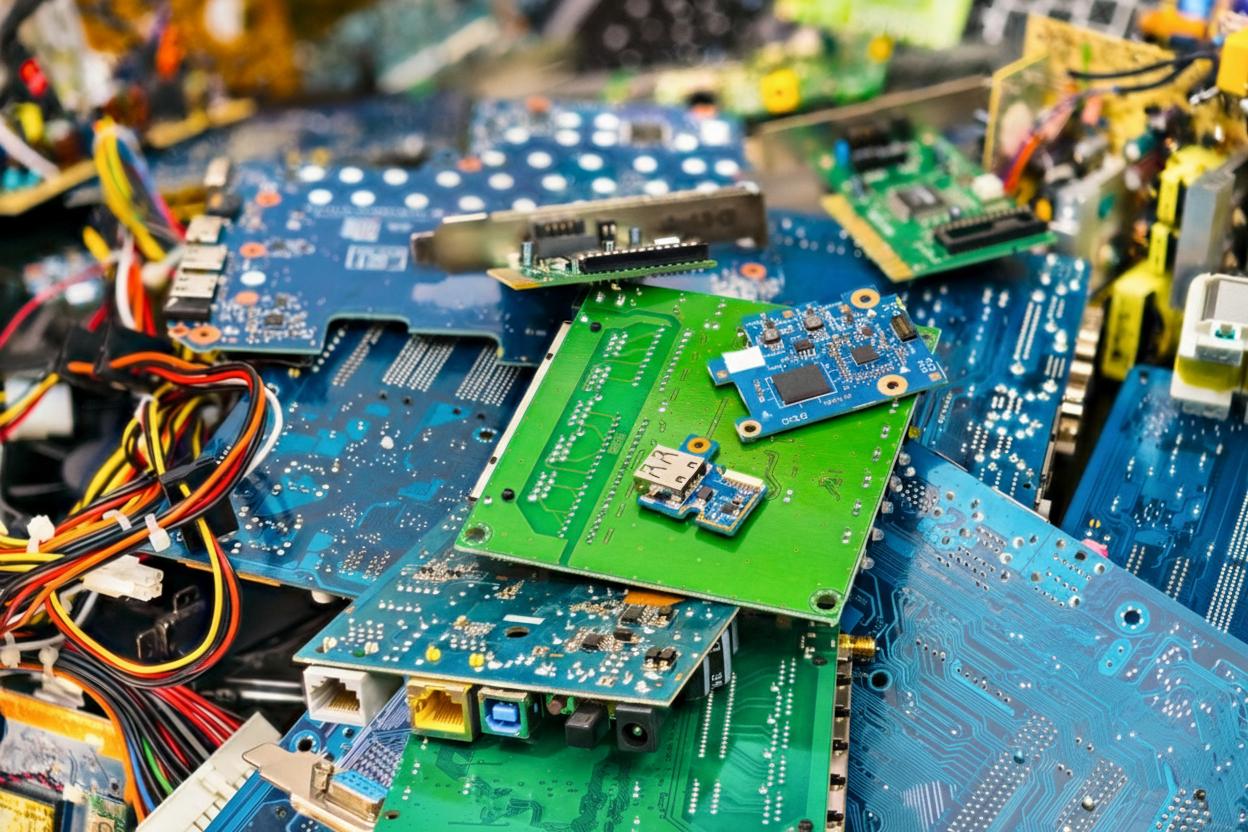
Most engineers assume the circuit board is the safe part of the design—the quiet foundation that just works if you follow the rules. That assumption causes more late-stage headaches than bad components ever do. Identical schematics, identical parts, yet one board survives testing while another cooks a trace or cracks a via. The difference usually isn’t magic. It’s board-level decisions that didn’t get enough respect.
A circuit board carries current, spreads heat, holds tolerances through solder reflow, and survives years of vibration and temperature swings. Ignore any one of those roles, and you’re inviting rework or full-blown circuit board repair. I’ve seen teams blame regulators, MOSFETs, even firmware, only to discover the printed circuit board itself was the bottleneck.
This article breaks down what actually matters—from materials and layout choices to manufacturing realities and common failure modes. Whether you’re dealing with a power bank design, a furnace control, or something repaired by circuit board medics on a bench, the fundamentals don’t change. Even suppliers like WellCircuits see the same pattern repeatedly: the board wasn’t “wrong,” just underdesigned for the job it was asked to do.
1. When a “Simple Board” Brings a Product to a Halt
The device powered up. LEDs blinked. Then smoke—thin, embarrassing smoke—from the corner of what everyone had been calling a “simple circuit board.” Turned out a single trace was undersized, heating up to the high 80s °C under load when it should’ve stayed closer to 45–55 °C. That board wasn’t exotic. No fancy materials. Just a basic printed circuit board doing more work than it was designed for.
This is where circuit boards stop being abstract diagrams and start becoming real hardware with consequences. A circuit board isn’t just a place to solder parts. It’s the electrical, thermal, and mechanical backbone of an electronic product. Get it right, and nobody notices. Get it wrong, and suddenly you’re dealing with rework, delays, or full-blown circuit board repair efforts that cost more than the board ever did.
I’ve debugged enough pcb circuit board failures to be blunt about this: most problems don’t come from “bad components.” They come from underestimating what the board itself is responsible for—current handling, signal integrity, heat spreading, and even basic structural support. Whether it’s a power bank circuit board or a Bluetooth circuit board tucked inside plastic, the board sets the limits. Everything else just lives on it.
2. Circuit Boards by the Numbers: Why They’re Everywhere
Roughly speaking, well over 90% of electronic products sold today rely on some form of electronic circuit board. Single-layer boards still dominate low-cost toys and learning kits, while 4–8 layer designs are common in consumer electronics. High-end networking and computing hardware pushes past 12 layers, sometimes hitting the high teens when density demands it.
What’s interesting isn’t just quantity—it’s variety. A furnace circuit board sees wide temperature swings, vibration, and long lifetimes. A circuit board for kids prioritizes cost and robustness over performance. A military circuit board Tarkov players obsess over? In real life, those designs chase reliability standards like IPC-6012 Class 3, and cost is almost an afterthought.
Here’s a quick snapshot of how circuit boards typically differ across applications. These aren’t absolutes—fabricator capability and volume always bend the rules, but they’re realistic ranges.
| Application Type | Typical Layer Count | Key Board Priority | Cost Sensitivity |
|---|---|---|---|
| Consumer gadgets | 2–6 layers | Cost, size | Very high |
| Industrial controls | 4–8 layers | Reliability, thermal margin | Medium |
| Automotive modules | 6–10 layers | Temperature, vibration | Medium–high |
| Defense/aerospace | 8–16 layers | Long-term reliability | Low |
Companies like WellCircuits see this spread daily—one day a cheap controller board, the next a dense multilayer design with tight impedance control. Same concept. Completely different execution.
3. What Actually Makes a Circuit Board “Work”?
So what’s really happening once power hits the board? Electrical signals don’t magically know where to go. They follow copper traces shaped by the circuit board design, interacting with components that resist, store, switch, or amplify those signals.
That sounds obvious, but here’s what gets missed: signals behave differently depending on speed, current, and layout. A low-speed GPIO line doesn’t care much about trace geometry. A high-speed differential pair absolutely does. That’s why two boards with the same schematic can behave nothing alike.
- Power flows through planes and pours, not just skinny traces
- Return paths matter as much as forward paths
- High-frequency signals “see” impedance, not resistance
- Components interact with the board electrically and thermally
Testing catches some of this. Flying probe tests usually confirm continuity and shorts, not performance under load. Passing FPT doesn’t mean the board will behave once it’s warm, noisy, and stuffed into an enclosure.
4. The Most Common Mistake: Treating the Board Like a Passive Object
Here’s a mistake I keep seeing: designers obsess over IC selection, then treat the circuit printed board as an afterthought. Thin copper. Minimal ground plane. Tight spacing everywhere because “the fab can handle it.”
The board isn’t passive. It adds parasitics—capacitance, inductance, resistance—that can help or hurt you. Push 8–12 A through a trace designed for 3 A, and it’ll heat up, drift electrically, and sometimes delaminate over time. That failure doesn’t show up on day one. It shows up after a few hundred thermal cycles.
Another classic error shows up during circuit board repair: lifted pads. That’s rarely bad luck. It’s usually poor pad sizing combined with repeated rework or high soldering temperatures. IPC-2221 gives guidance, but real-world durability often means going a bit bigger than the minimums.
If there’s one takeaway here, it’s this: assume the board will be stressed—thermally, electrically, mechanically. Design like it matters, because it does.
5. What Circuit Boards Are Really Made Of (and Why It Matters)
Most people hear “FR‑4” and stop thinking. That’s fine for hobby projects and many consumer products. FR‑4 glass-reinforced epoxy typically works up to around 130–170 °C Tg, depending on grade, which is usually enough for lead-free soldering if the profile is controlled.
The trade-offs start when conditions get tougher. Higher Tg materials cost more—often 20–40% extra—but handle thermal cycling better. Aluminum-core boards spread heat well but add weight and complicate assembly. Flexible circuits save space but tear more easily and don’t dissipate heat worth a damn.
Material choice also affects processing. Thicker copper handles current but is harder to etch cleanly. Exotic laminates improve high-frequency performance, but limit which fabricators can build your board without yield issues.
This is one of those areas where datasheets don’t tell the full story. Fabricator experience, stack-up symmetry, and even storage conditions can shift results.
6. Inside a Circuit Board: Components That Actually Do the Work
Strip away the solder mask and copper, and you’re left with the parts that give the board purpose. Resistors, capacitors, inductors, diodes, transistors, ICs—they all play specific roles, but how they’re placed matters as much as what they are.
Resistors are everywhere, usually doing boring but critical jobs like biasing and current limiting. Capacitors smooth power, but only if they’re close enough to the loads. Inductors store energy but radiate noise if the layout is sloppy.
Here’s the practical reality: component datasheets assume ideal placement. Real boards aren’t ideal. Trace length, via count, and reference planes change how components behave.
- Decoupling caps lose effectiveness with every extra millimeter
- High-current components need thermal relief planning
- Connectors stress the board mechanically, not just electrically
This is why circuit board components can’t be selected in isolation. The board and the parts form a system.
7. From Schematic to Copper: Design Is Where Most Boards Win or Lose
Schematic capture is clean and logical. Board layout is messy and full of compromise. That’s normal. The goal isn’t perfection—it’s controlled trade-offs.
Good circuit board design balances signal integrity, manufacturability, and cost. Tight spacing saves area but drives up fabrication risk. More layers improve routing but add roughly 25–60% per added pair, depending on volume and material.
One thing I strongly prefer: routing power early, not last. Leave power and ground until the end, and you’ll end up with narrow pours and awkward vias. That shows up later as noise or heat problems.
This phase is also where many “how to make a circuit board” guides fall short. They show the steps, not the decisions—and it’s the decisions that matter.
8. How Circuit Boards Are Manufactured (and Where Problems Start)
Manufacturing starts with laminate, copper foil, and artwork. From there, the process includes drilling, plating, imaging, etching, and finishing. Each step introduces variation—small, but cumulative.
Drilling vias sounds trivial until aspect ratios creep past 8:1. Plating becomes less uniform. Reliability drops. That’s not theory; it shows up in thermal cycling tests where vias crack after 900–1,200 cycles instead of lasting the product’s life.
Surface finish is another fork in the road. HASL is cheap and uneven. ENIG looks great, but carries black pad risk if plating chemistry isn’t controlled. OSP is affordable but has a limited shelf life, usually a few months in real storage conditions.
Understanding these trade-offs early saves a lot of grief later—especially when boards come back failing in ways the schematic never predicted.
9. Specifications Aren’t Paperwork — They’re Where Boards Live or Die
Here’s a mistake I still see: specs written after the layout is basically done. That’s backwards. Circuit board specifications aren’t a formality; they’re the fence lines. Trace width, copper weight, dielectric thickness, impedance targets, Tg rating—these decide whether the board survives real use or limps into circuit board repair six months later.
Take current handling. A 1oz copper trace that looks fine on-screen might only tolerate 3–5A continuously before climbing past 70 °C in a warm enclosure. Bump that to 2oz copper or widen the trace by 30–40%, and suddenly the temperature rise drops into the 35–50 °C range. Same schematic. Different outcome. Specs matter.
Mechanical specs get ignored even more. Board thickness around 1.6mm is common, but thinner boards flex more, especially near connectors. That flex shows up later as cracked solder joints, usually on heavier circuit board components, like inductors or transformers. I’ve seen boards pass electrical tests perfectly and still fail in the field because nobody specified stiffness or mounting constraints.
Even finishing selection is a spec with consequences. OSP is cheap and fine for quick-turn builds, but it oxidizes and doesn’t love rework. ENIG costs more and brings black pad risk if plating control slips. There’s no universal “best”—only what fits the product life, storage conditions, and rework expectations.
10. Technical Realities the Schematic Won’t Warn You About
On paper, a circuit board electrical design looks clean. Signals go where they’re told. In real hardware, physics has opinions. Impedance shifts, return paths wander, and ground isn’t a magical zero-volt plane—it’s copper with resistance and inductance.
High-speed digital lines are a common trap. Designers focus on the signal trace and forget the reference plane. Break that plane with a careless split, and you’ve just built an antenna. EMI issues follow, and suddenly people are wiping boards down with circuit board cleaner like that’ll fix a layout problem. It won’t.
Thermal behavior is another quiet troublemaker. Power devices dumping 1.5–2.5W each don’t look scary until they’re clustered. Without thermal vias and copper spreading, local temperatures creep into the high 80s °C. Components survive—until ambient rises or airflow drops. Then failures look “random.” They’re not.
- Signal integrity depends as much on return paths as trace geometry
- Thermal performance is about copper area, not just heatsinks
- Noise problems usually start in the layout, not the firmware
This is why circuit board design can’t be separated from layout experience. Tools help, but judgment matters more.
11. Legislation, Standards, and Why Compliance Isn’t Optional
Regulations don’t care if your board “mostly works.” If it ships, it’s expected to comply. RoHS limits substances. REACH tracks chemicals. UL looks at flammability and creepage. Ignore these, and you don’t just risk redesign—you risk not being allowed to sell.
For most consumer and industrial products, IPC standards quietly guide quality. IPC-A-600 Class 2 is typical for general electronics; Class 3 shows up in aerospace and defense. The jump isn’t cosmetic. Annular ring requirements tighten. Hole wall quality expectations rise. Costs follow.
Environmental compliance also shapes material choice. High-Tg FR-4 (IPC-4101/126) handles lead-free soldering better, resisting delamination when reflow peaks around 245–250 °C. Cheaper laminates can survive once or twice, then start blistering during rework. Seen it happen.
Some manufacturers, including WellCircuits among many others, operate ISO 9001 and 14001 certified facilities. That doesn’t guarantee perfection, but it does mean processes are documented and audited. For anything beyond hobby-scale, that baseline matters.
12. When Boards Fail, Repair Tells the Real Story
Circuit board repair is brutally honest. It shows what design reviews missed. Lifted pads near the connectors point to mechanical stress. Burnt vias scream current density problems. Intermittent faults usually trace back to marginal solder joints or flexing.
I’ve watched “circuit board medics” fix the same failure mode across dozens of units: cracked joints on tall components because the board was too thin and mounting screws were too far apart. The schematic was flawless. The board wasn’t.
Repairability itself is a design choice. Dense layouts save space but complicate rework. Fine-pitch parts without test points turn diagnostics into guesswork. If a product is expected to be serviced—industrial controls, furnace circuit board assemblies—designing for access pays off.
Quick fixes like jumper wires or epoxy patches keep units alive short-term. Long-term reliability? Questionable. Repairs are feedback. Ignore them, and the next revision repeats the same mistakes.
13. Comparing Board Types Without the Marketing Noise
Not all circuit boards are chasing the same goal. A circuit board for kids prioritizes robustness and safety. A military circuit board, Tarkov-style rugged design (the real ones, not the game loot) prioritizes survivability under shock, vibration, and temperature swings.
| Board Type | Main Priority | Typical Trade-Off |
|---|---|---|
| Consumer electronics | Cost and size | Limited thermal margin |
| Industrial control | Longevity | Higher BOM and board cost |
| High-reliability / defense | Survivability | Weight, expense, long lead times |
Blindly copying a design approach from one category to another causes trouble. Overbuilding a consumer product kills margins. Underbuilding an industrial one guarantees returns. Context matters more than buzzwords.
14. Trends That Actually Affect Real Boards
Ignore the hype cycles. A few trends genuinely change how printed circuit board assemblies behave. One is a higher component density paired with lower voltage rails. That combination tightens noise margins and raises sensitivity to layout sloppiness.
Another is sustainability pressure. Thinner boards, less copper, recyclable materials. Sounds good, but thinner stacks flex more, and lighter copper heats faster. Engineers end up balancing environmental goals against reliability. There’s no free win here.
Repair culture is also shifting. People search “circuit board repair near me” because replacement isn’t always cheaper anymore. Designs that tolerate rework—larger pads, accessible test points—age better in this environment.
Even pop culture sneaks in. I’ve heard more than one junior engineer reference a Palworld circuit board or a satisfactory circuit board when talking about automation chains. Funny, but also telling: systems thinking is becoming mainstream.
15. Final Take: Treat the Board Like a System, Not a Substrate
Circuit boards aren’t passive. They carry current, spread heat, constrain mechanics, and shape signal behavior. Treating them as just “something to hold parts” is how products fail quietly and expensively.
Good decisions start with honest requirements. How much current, really? What ambient temperature, realistically? Will this ever be repaired, or is it disposable? Answer those before layout, not after smoke appears.
I’m biased toward conservative margins because I’ve seen what happens without them. Not every board needs aerospace-level rigor, but every board needs respect. Whether it’s a Bluetooth circuit board, a power supply, or an electronic circuit board buried in an appliance, the fundamentals don’t change.
Next step is simple and unglamorous: review your last design and ask where the board itself was doing more work than you admitted. That’s usually where the next failure hides.“`html
Frequently Asked Questions About circuit board
Q1: What is a circuit board, and how does it work?
A circuit board, more accurately called a printed circuit board (PCB), is the physical platform that electrically connects and mechanically supports electronic components. In over 50,000 PCB projects I’ve reviewed, the core function is always the same: copper traces (often 1 oz/ft², sometimes 2 oz for power boards) route signals between components according to the schematic. The board typically uses FR-4 material with a dielectric constant around 4.2, and modern designs routinely achieve 0.1 mm trace width and ±0.05 mm registration tolerance. During operation, current flows through these copper paths, while vias connect signals between layers in multilayer boards. Manufacturing follows IPC standards such as IPC-A-600 Class 2 or Class 3 for high-reliability products. With proper DFM checks and controlled impedance, a well-designed circuit board can run reliably for 10+ years in the field.
Q2: Why should I choose a circuit board instead of point-to-point wiring?
From practical experience, circuit boards offer far better consistency, reliability, and scalability than point-to-point wiring. In production runs above even 50 units, PCBs reduce human error by more than 90% compared to manual wiring. They also support tighter tolerances, such as 0.2 mm BGA pitch and controlled impedance ±10%, which wiring simply can’t achieve. PCBs designed to IPC-2221 standards are easier to test, repair, and certify for UL or CE compliance. While wiring may work for quick prototypes, PCBs are the only realistic choice for long-term, repeatable manufacturing.
Q3: How much does a circuit board typically cost?
Cost depends on layers, size, and volume. For example, a simple 2-layer PCB (100 × 100 mm) can cost $2–$5 per piece at 100 units, while a 6-layer impedance-controlled board may be $20–$40. In my experience, early DFM reviews can cut total cost by 10–30%.
Q4: When should I use a multilayer circuit board?
You should consider a multilayer circuit board when signal density, EMI control, or power integrity becomes critical. In projects above 200 components or with clock speeds over 100 MHz, 4-layer or 6-layer boards are often necessary. Typical stackups include dedicated ground and power planes to reduce noise by up to 20 dB. Following IPC-2221 and IPC-2141 guidelines, multilayer boards also improve impedance control and thermal performance. From field data, they significantly reduce re-spin risk compared to forcing everything onto two layers.
Q5: What are the most common circuit board quality issues?
The most common issues are poor solder mask alignment, insufficient annular ring, and via cracking. In audits of thousands of boards, these account for over 60% of failures. Using IPC-A-600 Class 3 criteria and 100% electrical testing greatly reduces these risks.
Q6: How can I ensure my circuit board design is manufacturable?
The most effective approach is an early DFM (Design for Manufacturing) review. In practice, a 24-hour DFM check can catch up to 80% of potential issues before fabrication. Key items include minimum trace/space (commonly 0.1/0.1 mm), solder mask clearance, and drill aspect ratio below 10:1. Manufacturers like WellCircuits typically follow IPC-2221 and ISO9001 processes to standardize these checks. From experience, teams that involve their PCB supplier early see fewer delays and achieve over 99% on-time delivery.
Q7: How reliable are circuit boards in harsh environments?
Circuit board reliability in harsh environments depends heavily on materials, surface finish, and process control. In automotive and industrial projects I’ve supported, boards rated for -40°C to +125°C with ENIG or immersion silver finishes perform far better than standard HASL. Conformal coating can extend service life by 2–3× in high-humidity or dusty conditions. IPC-6012 Class 3 boards, combined with UL-certified laminates, are commonly required for mission-critical use. Field failure data shows that vibration-related issues drop by over 40% when proper stackup and via-in-pad techniques are used. Reliability is achievable, but it must be designed in from day one.
Q8: Are circuit boards environmentally friendly?
Modern circuit boards are more eco-friendly than many assume. Lead-free HASL and RoHS-compliant materials are now standard. In my experience, switching to halogen-free laminates can reduce environmental impact without affecting performance, though costs may rise 5–10%.
Q9: What is the difference between a PCB and a PCBA?
A PCB is the bare circuit board, while PCBA refers to the assembled board with components soldered on. In real production, most functional issues appear at the PCBA stage, not the bare board. PCBA quality depends on solder paste control, reflow profiles, and AOI/X-ray inspection. Following IPC-A-610 Class 2 or 3 standards ensures assembly reliability. Understanding this distinction helps teams assign responsibility correctly between fabrication and assembly suppliers.
Q10: How do I choose a reliable circuit board manufacturer?
Look beyond price and focus on process control and certifications. In my experience, manufacturers with ISO9001, UL certification, and clear IPC compliance deliver more consistent results. Ask about electrical testing coverage, DFM response time, and on-time delivery metrics. Companies like WellCircuits that offer traceability and engineering support tend to reduce project risk. A reliable supplier should feel like an extension of your engineering team, not just a vendor.
A circuit board succeeds or fails long before the first component is soldered down. The choices around materials, copper weight, stackup, layout discipline, and manufacturing tolerances quietly define current limits, thermal margins, and long-term reliability. Thicker copper can help—or make assembly harder. More layers can improve routing—or hide return-path problems. There’s always a trade-off, and pretending otherwise is how “simple boards” end up in smoke.
The practical next step is straightforward but often skipped: define what the board must handle electrically, thermally, and mechanically, then sanity-check those assumptions against real fabrication and assembly limits. Prototype early, measure temperatures and voltage drops under load, and don’t assume a circuit board design that worked once will scale cleanly to production. No single rule guarantees success, but disciplined decisions—and a healthy skepticism of shortcuts—stack the odds in your favor.
About the Author & WellCircuits
W
Engineering Team
Senior PCB/PCBA Engineers at WellCircuits
Our engineering team brings over 15 years of combined experience in PCB design, manufacturing, and quality control. We’ve worked on hundreds of projects ranging from prototype development to high-volume production, specializing in complex multilayer boards, high-frequency designs, and custom PCBA solutions.
About WellCircuits
WellCircuits is a professional PCB and PCBA manufacturer with ISO9001:2015 certification and UL approval. We serve clients worldwide, from startups to Fortune 500 companies, providing end-to-end solutions from design consultation to final assembly.
Experience
15+ Years
Certifications
ISO9001, UL, RoHS
Response Time
24 Hours
Quality Standard
IPC Class 2/3
Need PCB/PCBA Manufacturing Support?
Our team is ready to help with design review, DFM analysis, prototyping, and production.Get in Touch