
Published: February 26, 2026 | Reading time: ~19 min
Two boards, same schematic, same components. One passes EMC and thermal cycling without drama. The other turns into a science experiment at 70–80°C. That gap usually isn’t magic or luck—it’s decisions made long before assembly, right at the blank board stage.
Engineers love to talk about components. Regulators, MCUs, FETs. Fair enough. But a surprising number of problems show up before the first part ever hits solder paste. Copper weight assumptions, laminate choice, drill tolerances, solder mask openings—those “boring” details decide whether the design behaves in the real world. That’s why blank PCBs and parts deserve more respect than they usually get.
A blank PCB isn’t just an unfinished product. It’s a diagnostic tool. It’s where footprints get verified, impedance guesses get exposed, and mechanical fit gets proven. I’ve watched teams rush straight to assembly and then burn weeks fixing issues that were obvious on a bare board. Even large manufacturers—including outfits like WellCircuits on the fabrication side—know that most schedule slips start with bad early assumptions, not bad solder joints.
This article breaks down what a blank PCB actually is, the materials and processes behind it, the parts that eventually live on it, and where engineers most often trip themselves up. No marketing gloss—just the stuff that tends to bite you if you ignore it.
1. When a “Finished” Board Fails Before It’s Even Built
A few years back, a control board design looked perfect on screen. Clean schematics, tidy layout, ERC, and DRC all green. Then the prototypes arrived—and nothing worked as expected. Noise where there shouldn’t be noise. A regulator running hotter than simulation predicted. The problem wasn’t the components. It was the assumptions baked into the board before assembly even started.
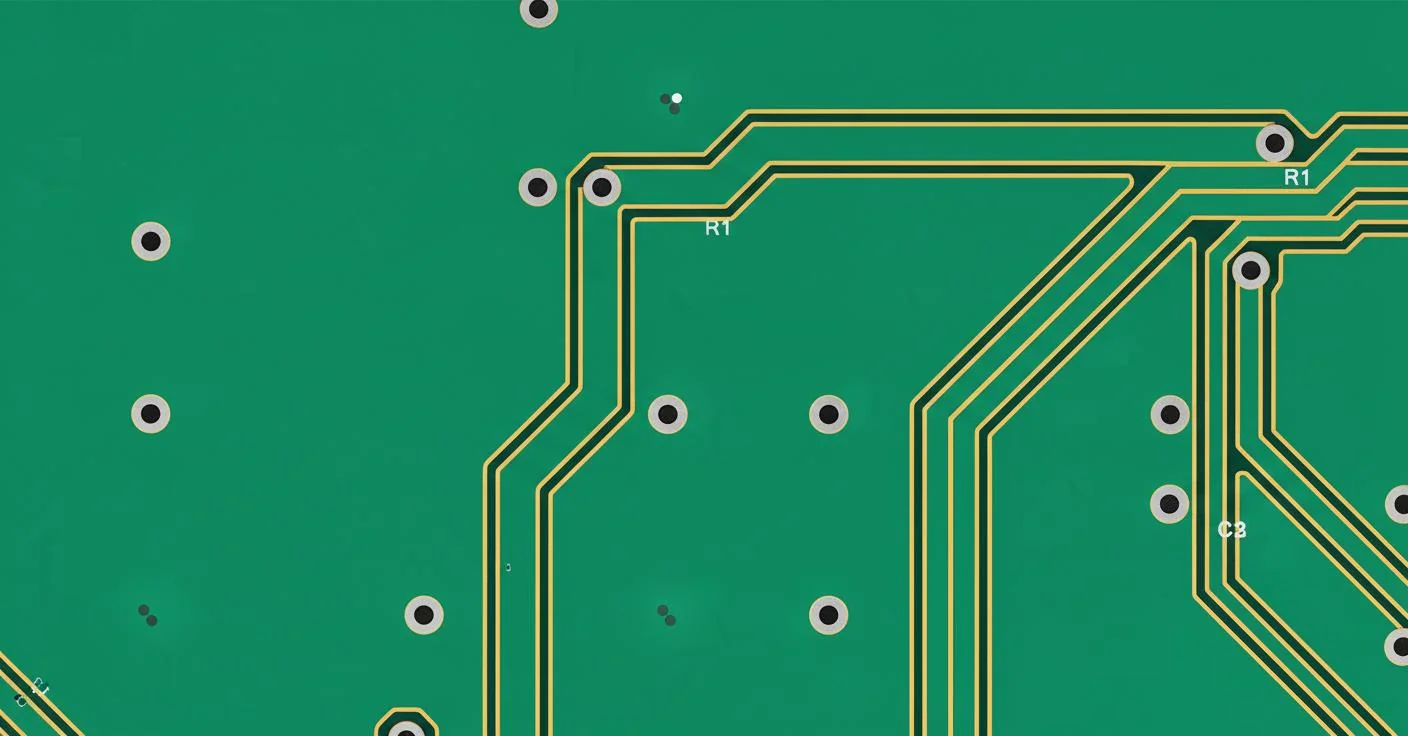
That’s where the idea of a blank PCB earns its keep. A blank PCB—also called a bare board—is the raw foundation: substrate plus copper, no parts, no solder mask drama yet. It’s the stage where mistakes are cheap, and changes are still possible. Once components are placed and soldered, every fix costs real money and time.
In practice, blank pcb boards are how engineers de-risk designs. You validate footprints, check impedance paths, confirm creepage distances, and sometimes even probe copper directly to see what’s really happening. I’ve seen teams skip this step to “save time” and lose weeks chasing issues that could’ve been spotted on an unassembled board in an afternoon.
2. Blank PCB vs Assembled PCB: The Numbers Tell the Story
Here’s a comparison that usually surprises non-hardware folks. A small batch of assembled boards can cost roughly 2.5–3.5× more than the same quantity of blank pcb boards. That multiplier grows fast when you add fine-pitch BGAs, mixed SMT/THT assembly, or multiple reflow profiles.
Lead time follows the same pattern. A straightforward 2-layer blank PCB might come back in 3–5 working days, depending on material and drill count. Fully assembled boards? Usually 10–18 days, once you factor in sourcing parts, stencils, and yield checks. When you’re still validating a design, that difference matters.
Blank PCBs also tolerate iteration better. Scraped bare boards hurt a lot less than scraped assembled ones. That’s why even experienced teams still order bare boards first, especially for new power or RF designs.
| Aspect | Blank PCB | Assembled PCB |
|---|---|---|
| Typical Cost (Low Volume) | Baseline | ~2.5–3.5× higher |
| Lead Time | 3–7 days | 10–18 days |
| Design Flexibility | High | Low once built |
| Best Use Stage | Validation, testing | Final production |
3. What Exactly Do We Mean by a “Blank PCB”?
So what is it really? Is a blank PCB just copper slapped onto fiberglass? Not quite. In most cases, a blank PCB—sometimes called a bare PCB or copper-clad laminate—is a carefully engineered stack-up of dielectric material and copper foil, manufactured to tight tolerances.
The copper is already there, laminated under heat and pressure. What’s missing are the electronic parts and, often, the final processing steps like solder mask and surface finish. That’s why blank PCBs are the starting point for almost everything else.
- Mechanical support for components (later on)
- Defined copper thickness for current handling
- Controlled dielectric properties for signal integrity
- A predictable platform for drilling, plating, and etching
4. The Most Common Mistake: Treating All Blank PCBs as the Same
I see this one constantly. Someone orders the cheapest blank pcb they can find, assuming “FR‑4 is FR‑4.” Then the board warps during reflow, or impedance is off by just enough to fail EMI.
The reality is that blank pcb board quality varies a lot. Tg ratings can range from around 130°C to 170°C or higher. Copper foil can be standard electrodeposited or low-profile rolled copper. Resin systems behave differently under lead-free soldering.
Ignore those details, and you’ll pay for it later. IPC-4101 exists for a reason, and not all laminates meet the same slash sheets. If you’re pushing temperature, current, or frequency, the cheapest option is rarely the best one.
5. Inside a Blank PCB: Materials That Actually Matter
At its core, a blank PCB is about materials working together. The substrate does most of the heavy lifting. FR‑4 is still the default choice, usually with a dielectric constant around 4.2–4.6, depending on resin content and glass weave. For most digital designs under a couple of gigahertz, that’s perfectly fine.
Then there’s copper. One ounce per square foot is common, but power designs often move to 2 oz or even 3 oz. Thicker copper handles more current but complicates etching and increases minimum trace spacing. There’s always a trade-off.
For higher-performance needs, materials like polyimide or PTFE-based laminates show up. They offer better thermal stability or lower Dk, but cost roughly 2–4× more and aren’t friendly to every fab shop.
| Material | Typical Use | Key Trade-Off |
|---|---|---|
| FR‑4 | General electronics | Limited at high frequency |
| Polyimide | High-temp environments | Higher cost, harder to process |
| PTFE | RF/microwave | Soft material, special handling |
6. How Blank PCBs Are Made (And Why It Affects Reliability)
The copper-clad laminate process starts with prepreg—glass fabric impregnated with resin. Layers of prepreg and copper foil are stacked and pressed under heat and pressure until everything bonds into a solid panel. Sounds simple. It’s not.
Small variations in resin flow or pressure can change dielectric thickness by a few tens of microns. That might not matter for a blinking LED board. It absolutely matters for controlled-impedance designs.
Drilling and plating come later, and that’s where weaker laminates show their flaws. Poor resin adhesion leads to via cracking after a few hundred thermal cycles. I’ve seen boards survive 850–1100 cycles before failure when the material choice was right—and die much sooner when it wasn’t.
7. The Parts That Eventually Live on a Blank PCB
A blank PCB is only half the story. The parts you plan to mount drive many early decisions. Passive components—resistors, capacitors, inductors—set requirements for pad size, copper weight, and thermal relief. High-power resistors, for instance, often need wider copper pours to spread heat.
Active parts complicate things further. Fine-pitch ICs demand tighter registration and smoother copper. Power devices push current density and thermal limits. Even something as basic as connector choice can dictate board thickness.
This is where working with an experienced blank pcb board supplier helps. Some suppliers, including WellCircuits, will flag manufacturability issues early—before you’ve locked yourself into a bad stack-up.
8. From Blank PCB to Real Circuit: Early Design Choices
Choosing the right blank PCB isn’t glamorous, but it’s one of the most consequential decisions in a project. Material selection should match the application, not marketing claims. High-speed digital and RF designs benefit from stable Dk and low loss. Power electronics care more about copper thickness and thermal paths.
One practical approach: define operating temperature, voltage, and frequency first. Then, shortlist materials that meet those needs with some margin. After that, compare cost, availability, and fab capability. Not every shop can reliably build 0.1 mm traces or high-aspect-ratio vias.
Whether you’re sourcing blank PCBs for prototyping or lining up a long-term blank PCB board supplier, get samples, review material datasheets, and talk to the fabricator. WellCircuits and similar suppliers usually provide stack-up guidance—use it. It’s cheaper than fixing mistakes after assembly.
9. The Mistakes Engineers Make with Blank PCB Boards (And Regret Later)
Most layout errors don’t show up in CAD. They show up when you’re holding a soldering iron, wondering why two pads are bridged or why your ADC readings look like white noise.
One of the biggest offenders is spacing. IPC-2221 gives minimum conductor spacing based on voltage, but I still see designs squeezing 0.15 mm clearances into 48 V systems “because the fab can do it.” Sure, they can etch it. That doesn’t mean it’s wise. Flux residue, humidity, and contamination can turn marginal spacing into intermittent shorts.
Another recurring issue: ignoring thermal paths on a bare board. Designers focus on copper thickness—1 oz vs 2 oz—but forget that heat has to spread somewhere. A MOSFET on a small island of copper will run 12–18 °C hotter than the same part tied into a proper ground plane with stitched vias. The blank PCB already defines your thermal reality. The assembly can’t fix poor copper geometry.
Signal integrity mistakes are subtler. Long parallel traces without controlled impedance? Expect crosstalk once you hit a few hundred MHz edge rates. Split ground planes under high-speed lines? That’s how you build antennas, not products.
- Overcrowded footprints that don’t allow proper solder fillets
- No test points because “we’ll probe the pins.
- Skipping thermal reliefs on high-current pads (making rework miserable)
- No consideration for EMI return paths
I’ve debugged enough boards to know this: 70% of “component problems” are actually layout decisions baked into the blank pcb board. Fix it there, not after parts are soldered.
10. Blank PCB vs Pre-Assembled PCB: Where the Real Difference Lies
Here’s the blunt truth: flexibility versus convenience. That’s the trade.
A blank PCB gives you full control. You decide which components go on, which substitutions are acceptable, and how prototypes evolve. Pre-assembled boards save time but lock you into earlier decisions. If a regulator footprint is wrong or a decoupling cap needs relocation, you’re reworking populated boards instead of adjusting copper.
In small development runs—say 5 to 30 units—the difference is significant:
- Blank PCB boards: Lower upfront cost, higher manual labor, maximum iteration freedom.
- Pre-assembled PCBs: Higher cost per unit, reduced hands-on time, faster to functional testing.
Production changes the equation. Once volumes hit a few hundred pieces, assembly efficiency outweighs manual flexibility. But during R&D? I prefer starting with bare boards. You learn more, faster.
That said, not every team has in-house soldering capability. If your project involves fine-pitch BGAs under 0.5 mm pitch, a turnkey assembly may be the smarter move. Just understand: design mistakes become expensive the moment parts are mounted.
11. Choosing the Right Blank PCB and Parts Without Overengineering
I’ll say it directly: most boards are overbuilt.
Start with electrical reality. Define voltage ranges, steady-state and peak current (be honest about inrush), switching frequency, and expected ambient temperature. A 12 V, 3 A control board doesn’t need 2 oz copper everywhere. But a 24 V motor driver pulling 18–22 A bursts? That’s different. Trace width calculators are helpful, but they assume ideal cooling. Real enclosures trap heat.
Mechanical constraints matter just as much. Board thickness of 1.6 mm is common, but I’ve seen vibration-prone environments where 2.0 mm reduced connector fatigue failures noticeably. More material means more stiffness—but also higher cost and weight.
Component compatibility is another quiet trap. Pads must match footprints exactly, and spacing should allow automated or manual assembly. Standardized packages (SOIC, SOT-23, 0603, 0805) reduce sourcing headaches. If you design around exotic packages, expect longer lead times.
Substitutions deserve planning. I like leaving alternative footprints for critical parts—say, two regulator packages sharing compatible pinouts. It adds layout effort but can save a project when supply chains get weird.
As for suppliers, any reputable blank PCB board supplier should provide stack-up details, Tg rating (IPC-4101 classifications are worth checking), and copper weight tolerances. If they can’t clearly state those, I’d be cautious. I’ve seen consistent quality from shops like WellCircuits, but regardless of vendor, always validate with a small batch first.
12. Comparing PCB Fabrication Prices Without Fooling Yourself
Price comparison tools look convenient. Enter dimensions, layer count, thickness, copper weight—and you get numbers from multiple manufacturers in seconds. Sounds great. The catch? Specs aren’t always apples-to-apples.
Here’s a simplified comparison structure you’ll typically encounter:
| Parameter | Low-Cost Offer | Mid-Range Offer |
|---|---|---|
| Base Material | Standard FR-4, Tg ~130°C | High-Tg FR-4, ~170°C |
| Copper Weight | 1 oz outer | 1 oz outer / 1 oz inner |
| Solder Mask | Basic green | Multiple color options |
| Lead Time | 5–7 working days | 3–5 working days |
That $12 difference per batch might hide material upgrades that actually matter for reliability. If your board sees lead-free reflow (peaks around 245–250 °C), low-Tg material can warp more easily. Cheap now, expensive later.
Tools that aggregate quotes are useful for rough budgeting. Just double-check stack-ups, impedance control options, and minimum drill sizes. A quote is only meaningful if technical details match your design intent.
13. Handling and Storing Blank PCBs: They’re Tough, But Not Invincible
People treat blank PCBs like sheet metal. They’re not.
FR-4 and similar epoxy-glass materials are mildly hygroscopic. Leave boards in a humid warehouse (above roughly 65–70% RH) for weeks, and they’ll absorb moisture. Run them straight into a reflow oven later, and you risk delamination or micro-blistering. It doesn’t happen every time—but when it does, it’s ugly.
Surface contamination is another quiet killer. Oils from fingers affect solderability, especially on bare copper or OSP finishes. Even ENIG can suffer if handled carelessly before assembly.
- Store in sealed, moisture-barrier bags when possible
- Keep relative humidity under ~60% for long-term storage
- Avoid stacking heavy panels that can cause warpage
- Use ESD-safe handling practices—even for bare boards
Shelf life depends on surface finish. OSP might be best assembled within 3–6 months. ENIG often tolerates 9–12 months if stored properly. Beyond that, solderability testing is wise.
I’ve seen perfectly designed boards fail assembly simply because they sat on a shelf too long. The copper was fine. The storage wasn’t.
14. Where Blank PCB Technology Is Headed
Traditional FR-4 still dominates, but high-speed and high-power designs are pushing its limits.
For RF and multi-gigabit digital signals, ultra-low Dk and low Df materials are becoming more common. Not because engineers love spending more, but because at several GHz, dielectric losses and impedance drift become measurable performance bottlenecks. Ceramic-filled PTFE composites and advanced hydrocarbon laminates are showing more stable electrical properties across temperature ranges from roughly -40 °C to 125 °C.
Thermal performance is also evolving. Standard FR-4 has thermal conductivity around 0.25–0.3 W/m·K. Newer composite materials can reach 1 W/m·K or higher, which significantly improves heat spreading without jumping to full metal-core boards.
Another shift: finer geometries. Trace widths below 0.1 mm and microvias under 0.15 mm in diameter are becoming accessible in volume production. That opens doors for denser designs—but also raises fabrication sensitivity. Yield can dip if the manufacturer’s process control isn’t tight.
Worth noting: advanced materials aren’t automatically better. They’re better for specific problems. For a low-frequency control board, classic FR-4 still wins on cost and availability.
15. Final Thoughts: Start with the Board, Not the Parts
Every electronic product, from simple sensor modules to complex motor drives, begins as copper on laminate. The blank PCB is the quiet foundation that decides whether your parts will behave—or misbehave.
If you’re developing hardware, define your electrical and mechanical constraints first. Match copper weight to real current, not optimistic estimates. Choose substrate materials based on thermal and frequency demands, not marketing claims. Confirm that your blank pcb board supplier can meet drill tolerances and stack-up requirements. Then worry about components.
Blank PCBs aren’t glamorous. They don’t blink or compute. But they determine impedance, heat flow, EMI behavior, and long-term reliability. Treat them as an engineering decision—not a commodity checkbox.
Get the foundation right, and the parts have a fair chance to do their job.“`html
Frequently Asked Questions About blank pcb and parts
Q1: What is a blank PCB and parts, and how does it work?
A blank PCB refers to an unpopulated printed circuit board without electronic components mounted, while “parts” typically means the discrete components (resistors, ICs, connectors) that will later be assembled onto it. In 50,000+ PCB/PCBA projects I’ve overseen, this separation is critical for cost control and design flexibility. The blank PCB is fabricated from materials like FR-4 with controlled parameters—common specs include ±0.05mm board thickness tolerance and 0.1–0.15mm minimum trace/space. Manufacturing follows IPC-A-600 Class 2 or Class 3 standards, depending on reliability needs. Once the bare board passesthe electrical test and visual inspection, parts are sourced per the BOM and assembled via SMT or THT processes. This staged approach allows early DFM checks, typically within 24 hours, reducing redesign risk. It’s the foundation of reliable, scalable electronics manufacturing.
Q2: Why do engineers choose blank PCBs and parts instead of fully integrated modules?
Engineers often choose blank PCBs and parts for control and customization. From my experience on high-mix, low-volume projects, this approach allows precise component selection, footprint optimization, and cost tuning. You can design for specific standards like IPC-2221 and target tighter tolerances, such as ±10% impedance control for high-speed signals. It also avoids vendor lock-in, common with modules. While it requires more upfront engineering, the long-term benefits include better performance tuning, easier revisions, and clearer quality accountability under ISO9001-certified processes.
Q3: How much does a blank PCB and parts typically cost?
Cost varies widely, but for standard FR-4 boards, blank PCBs often range from $5–$50 depending on layer count and size. Parts cost can exceed the PCB itself. In our projects, early BOM optimization typically saves 10–20%. Pricing transparency and DFM feedback are key trust factors.
Q4: When should I use blank PCB and parts in a project?
Blank PCB and parts are ideal during prototyping, pilot runs, and products with frequent revisions. I’ve seen this approach work best when electrical performance, thermal control, or compliance (UL, CE) matters. For example, using a 4-layer blank PCB with dedicated ground planes can reduce EMI by 15–30%. It’s also preferred when component lifecycle management is important, as you can swap parts without redesigning the board. This flexibility is hard to achieve with off-the-shelf modules.
Q5: How do you ensure the quality and reliability of blank PCBs?
Quality starts at fabrication. In ISO9001-certified factories, blank PCBs undergo AOI, flying probe or fixture testing, and cross-section analysis. From experience, specifying IPC-A-600 Class 3 for critical products cuts field failure rates significantly. Key metrics include copper thickness (±10%), solder mask alignment (±0.05mm), and 100% electrical test. Reputable suppliers also provide UL certification and material traceability, which is essential for long-term reliability and audits.
Q6: What are common problems with blank PCBs and parts, and how can they be avoided?
The most common issues are footprint mismatches, poor stack-up design, and part obsolescence. In real projects, a 24-hour DFM review catches over 90% of these early. Using IPC-compliant libraries and approved vendor lists greatly reduces risk.
Q7: How do blank PCBs and parts compare with turnkey PCBA services?
Blank PCB and parts offer more control, while a turnkey PCBA offers convenience. In my experience, managing both blank PCB sourcing lets you qualify multiple component vendors and control tolerances as 0.1mm BGA pitch escapes. Turnkey is faster for simple builds, but can hide part substitutions. Companies like WellCircuits often support hybrid models—customer-supplied boards with partial turnkey parts—balancing speed and transparency. The right choice depends on volume, complexity, and internal engineering resources.
Q8: What is the full process flow from blank PCB to finished assembly?
The process starts with PCB design and stack-up definition, followed by blank PCB fabrication under standards like IPC-6012. After fabrication, boards undergo electrical test and visual inspection. Parts are then sourced based on the BOM, considering lead time and lifecycle status. In over 15 years of production experience, I’ve found that SMT assembly with controlled reflow profiles (±2°C) is critical for yield. Post-assembly, AOI, X-ray (for BGAs), and functional testing are performed. Reliable manufacturers achieve 99% on-time delivery by integrating DFM, sourcing, and testing. This structured flow minimizes defects and supports scalable production.
Q9: Are blank PCBs suitable for high-reliability industries like medical or aerospace?
Yes, when built to the right standards. Blank PCBs made to IPC-A-600 Class 3 and assembled with traceability are widely used in medical and aerospace. In my projects, this approach meets strict reliability and audit requirements.
Q10: How do I choose a reliable supplier for blank PCBs and parts?
Look for proven experience, certifications, and transparent processes. I recommend suppliers with ISO9001, UL certification, and documented DFM reviews within 24 hours. Ask about yield rates, typical tolerances (±0.05mm), and delivery performance. In practice, suppliers like WellCircuits that share inspection data and offer engineering feedback build long-term trust. A reliable partner should feel like an extension of your engineering team, not just a vendor.
Blank boards sit in an awkward middle ground—too simple to get excited about, yet critical enough to make or break a project. The real takeaway is that most board-level failures don’t come from exotic components or bad assembly. They come from quiet choices: laminate grade that can’t handle lead-free profiles, copper thickness that looks good on paper but traps heat, or footprints copied without checking actual pad geometry.
Working with blank pcb and parts forces those issues to surface early, when fixes are still cheap. Bare boards let you probe copper, verify spacing, and stress materials without the noise of a full assembly. They also make iteration tolerable. Scrapping a stack of blank boards hurts a lot less than binning fully populated ones.
The practical next step is simple, even if it’s not glamorous. Define your real constraints—thermal load, voltage, current, environment, and expected lifetime. Then, validate those assumptions on blank boards before committing to volume assembly. Compare material options, copper weights, and surface finishes with two or three fabricators, and don’t assume the “premium” choice is automatically safer. The goal isn’t perfection. It’s reducing surprises when the board finally gets built.
About the Author & WellCircuits
Engineering Team
Senior PCB/PCBA Engineers at WellCircuits
Our engineering team brings over 15 years of combined experience in PCB design, manufacturing, and quality control. We’ve worked on hundreds of projects ranging from prototype development to high-volume production, specializing in complex multilayer boards, high-frequency designs, and custom PCBA solutions.
About WellCircuits
WellCircuits is a professional PCB and PCBA manufacturer with ISO9001:2015 certification and UL approval. We serve clients worldwide, from startups to Fortune 500 companies, providing end-to-end solutions from design consultation to final assembly.
Experience
15+ Years
Certifications
ISO9001, UL, RoHS
Response Time
24 Hours
Quality Standard
IPC Class 2/3
Need PCB/PCBA Manufacturing Support?
Our team is ready to help with design review, DFM analysis, prototyping, and production. Get in Touch