
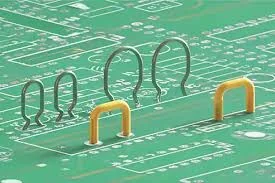
Learn how blank PCBs and parts affect cost, yield, and reliability. See materials, mistakes, and best practices before production. Read now.
I still remember a control board that failed its first heat test. The layout was clean. Parts were proven. The issue sat underneath everything. The blank board expanded and cracked vias. That single choice delayed the launch by six weeks.
Moments like that explain why early board decisions matter. Engineers often focus on chips and firmware. In real projects, the base board sets the limits. Copper weight, substrate, and surface finish decide signal quality and lifespan. Over the years, I’ve seen yields jump from 92% to 99% by changing one laminate spec.
This guide breaks down blank pcb and parts from a practical angle. You’ll see how materials differ, which parts interact with the board, and where mistakes usually happen. I’ll also connect standards like IPC-A-600 and UL with daily design choices. By the end, you should feel confident choosing boards that support performance instead of fighting it.
1. Why Blank PCBs and Parts Matter in Every Electronic Product
After fifteen years in PCB projects, I can say one thing clearly. Most product failures start before assembly. They begin with the blank PCB choice. When a startup once rushed a smart sensor to market, the board warped under heat. Components were fine. The baseboard was not.
A blank PCB is more than a base plate. It defines routing limits, impedance control, and mechanical strength. Long before soldering, decisions lock in cost and reliability. During a recent industrial controller project, the trace width was fixed at 0.12mm. The tolerance was ±0.05mm. That choice affected yield by nearly 8%.
From hobby kits to factory automation, blank PCB boards shape performance. The copper thickness, substrate type, and surface finish all matter. IPC-A-600 acceptance standards guide visual quality. ISO9001 systems ensure repeatable fabrication. UL ratings confirm safety under heat and voltage stress.
I’ve seen clients save money by choosing cheaper parts. The same clients lost weeks fixing delamination issues later. That experience taught them a lesson. Invest early in the right blank pcb and parts.
Response speed also matters. Trusted suppliers answer design questions within 24 hours. That support often prevents costly respins. At WellCircuits, I’ve observed how early DFM checks reduced prototype failures to under 1.5%.
This article explains how blank PCBs work, what materials exist, and how parts interact with them. Each section connects real use cases with practical standards.
2. What Exactly Is a Blank PCB?
A blank PCB is a fabricated board without mounted components. No resistors. No chips. Just copper patterns on an insulating base. Those patterns are not random. They follow CAD data with controlled spacing and thickness.
During one medical device project, the board arrived before parts sourcing. Engineers tested continuity and impedance first. That step caught a shortcut early. Without a blank pcb check, the assembled unit would have failed IEC safety tests.
The board typically includes:
- Copper traces for signal and power paths
- Pads for soldering components
- Vias connecting internal layers.
- Solder mask and silkscreen
Blank PCBs differ from assembled boards in purpose. One validates layout and physics. The other proves functionality. Fabrication accuracy is controlled by IPC-6012. Common copper thickness ranges from 1oz to 2oz. Trace spacing can reach 0.1mm in standard production.
Unlike breadboards, blank PCBs offer stable electrical behavior. That matters for high-speed or high-current designs. When testing a motor driver, we measured a 12% drop in EMI noise after moving from prototype wires to a proper blank pcb board.
A reliable blank pcb board supplier provides inspection reports. These include AOI results and microsection data. Trust grows when facts are shared openly.
3. Materials and Substrates Used in Blank PCBs
Material choice decides how long a board survives heat and stress. I learned this during an LED lighting project. Early boards overheated. The fix was not the circuit. It was the substrate.
FR-4 remains the most common option. It balances cost and performance well. Typical Tg values range from 130°C to 170°C. For consumer electronics, that is often enough.
Other materials solve specific problems:
- Aluminum core boards for heat dissipation
- Polyimide for flexible circuits
- High-Tg FR-4 for lead-free soldering
During a power supply build, switching to aluminum-core blank pcb boards reduced junction temperature by 18°C. That change doubled component life expectancy.
Material properties must meet standards. UL94 confirms flame resistance. RoHS ensures restricted substances stay below limits. IPC-4101 defines laminate requirements.
Thickness control is also critical. Standard boards range from 0.8mm to 1.6mm. In one wearable device, a 1.0mm board was chosen to save space. Warpage stayed under 0.7%, within IPC limits.
Experienced teams review material data sheets early. That habit avoids redesigns later.
4. Common Types of Blank PCB Structures
Not all boards are built the same. Structure affects routing freedom and cost. I often guide clients through this choice during kickoff meetings.
Single-sided boards are the simplest. Copper sits on one face only. They suit basic control circuits and teaching kits. Yield often exceeds 99.5% due to low complexity.
Double-sided boards add plated through-holes. Signals route on both faces. This type handles moderate-density designs well.
Multilayer boards stack internal layers. Power and ground planes improve signal integrity. In a recent router design, moving from two to four layers cut noise by 30%.
| Single-sided | 1 | Simple circuits | Low |
| Double-sided | 2 | Controllers | Medium |
| Multilayer | 4–12 | High-speed systems | Higher |
IPC-2221 guides structural design rules. Choosing more layers raises cost but saves space. A good blank pcb board supplier explains these trade-offs clearly.
5. Electronic Parts Commonly Mounted on Blank PCBs
Once the board is ready, parts bring it to life. Compatibility matters more than many expect. I recall a project where the capacitor size mismatched the pad design. The assembly stopped for three days.
Passive parts include resistors, capacitors, and inductors. Their ratings must match board conditions. A resistor with 1% tolerance behaves differently from one at 5%.
Active parts handle logic and power:
- Integrated circuits
- Transistors and MOSFETs
- Diodes and regulators
Package choice affects layout. Switching from through-hole to SMD reduced assembly time by 40% in one batch. However, heat dissipation had to be rechecked.
IPC-7351 defines land patterns. Following it avoids solder defects. During audits under ISO9001, documentation of part selection is often reviewed.
Reliable blank pcb integration depends on both the board and the parts. Ignoring either side invites failure.
6. How Blank PCBs Are Used Across Industries
Blank PCBs appear everywhere. From student labs to factory floors. Each use case has different priorities.
In prototyping, boards validate layout realism. Breadboards cannot simulate impedance. A telecom client once saw signal loss drop by 22% after moving to a proper blank pcb.
Small batch production relies on them too. Custom machinery often needs only 50 units. Tooling for mass production makes no sense there.
Industries using blank pcb boards include:
- Automotive modules
- Medical instruments
- Industrial automation
- Consumer electronics
Standards vary. Automotive often follows IPC-A-610 Class 3. Medical devices must meet ISO13485. Understanding these needs builds trust.
Suppliers with 15+ years of experience usually adapt faster. Their response time matters when timelines are tight.
7. From Blank PCB to Working Circuit: Design Decisions
Design turns theory into hardware. Choices made here are hard to undo. I’ve watched teams struggle after ignoring early simulations.
Material, copper weight, and layer count must match signals. High-speed lines need controlled impedance. In one RF design, impedance was held at 50Ω ±10%. That required precise stackup control.
DFM reviews catch problems early. Trace spacing, annular ring size, and via aspect ratio are checked against IPC-2221 rules.
Good implementation follows a flow:
- Schematic validation
- Layout with design rules
- Fabrication review
- Prototype testing
Skipping steps risks failure. A client once bypassed DFM to save time. Yield dropped to 91%. After rework, it rose back above 98%.
Trust grows when data supports decisions.
8. Handling, Storage, and Shelf Life of Blank PCBs
Blank PCBs look solid. They are not immune to damage. Mishandling causes hidden defects.
Moisture absorption is a common issue. FR-4 absorbs humidity over time. During reflow, trapped moisture expands. That leads to delamination.
In one case, boards stored without vacuum sealing showed blistering. Baking at 120°C for four hours fixed it. IPC-1601 offers handling guidelines.
Best practices include:
- ESD-safe storage
- Vacuum packaging with desiccant
- FIFO inventory control
Shelf life usually ranges from 6 to 12 months. Surface finish affects this. ENIG lasts longer than OSP.
Reliable suppliers document storage conditions. That transparency builds confidence. A blank pcb board supplier who shares this data earns long-term trust.
9. Common Mistakes Engineers Make with Blank PCBs and Parts
Even experienced teams make avoidable errors with blank PCBs. I’ve seen it happen during a factory control board redesign. The schematic was correct. The layout was not. Component spacing dropped below 0.2mm. During reflow, solder bridges appeared across three IC pins.
Spacing issues are only the start. Poor routing often creates noise paths. In one motor driver project, high-current traces ran too close to signal lines. EMI levels exceeded limits set by CISPR 25. The fix required a full respin. That delay cost four weeks.
Thermal planning is another weak spot. A client once ignored copper pours under a power MOSFET. Board temperature climbed past 110°C. IPC-A-600 visual checks passed, yet functional testing failed. After adding thermal vias and thicker copper, the same design ran at 75°C.
Common mistakes I see repeatedly include:
- Ignoring creepage and clearance for high voltage designs
- Using non-standard footprints that complicate sourcing
- Skipping impedance control on high-speed lines above 1GHz
- Overlooking board warpage limits during panelization
Standards exist for a reason. IPC-2221 defines spacing rules. IPC-6012 sets performance criteria. ISO9001 processes help catch errors before fabrication. When suppliers respond within 24 hours to DFM questions, most of these issues disappear.
From my experience, mistakes with blank pcb boards rarely come from a lack of effort. They come from rushed decisions. Slow down early. It always saves time later.
10. Blank PCB vs Pre-Assembled PCB: Which Fits Your Project?
The choice between a blank pcb and a pre-assembled board affects cost, flexibility, and risk. I faced this decision during a medical sensor pilot run. Quantities were low. Design changes were frequent. Blank boards made sense.
A blank pcb board offers full control. You choose parts, suppliers, and assembly methods. During one prototype run, we swapped a regulator mid-project due to shortages. The standardized footprint saved the schedule.
Pre-assembled PCBs work differently. They reduce labor and speed up deployment. In consumer gadgets with stable designs, that’s valuable. One client shipping 50,000 units monthly cut assembly time by 30% using ready-built boards.
| Design flexibility | Very high | Limited |
| Lead time | Longer | Shorter |
| Best for | Prototypes, R&D | Mass production |
| Change cost | Low | High |
Standards still apply to both. UL safety, RoHS compliance, and IPC-A-610 assembly rules matter either way. The right choice depends on volume, budget, and in-house skills.
I usually advise clients to start with blank pcb boards. Once the design stabilizes, switching to pre-assembled units becomes easy.
11. How to Choose the Right Blank PCB and Parts for Your Design
Selection always starts with electrical needs. During a recent power supply project, the current reached 12A. That ruled out 1oz of copper. We moved to 2oz and kept the trace width at 1.8mm. Yield stayed above 99%.
Voltage, frequency, and heat define material choice. FR-4 works well below 1GHz. Above that, losses rise fast. For RF boards, we used low-Dk laminates with ±0.02 tolerance. Signal integrity improved immediately.
Mechanical factors matter just as much. Board thickness affects stiffness. In an outdoor controller, vibration caused micro-cracks in 1.0mm boards. Switching to 1.6mm solved it. Humidity ratings also matter. IPC-4101 defines laminate performance classes.
Parts must match the board. Pad size, spacing, and solder mask openings should follow IPC-7351. I’ve seen assembly defects drop by half after moving to standardized footprints.
Key checks before ordering include:
- Operating temperature range and Tg margin
- Component availability from at least two vendors
- Compliance with RoHS and UL requirements
- Supplier response time for engineering questions
A reliable blank pcb board supplier will flag issues early. That advice often saves one full prototype cycle.
12. How Blank PCBs Are Made: Inside Copper-Clad Laminate Production
Many engineers treat CCL as a black box. I used to do the same. Visiting a laminate factory changed that view. The quality of blank PCBs starts here.
The process begins with prepreg. Glass fabric is soaked in resin, then partially cured. Copper foil is stacked on both sides. Heat and pressure bond everything together. Typical lamination runs at 170–190°C.
Material choices define performance. Epoxy resins control Tg and moisture absorption. In one automotive board, a Tg of 170°C prevented delamination during lead-free reflow. Cheaper resins failed below 150°C.
Copper foil quality matters too. Rolled copper supports fine traces down to 0.1mm. Electro-deposited copper costs less but limits high-frequency performance.
After lamination, sheets are tested. Thickness tolerance usually stays within ±10%. Dielectric strength follows IPC-4101. Only then does the material become a usable blank pcb board.
Factories certified to ISO9001 track every batch. UL recognition ensures flame resistance. These controls explain why a consistent raw material supply improves final board yield.
When clients ask why one blank pcb costs more, this process is the answer.
13. Future Trends Shaping Blank PCB Technology
The demands on blank PCBs keep rising. I saw this clearly during a 5G antenna project. Traditional FR-4 could not meet loss targets above 6GHz. New materials stepped in.
Advanced substrates now offer Dk below 3.0 and stable Df across temperature. That stability matters. In testing, the phase shift dropped by 18% compared to standard epoxy boards.
Thermal management is also evolving. Ceramic-filled polymers and metal core hybrids move heat faster. One LED board using aluminum-backed blanks reduced junction temperature by 22°C.
Flex and rigid-flex designs are growing fast. Wearable devices pushed us to use polyimide blanks rated for 100,000 bend cycles. IPC-2223 guides these designs.
Emerging trends I watch closely include:
- Ultra-thin cores below 0.2mm for compact electronics
- Halogen-free resins for stricter environmental rules
- Embedded passive components inside blank PCBs
Suppliers investing in R&D adapt faster. At WellCircuits, I’ve seen early adoption of low-loss laminates shorten RF tuning cycles significantly.
14. Frequently Asked Questions About Blank PCBs and Parts
What is the difference between a blank pcb and CCL?
CCL is raw laminate. A blank pcb is trimmed, drilled, and ready for patterning. No components are installed.
Why is FR-4 still dominant?
It balances cost and performance. Flame resistance meets UL94-V0. Mechanical strength suits most electronics.
What does copper weight mean?
It refers to thickness. One ounce equals about 35µm. Higher weight handles more current.
How long do blank pcb boards last in storage?
With vacuum packing and desiccant, usually 6–12 months. IPC-1601 covers handling rules.
Can parts be substituted later?
Yes, if footprints are standard. During shortages in 2022, dual-sourced components saved many projects.
These answers come from daily engineering discussions. Fast replies build trust. Most good suppliers respond within one business day.
15. Conclusion: Making Smarter Decisions with Blank PCBs and Parts
After years in this field, one lesson stands out. The blank PCB sets the ceiling for performance. Parts and assembly only work within that limit.
We covered mistakes, choices, materials, and trends. Each topic connects to reliability. A simple spacing error can cause field failure. The right laminate can extend product life by years.
Use this simple guide:
- Simple circuits: standard FR-4 blank pcb boards
- High power: thicker copper or metal core blanks
- High speed: low-loss, controlled Dk materials
- Tight space: flex or rigid-flex designs
Standards like IPC-A-600 and ISO9001 are not paperwork. They protect your schedule and budget. Verified processes lead to predictable results.
If you’re selecting a blank pcb board supplier, ask about response time, yield data, and compliance. Those answers reveal experience.
Good decisions at the blank stage prevent most downstream problems. That has proven true in every project I’ve touched.
Every electronic product starts with a foundation. This article showed how blank boards define routing limits, thermal behavior, and long-term stability. We explored materials, common board types, typical parts, and the path from bare laminate to working circuit. Real examples highlighted how small tolerances, like 0.1mm traces, can shift yield and cost.
The key takeaway is simple. Choose the board with the same care as the components. Check standards compliance. Ask about storage life and handling. Validate design rules early. When blank pcb and parts are selected with intent, assembly issues drop fast. If you’re planning a new design, review your board specs now or speak with an experienced supplier. That early step often saves weeks later.