
Published: January 30, 2026 | Reading time: ~18 min
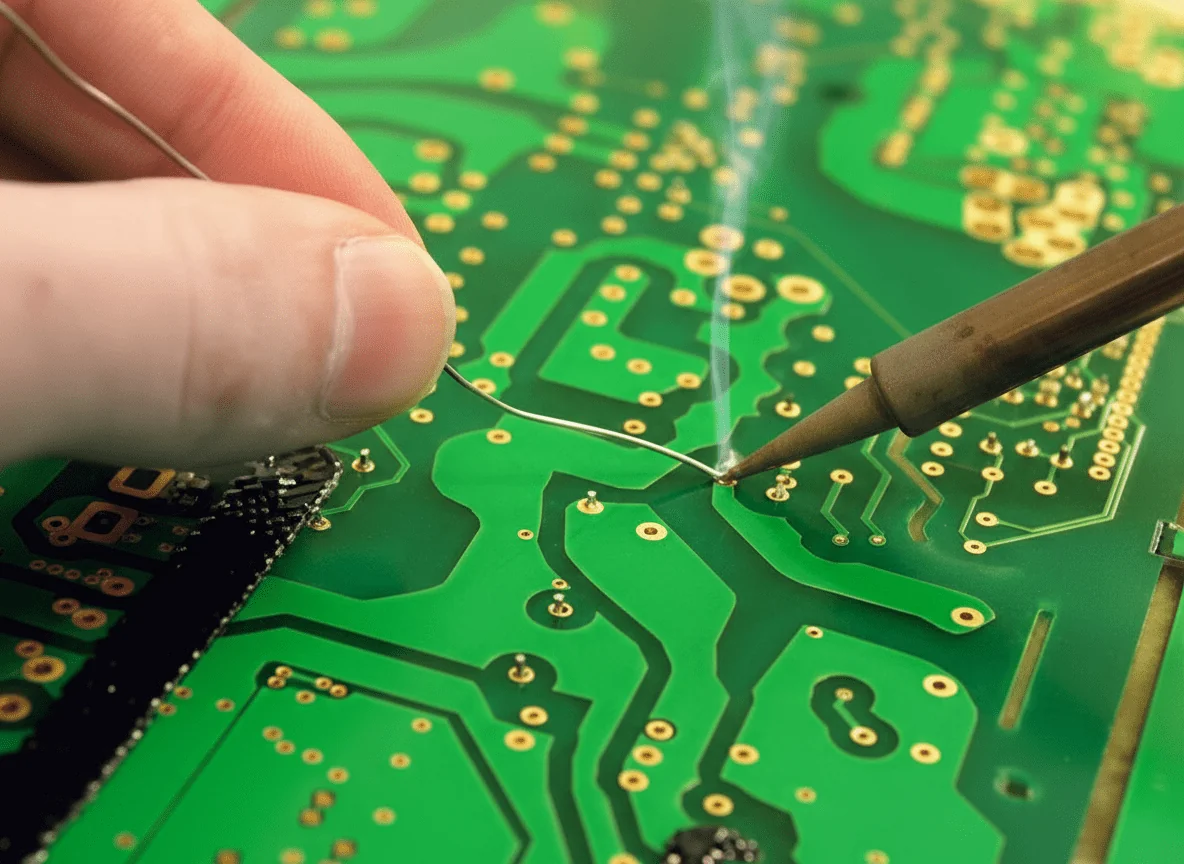
Most people assume a non‑responsive board is finished. Power’s dead, the screen’s blank, and the verdict comes fast: replace it. That assumption is wrong more often than engineers like to admit—and it’s expensive.
The reality on the bench looks different. A lot of “failed” boards come down to cracked joints, fatigued connectors, or a single component that aged badly after years of thermal cycling. The question isn’t just can you repair a printed circuit board; it’s whether the repair restores reliability instead of creating a future intermittent fault.
That’s where printed circuit board repair stops being a quick rework job and turns into a precision exercise. The sections ahead dig into why boards fail, how proper diagnostics beat guesswork, what tools and safety practices actually matter, and why repair—done carefully—often carries less risk than rushed replacement. This isn’t theory. It reflects how real repair shops, including outfits like WellCircuits, approach boards that still have useful life left in them.
1. When a “Dead” Board Isn’t Actually Dead
A control board comes in labeled DOA. No power, no display, nothing. The usual reaction? Toss it and order a replacement. I’ve seen that move burn weeks of lead time and a surprising amount of money—only to find later that the original board had a single cracked solder joint near a connector. The device wasn’t dead. It was just ignored.
This happens more than people like to admit. Printed circuit boards fail quietly. A voltage rail sags. A trace opens under a conformal coat. A ceramic capacitor fractures after one too many thermal cycles between 10°C storage and 70°C operation. The symptoms look catastrophic, but the root cause often isn’t.
Here’s the uncomfortable truth: replacing boards has become easier than understanding them. But that doesn’t mean replacement is the smart move. In most cases, especially with industrial controls, automotive modules, or legacy equipment, printed circuit board repair brings the board back to functional life with far less risk than redesigning around a new assembly.
I’m biased toward repair because I’ve seen how often it works. Not magically. Not instantly. But methodically. If you know where boards usually fail—and why—they’re surprisingly forgiving.
2. Why Precision Matters More Than the Repair Itself
Modern PCBs pack a lot into very little space. Six, eight, sometimes ten copper layers stacked with dielectric thicknesses measured in fractions of a millimeter. Trace widths down around 0.1–0.15 mm aren’t unusual anymore. One sloppy repair can turn a localized fault into an intermittent nightmare.
Data from field returns tells a consistent story. Boards that fail again after repair usually weren’t “repaired wrong”—they were repaired imprecisely. A jumper wire routed without strain relief. Excess heat lifting adjacent pads. Flux residue left under a QFN package. These don’t show up immediately. They show up three months later.
Accurate printed circuit board repair preserves the original electrical intent. Impedance, current capacity, and creepage distances—they still matter during repair. Ignore them, and you’ll chase ghosts.
There’s also a reliability angle. A repaired trace that’s wider than the original may carry current just fine, but it can change localized heating by roughly 6–12°C under load. That may be acceptable. Or it may shift the failure somewhere else.
| Repair Quality Level | Typical Outcome | Common Risk |
|---|---|---|
| Cosmetic / Quick Fix | Board powers up | Intermittent failure after weeks |
| Functional Repair | Passes basic testing | Thermal or vibration sensitivity |
| Precision Repair | Near-original performance | Higher labor cost, longer time |
3. Can You Repair a Printed Circuit Board, or Should You?
That’s the question everyone asks, usually five minutes before a production line stops. Can you repair a printed circuit board? Yes—usually. Should you? That depends on what failed, how critical the board is, and what “success” actually means.
If the damage is confined to discrete components, pads, or external traces, repair is often straightforward. Internal layer damage, extensive carbonization, or repeated overheating? Different conversation. Not impossible, but the odds drop.
- Good repair candidates: lifted pads, broken traces, failed passives, and connector damage
- Questionable: inner-layer shorts, widespread delamination, severe arc damage
- Usually not worth it: boards with multiple rework cycles and unknown history
Repair isn’t about heroics. It’s about knowing when the board will behave predictably after you’re done.
4. The Most Common PCB Repair Mistake (And It Keeps Happening)
Jumping straight to the soldering iron.
Seen it too many times: a board arrives, someone spots a burnt resistor, swaps it, powers up—and the new part dies instantly. The real problem was upstream. Overvoltage, poor thermal design, or a shorted IC pulling way more current than intended.
Repair without diagnosis is just component roulette. Before touching anything, the failure mode needs to make sense. Electrical, thermal, mechanical, or environmental. Usually it’s a combination.
Another frequent misstep is overheating during rework. FR-4 can tolerate short excursions above 245–255°C during lead-free soldering, but repeated localized heating causes resin recession and pad lifting. Preheating to around 90–120°C reduces thermal shock, but it adds setup time and cost. Worth it? Most of the time, yes.
5. What Actually Damages PCBs in the Real World
Boards don’t fail randomly. They fail predictably, just not always obviously.
Overheating is the headline culprit, but it’s rarely uniform. Hotspots form near regulators, power MOSFETs, or current shunts. A local temperature rise of 28–34°C above ambient is enough to embrittle solder joints over time. Add vibration, and cracks follow.
Physical damage is sneakier. Dropped assemblies, over-torqued screws, and flex during installation. Microcracks form in MLCCs or BGA joints and pass initial tests. Weeks later, the field failures start.
Contamination deserves mention. Flux residues, moisture ingress, conductive dust. Under the right humidity—say 70–85% RH—leakage paths form. The board still “works,” but logic levels drift.
Understanding which of these you’re dealing with determines whether the repair will last or just delay replacement.
6. Tools That Matter (And the Ones That Don’t)
You don’t need a lab full of gear, but you do need the right fundamentals. ESD control isn’t optional. Neither is good lighting. Past that, the list gets shorter than most catalogs suggest.
| Tool | Why It Matters | Limitations |
|---|---|---|
| Temperature-controlled soldering station | Prevents pad and trace damage | Cheap tips wear fast |
| Hot air rework | Essential for fine-pitch SMT | Easy to overheat nearby parts |
| Preheater (IR or hotplate) | Reduces thermal shock | Adds setup time |
| Microscope (10–20×) | Finds cracks you’ll otherwise miss | Costs more than people expect |
Printed circuit board repair tools don’t fix boards. They just reduce the chances of you making things worse.
7. Safety Isn’t Optional, It’s Practical
PCB repair looks harmless until it isn’t. Lead-free solder fumes, fiberglass dust from drilling, and hot components that stay hot longer than expected. Protective glasses and fume extraction aren’t bureaucracy—they’re self-preservation.
Electrostatic discharge causes silent failures. You won’t see it, but that microcontroller that passed yesterday may not boot tomorrow. Ground the bench. Use ESD mats. Discharge large capacitors before probing. Basic habits prevent weird, expensive problems.
One more thing people skip: documenting changes. Even a simple jumper wire should be noted. Six months later, when someone else opens the unit, that note matters.
8. Simple Electrical Tests That Catch Most Issues
If a board can power safely, start simple. Measure rail voltages. Not just “present,” but within tolerance. A 3.3 V rail sitting at 3.05 V under load is already telling you something.
An oscilloscope helps when logic misbehaves. Clocks that look fine on a multimeter can be distorted enough to cause random resets. I’ve even used a phone to confirm RF activity when proper gear wasn’t available. Crude, but effective.
Leaky capacitors often show up as resistance that won’t settle. It’s not definitive, but it’s a clue. Combine measurements with visual inspection, and the failure usually narrows down fast.
Shops like WellCircuits approach testing conservatively—verify, repair, verify again. That mindset matters whether you’re handling an instrument cluster printed circuit board repair or a simple power module.
9. Troubleshooting Isn’t Guesswork—It’s a Discipline
The fastest way to waste hours is to start probing without a plan. I see this a lot: meter out, probes down, chasing voltages that don’t mean anything yet. That’s not troubleshooting. That’s fishing.
Real PCB troubleshooting starts with narrowing the problem space. Power first. Always. Is the input actually reaching the board? Is the primary rail within tolerance—say 4.7–5.2V for a nominal 5V rail under light load? If not, nothing downstream matters. Once power checks out, then you move to clocks, resets, and only then logic or signal paths.
Tool choice matters, but not in the way people think. A basic digital multimeter catches maybe 60–70% of common faults: open traces, shorted caps, dead regulators. When things get denser—multi-layer boards with BGAs or mixed-signal sections—that’s where an oscilloscope or logic analyzer earns its keep. I’ve had cases where a rail looked fine on a DMM but showed a 300–500mV ripple at 120kHz under load. The board booted sometimes. Sometimes it isn’t acceptable.
One caution: advanced tools can mislead if you don’t understand the circuit intent. Probing a high-impedance node with the wrong scope setting can create a problem that wasn’t there. The goal is to confirm hypotheses, not generate noise. That mindset separates successful printed circuit board repair from endless bench time.
10. Repair vs. Replace: The Math Usually Favors Repair
Here’s a comparison people avoid because it feels obvious—until you run the numbers. A replacement board might cost $900. Repair evaluation? Often free or under $150. Even if the repair costs $300–$500, the economics usually aren’t close.
- Lead time: Replacement boards can take 6–14 weeks. Repairs often ship in days.
- Risk: New revisions bring new bugs. Repaired boards bring known behavior.
- Availability: Obsolete boards can’t be replaced at all. Repair may be the only option.
I’ve watched operations stall because someone insisted on a factory-new board that didn’t exist anymore. Meanwhile, the “dead” unit on the bench had two failed electrolytics and a scorched current-sense resistor. Three hours of work. That’s it.
This is where printed circuit board repair services make sense, especially for industrial or automotive electronics. If you’re searching for “printed circuit board repairs near me,” what you really want is fast evaluation and honest feedback. Sometimes the board truly is beyond economic repair. Good shops will say that. Bad ones will try anyway.
I’ll admit my bias: I prefer repair because it respects reality—budgets, downtime, and the fact that electronics don’t age gracefully but predictably.
11. What Separates a Real Repair House from a Parts Swapper
Anyone can replace a burnt resistor. That doesn’t make them a repair company. The difference shows up when faults aren’t visible.
Professional shops invest in diagnostics because volume forces honesty. When dozens of boards show up every week, you can’t afford trial-and-error. Skilled technicians look for patterns: the same regulator failing after 18–24 months, the same connector cracking after repeated vibration. That knowledge compounds.
I’ve seen facilities—WellCircuits included—where evaluations uncover secondary issues customers didn’t know existed. A failed MOSFET gets replaced, but the gate driver that overstressed it gets checked too. That’s the difference between a board that passes today and one that comes back in three months.
Be skeptical of places that promise miracles without testing. A trustworthy printed circuit board repair company talks about diagnostics, not just turnaround time. They’ll mention boundary conditions, stress factors, and why a fix is expected to last. If all you hear is “we can fix it,” keep looking.
12. BGA Rework: Possible, Risky, and Often Misunderstood
Can you repair a printed circuit board with a failed BGA? Yes. Should you always? No.
BGA reballing sits right on the edge of practicality. Done correctly, it restores connectivity where solder fatigue or voiding caused intermittent failures. Done poorly, it warps the board, damages pads, or introduces latent defects that show up after a few hundred thermal cycles.
The process is unforgiving. Component removal profiles must match the board’s thermal mass. Site cleaning has to avoid pad lift. Reballing requires consistent sphere size and flux control—no-clean flux helps, but residue still matters. Even with care, yield isn’t perfect. Expect maybe 90–95% success on first pass for common packages, less for fine-pitch or underfilled parts.
This is where trade-offs get real. Reballing saves a $400 ASIC but costs time and carries risk. Full component replacement costs more but can be more reliable long-term. There’s no universal answer. Anyone selling BGA repair as “routine” is oversimplifying a delicate operation.
13. How High-Volume Repair Centers Actually Test Boards
Once repair volume climbs, handheld tools stop scaling. That’s when automated testing enters the picture.
| Test Method | What It Catches Well | Limitations |
|---|---|---|
| In-Circuit Test (ICT) | Opens, shorts, component values | Needs test points; limited on dense boards |
| V-I Signature Analysis | Dead ICs, leaky junctions | Comparative—needs a known-good reference |
| Functional Test | Real-world behavior under load | Misses marginal components |
Automated systems aren’t magic. They’re fast and consistent, which matters when you’re repairing hundreds of boards a month. A failing signature jumps out immediately. That saves hours.
The catch? Setup time. Building fixtures and profiles only makes sense at scale. For one-off repairs, manual diagnostics still win. This is why smaller shops lean on experience while bigger centers lean on infrastructure. Both approaches work when applied honestly.
14. Repair Quality Control Is Not Manufacturing QC
People love to borrow terms from manufacturing and pretend they apply directly to repair. They don’t. AOI and X-ray help, but repair QC is about confidence, not cosmetics.
After a fix, the question isn’t “does it look good?” It’s “will it survive?” Thermal cycling, vibration, and load testing matter more than shiny solder joints. A reworked connector that passes continuity but fails after 30–40 insertion cycles isn’t a success.
Good repair processes include targeted stress. Power the board slightly above nominal. Heat it to 60–70°C if the application allows. Watch the current draw over time. Marginal parts reveal themselves when stressed gently, not brutally.
This is also where limitations surface. Some damage—CAF growth in inner layers, for instance, can’t be economically fixed. Quality control should catch that and stop the process, not push a board out the door.
15. Final Thoughts: When Repair Makes Sense—and When It Doesn’t
Printed circuit board repair isn’t a moral stance. It’s a decision. Sometimes replacement is cleaner. Sometimes repair is the only realistic path.
If the board is obsolete, high-value, or tightly integrated into a certified system, repair usually wins. If it’s a cheap consumer board with multiple-layer failures, replacement might be smarter. The trick is knowing which situation you’re in.
Start with the diagnosis. Use the right printed circuit board repair tools, not all of them. Ask whether the failure is isolated or systemic. Consider downtime costs, not just invoice totals. That framework keeps emotions out of the decision.
I’ve watched repair keep factories running and vehicles on the road. I’ve also seen repairs fail because someone ignored physics or rushed the process. Respect the board, respect the limits, and repair becomes a powerful option—not a gamble.“`html
Frequently Asked Questions About Printed Circuit Board Repair
Q1: What is printed circuit board repair and how does it work?
Printed circuit board repair is the process of restoring damaged or defective PCBs to full electrical and mechanical functionality. In over 50,000 repair and rework projects, we’ve seen that most failures come from broken traces, lifted pads, burned substrates, or solder joint fatigue. The repair process typically starts with visual inspection under 10–40× magnification, followed by electrical testing to pinpoint opens or shorts. Technicians then use micro-soldering, trace reconstruction (down to 0.1 mm trace width), or pad replacement techniques. All work is performed to IPC‑7711/7721 and IPC‑A‑600 Class 3 standards for high-reliability electronics. When done correctly, repaired boards can meet the same functional requirements as new boards, with validated continuity, insulation resistance, and thermal cycling performance.
Q2: Why should I choose printed circuit board repair instead of replacing the board?
PCB repair is often chosen to save time, cost, and supply-chain risk. From experience, repairing a board can be 40–70% cheaper than a full replacement, especially for obsolete or long‑lead components. In regulated industries, repairing avoids requalification delays tied to new builds. We’ve found that with IPC‑compliant methods and proper testing, repaired boards can achieve the same reliability as replacements. It’s particularly valuable for prototypes, low‑volume products, and legacy systems where redesign is impractical.
Q3: How much does printed circuit board repair usually cost?
Costs vary by damage type and board complexity. Simple solder joint or pad repairs may range from USD 30–80 per location, while complex trace reconstruction or multilayer damage can exceed USD 200. Based on thousands of jobs, most repairs still cost significantly less than fabricating a new PCB, especially for small batches.
Q4: What types of PCB damage can realistically be repaired?
Most common PCB failures are repairable, including lifted pads, broken traces, solder mask damage, connector damage, and minor burn marks. In our experience across 15+ years, single- and double-layer repairs have a success rate above 95% when damage is localized. Multilayer boards can also be repaired if inner-layer damage is limited and well-mapped. However, widespread carbonization or severe delamination often makes repair unreliable. All decisions should follow IPC‑7711/7721 acceptability criteria.
Q5: Is printed circuit board repair reliable for high‑reliability or industrial applications?
Yes, when performed to the correct standards. We regularly support industrial, medical, and aerospace customers requiring IPC‑A‑600 Class 3 workmanship. Repairs use controlled soldering profiles, certified materials, and conductor reconstruction tolerances as tight as ±0.05 mm. Each repaired board is electrically tested and visually inspected under magnification. Many customers also require thermal cycling or functional testing, which repaired boards consistently pass. Reliability ultimately depends on repair scope and process discipline.
Q6: How long does a typical printed circuit board repair take?
Turnaround time depends on complexity. Simple repairs can be completed within 24–48 hours, while complex multilayer work may take 3–5 business days. Shops with strong processes, such as 24‑hour DFM or repair review, routinely achieve 99% on‑time delivery. Faster service is often possible for critical production downtime situations.
Q7: What standards and certifications should a PCB repair service follow?
A qualified PCB repair provider should follow IPC‑7711/7721 for rework and repair, and IPC‑A‑600 for acceptability. In our audits of suppliers, ISO9001 certification is a baseline requirement, while UL‑recognized materials are critical for safety‑related products. These standards ensure consistent workmanship, traceability, and process control. Without them, repair quality can vary significantly and introduce latent failures.
Q8: What are the most common PCB repair mistakes to avoid?
The most common mistake is overheating, which damagesthe laminate and reduces long‑term reliability. We’ve seen many failed repairs caused by uncontrolled soldering irons exceeding safe thermal limits. Another issue is improper conductor replacement using incorrect wire gauge or adhesive. Repairs must match original impedance, current capacity, and mechanical strength. Following IPC guidelines and using calibrated tools is critical to avoid these problems.
Q9: When is printed circuit board repair NOT recommended?
Repair is not recommended when damage affects large inner‑layer areas, causes extensive delamination, or compromises safety‑critical insulation distances. In over 15 years of field data, boards with widespread carbon tracking or repeated thermal damage have high failure rates even after repair. For high‑volume consumer products, replacement may also be more economical. A proper cost‑versus‑risk analysis should always be done before proceeding.
Q10: How does printed circuit board repair compare with PCB rework or redesign?
PCB repair focuses on restoring damaged conductors or substrates, while rework typically involves component removal and replacement. Redesign, on the other hand, requires new layout, fabrication, and validation cycles. From practical experience, repair is fastest for localized damage, often days instead of weeks. Rework is ideal for BOM or assembly errors, and redesign makes sense only when failures are systemic. At WellCircuits, we often help customers evaluate these options based on cost, reliability, and time‑to‑market before committing.
What stands out after enough board autopsies is this: most failures aren’t dramatic. They’re small, localized, and easy to miss. Precision matters more than brute force, and understanding the failure mechanism matters more than how fast the soldering iron heats up. Printed circuit board repair works best when the fault is clearly identified, the surrounding materials are respected, and the fix doesn’t introduce new stress points.
The trade‑off is time and discipline. Repair takes careful inspection, controlled heat, proper tools, and follow‑up testing. Replacement feels faster, but it brings its own risks—long lead times, firmware mismatches, or subtle layout changes that break compatibility. A practical next step is simple: evaluate the board’s function, operating environment, and replacement availability before deciding. If the failure is isolated and the design is stable, repair is often the lower‑risk path. If damage is widespread or layered deep, replacement may still win. Either way, make the decision deliberately—not out of habit.
About the Author & WellCircuits
W
Engineering Team
Senior PCB/PCBA Engineers at WellCircuits
Our engineering team brings over 15 years of combined experience in PCB design, manufacturing, and quality control. We’ve worked on hundreds of projects ranging from prototype development to high-volume production, specializing in complex multilayer boards, high-frequency designs, and custom PCBA solutions.
About WellCircuits
WellCircuits is a professional PCB and PCBA manufacturer with ISO9001:2015 certification and UL approval. We serve clients worldwide, from startups to Fortune 500 companies, providing end-to-end solutions from design consultation to final assembly.
Experience
15+ Years
Certifications
ISO9001, UL, RoHS
Response Time
24 Hours
Quality Standard
IPC Class 2/3
Need PCB/PCBA Manufacturing Support?
Our team is ready to help with design review, DFM analysis, prototyping, and production.Get in Touch