Home PCB ProductsELIC HDI PCB6 Layer HDI Flex PCB
ELIC HDI PCB

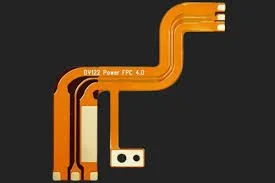
6 Layer HDI Flex PCB

HDI PCB Manufacturer China

High-Density Interconnects (HDI) PCBs, also known as Sequential Build-Up (SBU) or Build-Up Multilayer (BUM), are distinguished by their use of very small blind, buried, and through vias. These vias are created using methods beyond traditional mechanical drilling techniques.

The use of more complex components with very high input/output (I/O) counts has pushed the HDI board fabricator to enhance techniques for creating smaller vias, therefore many new or redeveloped processes appeared on the market.They all allow the designer to increase significantly routing density through the use of vias in surface-mount technology (SMT) pads, to reduce the size and weight of the product, and to improve the electrical performance of the system. These types of boards are generically called high-density interconnects (HDI). An HDI board typically will have, as on average, over 110 to 130 electrical connections per square inch (20 connections per sq. cm) on both sides of the board.


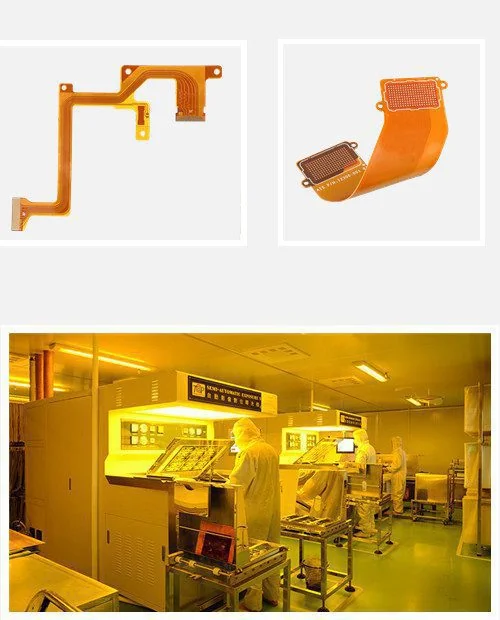
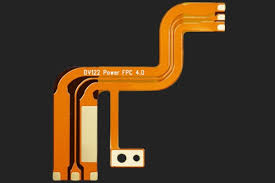
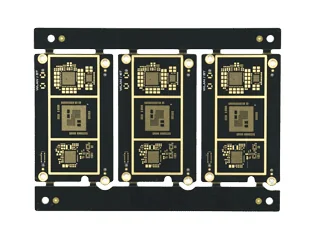
We fabricate a variety of HDI PCB, including rigid HDI PCB, HDI flex PCB, or any PCB with microvia, stacked via, blind via, and buried via. Normally we start by building the prototype, then go to series production. Max layer for HDI PCB manufacturing is 20L.


HDI PCB Advantage & Cost Benefits

Four main factors drive printed boards to require higher wiring densities:
 
• More components can be placed on both sides of the printed circuit.
• Components are closer together.
• Size and pitch of components are smaller while the number of I/Os is increasing.
• Smaller geometries allow faster transmission of signals and reduce signal crossing delay.

Cost parity (for similar wiring densities) is achieved with a four-layer HDI microvia at approximately an eight-layer, through-hole printed circuit multilayer. At very high densities, there are no through-hole multilayers that can meet the wiring capacities and density demand necessary, whereas HDI can easily meet the requirements.

Flexible Circuit's - Technical Capability

Item: Specification
Laminate Material: FR-4, Polyimide, High Tg, Halogen free, High speed, High frequency
Layer:4-50 Layer
HDI Stackup:1+N+1, 2+N+2, 3+N+3,4+N+4, 5+N+5, Any Layer
Panel Size:21.5 X 24.5″(546mm X 622mm)”
Min Line Trace/Width:2mil/2mil
Min. Laser Drill Hole:3mil (0.075mm)
Finish:HASL/Lead Free HASL, OSP, ENIG, Electro. Hard Gold, Electro-bondable Ni-Au,Electro-nickel palladium Ni-Au
Copper weights£¨finished):1/2 to 2 OZ
Min Annular Ring:2.5 mil
Min Dielectric Thickness:2mil

WellCircuits ADVANTAGES

HDI PCB Design Rules

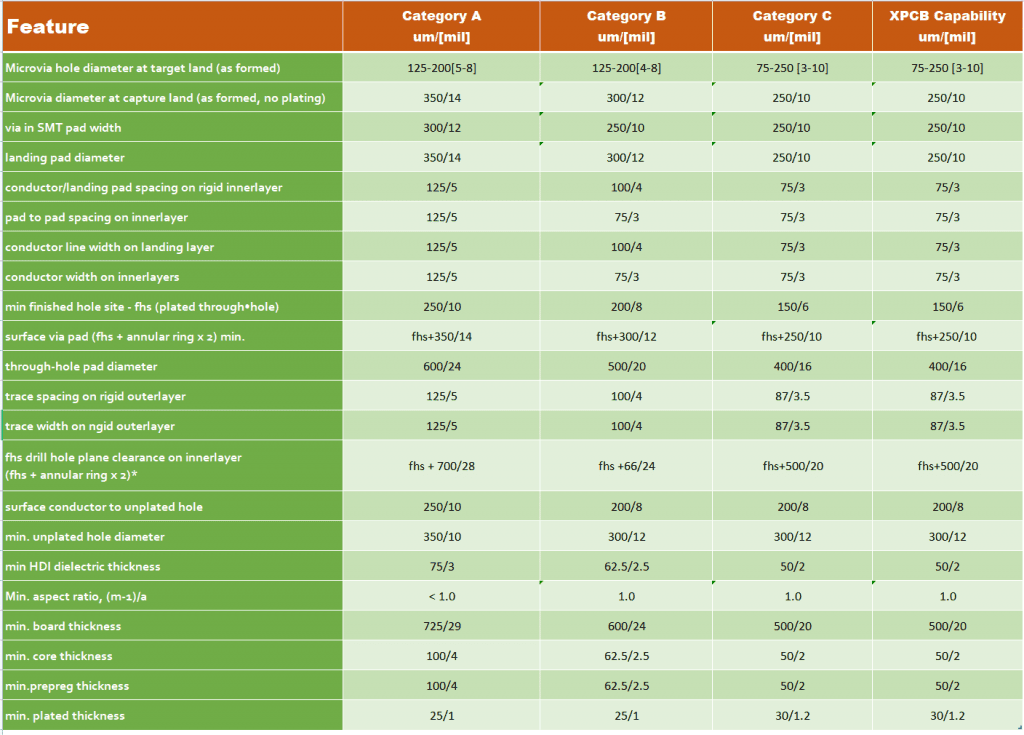
The designer should be aware that not all fabricators have equal capabilities in the areas of fine-pitch imaging, etching, layer-to-layer alignment, via formation, and plating. For this reason,we categorizes design rules into two categories: the preferred producibility range and the reduced producibility range. For simplicity of design, here will further divide the design rules into three category ranges: A, B, and C, with A being the easiest to produce and C being the most difficult.
 
Category A. This specification allows conventional HDI processes to be used with relaxed tolerances. It should have the highest yield and lowest cost. It is estimated that 100 percent of HDI fabricators can meet these design rules.
 
Category B. This is the conventional HDI process. It is estimated that 75 percent of HDI suppliers can meet these design requirements under production conditions.
 
Category C. Top-level fabrication shops, representing 20 percent of the total HDI fabricators, can meet these design rules.

Need a Quote?

Fill in your requirements and get a detailed quotation within 24 hours.

Request a Quote

No account required • Free consultation
Request a Quote

Fill in your requirements and we'll get back to you within 24 hours.

Product: 6 Layer HDI Flex PCB
Supported: ZIP, RAR, 7Z, PDF, Gerber files (Max 20MB)

Contact

WellCircuits
More than PCB

Upload your GerberFile(7z,rar,zip)