
If you’re diving into PCB design or manufacturing, understanding pcb materials isn’t just helpful—it’s critical. The right PCB substrate can make or break your project’s performance, reliability, and cost-effectiveness. Whether you’re weighing options like FR-4, Rogers laminates, or metal-core solutions, knowing their key properties and applications gives you the edge to build smarter, faster, and more durable electronics. In this guide, you’ll get a clear, practical overview of common pcb materials, their strengths, and how to choose the best fit for your unique needs. Let’s get started.
Introduction to PCB Materials
Printed circuit board (PCB) materials are the essential building blocks of any electronic device. They form the physical foundation that holds components, connects circuits, and ensures the electronics perform as intended. Choosing the right PCB substrate material is crucial because it directly impacts the board’s performance, reliability, and overall cost.
A typical PCB structure includes several layers:
- Substrate: The base layer providing mechanical support and electrical insulation.
- Copper foil: Conductive layers that create electrical pathways.
- Solder mask: Protective coating that prevents accidental shorts and protects copper traces.
- Silkscreen: Printed labels for component identification and assembly guidance.
Each of these layers relies on specific materials that must work together seamlessly. For instance, the substrate’s electrical and thermal properties govern signal integrity and heat dissipation, while the solder mask and silkscreen contribute to durability and ease of manufacturing.
In modern electronics, especially in high-speed and high-frequency applications, selecting the right PCB materials is not just about durability but ensuring consistent, efficient performance under various environmental and electrical stresses. Balancing material choices also affects the final product’s budget, making material selection a strategic decision for engineers and designers.
Core Components of PCB Construction
When it comes to PCB materials, understanding the core components is key. Each part plays an essential role in how your board performs and lasts.
- Substrate (Base Material): This is the foundation that provides mechanical support and electrical insulation. Common substrates include FR-4 and polyimide. The substrate’s quality directly affects durability and heat resistance, so picking the right PCB substrate type matters.
- Copper Foil: This forms the conductive paths on the board. Copper thickness varies depending on current requirements, usually measured in ounces per square foot (oz). Thicker copper supports higher currents but can raise costs.
- Solder Mask: A protective layer over the copper, the solder mask prevents short circuits and oxidation. It also insulates the board, improving reliability in various environments.
- Silkscreen: The topmost layer used for labeling components, logos, and test points. It makes assembling and troubleshooting easier, offering clear identification on the PCB’s surface.
These core materials come together to build a reliable, efficient PCB that meets your design and performance needs. Proper selection of these parts is crucial for quality, cost, and long-term durability.
Common Types of PCB Substrates
When choosing PCB materials, the substrate plays a huge role. It’s the base that supports everything mechanically and electrically. Here are the most common types of PCB substrates used in the U.S. electronics market:
- FR-4: This is the go-to PCB substrate for most applications. It’s a glass-reinforced epoxy laminate that offers a good balance of cost, durability, and electrical performance. FR-4 has solid thermal and mechanical properties, making it ideal for standard consumer electronics and industrial uses.
- Other Epoxy-Based Variants:
- CEM-1 and CEM-3: These are less expensive alternatives to FR-4, often used in single-sided or double-sided PCBs. They’re lighter on performance but cost-effective for simple circuits.
- G-10: Similar to FR-4 but without flame retardants, primarily for mechanical strength rather than high electrical performance.
- Polyimide: If you’re dealing with flexible PCBs or need materials that handle higher temperatures, polyimide is the choice. This material is flexible, has excellent thermal resistance, and performs well in demanding environments like aerospace or medical devices.
- Metal-Core PCB (Aluminum or Copper Base): For applications where heat dissipation is critical—think LED lighting, power supplies, or automotive electronics—metal-core substrates are essential. Using aluminum or copper helps conduct heat away from critical components, enhancing reliability and lifespan.
- Ceramic Substrates: These are for extreme environments where thermal stability, low loss, and high frequency matter. Ceramic PCBs are common in aerospace, military, and high-frequency RF circuits due to their excellent thermal and electrical properties.
Each of these PCB substrate types serves a different need, balancing cost, performance, and environment. Selecting the right one is key for your project’s success, especially when reliability and signal integrity are on the line.
High-Performance and Specialty PCB Materials
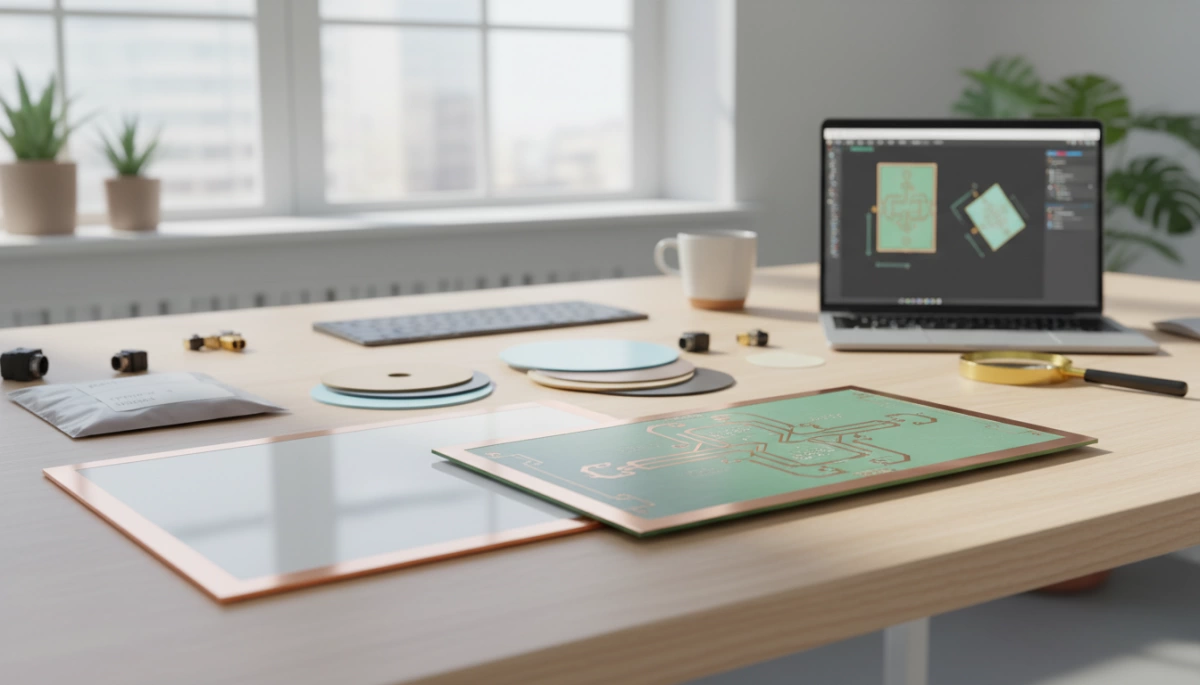
When it comes to high-speed, RF, or demanding applications, standard FR-4 just doesn’t cut it. That’s where high-performance PCB materials come in.
- Rogers series (RO4000, RT/duroid): These are top choices for RF and microwave circuits. They offer low dielectric constant and very low dissipation factor, which means less signal loss and better performance at high frequencies. Perfect for 5G and wireless devices.
- PTFE (Teflon-based): Known for an ultra-low dielectric constant, PTFE substrates are designed for extremely high-frequency use. This material keeps signal integrity tight, making it a staple for advanced RF PCBs.
- High-Tg FR-4 variants: These are modified FR-4 materials with higher glass transition temperatures (Tg). They handle higher temps better, making them suitable for automotive electronics and power devices where thermal stress is common.
- Halogen-free and eco-friendly options: These materials reduce environmental impact by avoiding harmful halogens. They’re gaining traction in the U.S. market as manufacturers look for sustainable PCB substrate types that meet stricter regulations without sacrificing performance.
Each of these specialty materials is selected based on your project’s frequency, thermal, and environmental demands. Knowing the right PCB materials list can make a big difference in reliability and cost, especially for high-speed and RF applications.
Key Properties of PCB Materials
When choosing PCB materials, understanding their key properties is crucial for performance and longevity.
Electrical Properties
- Dielectric constant (Dk): This affects how signals travel through the board. Lower Dk means faster signal speed, which is critical for high-speed and RF PCB materials.
- Dissipation factor (Df): Indicates how much signal energy is lost as heat. A low Df ensures better signal integrity, especially in high-frequency substrate applications.
- Signal integrity: Good PCB materials help maintain clear, interference-free signals, vital for today’s fast and complex circuits.
Thermal Properties
- Glass transition temperature (Tg): The temperature where the material changes from solid to a softer state. A higher Tg means better heat resistance, important for high-Tg materials used in automotive or industrial settings.
- Thermal conductivity: This tells how well the material dissipates heat. Metal core PCBs excel here, managing heat in LED and power electronics.
- Coefficient of thermal expansion (CTE): Materials with a low CTE reduce stress during temperature changes, preventing cracks and failures.
Mechanical Properties
- Tensile strength: Indicates how much stress the PCB material can handle before breaking, crucial for flexible PCB substrates like polyimide.
- Flexibility: Flexible materials are essential for bendable and wearable electronics.
- Moisture absorption: Low moisture absorption reduces risks of delamination and electrical failure over time.
Chemical and Environmental Resistance
- Flammability (UL94 rating): This safety rating shows how resistant the material is to catching fire. FR-4 has a good UL94 V-0 rating, making it a standard choice.
- CAF resistance (Conductive Anodic Filament): Important to prevent leakage currents and corrosion, especially in humid or harsh environments.
By balancing these electrical, thermal, mechanical, and chemical properties, you ensure your PCB meets its intended performance, longevity, and safety requirements—key factors for the U.S. electronics market.
Comparing Popular PCB Materials
Here’s a quick side-by-side look at some of the most common PCB materials: FR-4, Rogers, Polyimide, and Metal-core. This comparison highlights their strengths, drawbacks, costs, and how they perform in different applications—from standard boards to high-speed, high-frequency designs.
| Material | Pros | Cons | Typical Cost | Best Use Case |
|---|---|---|---|---|
| FR-4 | Affordable, widely used, good mechanical strength | Limited thermal and high-frequency performance | Low | General electronics, standard PCBs |
| Rogers | Low dielectric constant, excellent signal integrity for RF and microwave | Higher cost, less mechanical strength | High | RF, microwave, high-speed PCBs |
| Polyimide | Flexible, high thermal stability, good for dynamic bending | More expensive, lower mechanical rigidity | Medium-High | Flexible PCBs, aerospace, medical |
| Metal-core | Superior heat dissipation, robust mechanical support | Heavier, limited flexibility | Medium | LED lighting, power electronics |
Performance Highlights
- FR-4: The workhorse for most electronics with a solid balance of performance and price. It handles standard frequency signals well but struggles at very high frequencies or harsh thermal environments.
- Rogers Laminate: Preferred when signal integrity matters, especially in RF PCB materials and microwave circuits. It has a proven low dielectric constant and dissipation factor, minimizing signal loss.
- Polyimide Flexible PCB: Ideal for applications needing flexibility combined with stable thermal performance. It supports dynamic uses, like wearable electronics or automotive sensors.
- Metal Core PCB: Offers unmatched thermal conductivity, critical for high-power or LED applications where heat must be managed efficiently.
Cost vs. Performance
For most US-based manufacturers, choosing PCB substrate types comes down to balancing cost with performance needs. FR-4 remains the budget-friendly option, while Rogers and Polyimide push costs up but deliver superior electrical properties like lower dielectric constants and better glass transition temperatures (Tg). Metal-core boards find their niche where thermal management trumps flexibility.
If your project involves high-speed PCB materials or high-frequency substrate needs, investing in Rogers or PTFE-based options is usually worth the premium. Otherwise, FR-4 or modified epoxy-based boards cover everyday electronics reliably.
This table and overview should help clarify which PCB material best fits your project’s goals, ensuring you get the right balance of performance, reliability, and cost.
Selecting the Right PCB Material
Choosing the right PCB materials is essential to make sure your electronics perform well, last long, and stay within budget. Here’s what you need to keep in mind:
Factors to Consider
- Application type: Different projects—whether automotive, LED lighting, or RF communication—need specific PCB substrate types to handle unique demands.
- Operating environment: Will the PCB face high temperatures, moisture, or harsh chemicals? These conditions influence material choice.
- Frequency requirements: High-speed digital and RF/microwave circuits need materials with low dielectric constant and dissipation factor to maintain signal integrity.
- Budget: Balancing cost and performance is key. For example, FR-4 is budget-friendly but may not suit high-frequency needs, where materials like Rogers laminate excel.
Guidelines for Different Applications
- High-speed digital: Use high-Tg FR-4 or specialized low-loss materials to reduce signal loss.
- RF/microwave: Materials like Rogers or PTFE offer low dielectric constants and excellent thermal stability.
- Automotive: Opt for halogen-free, high-reliability substrates resistant to harsh environments.
- LED lighting: Metal-core PCBs help with heat dissipation and ensure longer LED life.
Common Mistakes to Avoid
- Picking materials based on price alone without considering performance needs.
- Overlooking thermal management, leading to premature PCB failure.
- Ignoring the specific dielectric properties required for high-frequency signals.
- Not accounting for mechanical stresses in flexible or rigid-flex PCBs.
How WellCircuits Supports You
At WellCircuits, we understand the American market and your diverse project needs. Our team helps you pick the best PCB substrate material, blending performance with cost-effectiveness. We support custom solutions, whether it’s FR-4, polyimide for flexible PCBs, or metal-core options for thermal challenges. With us, you get tailored advice and quality materials that keep your designs running smoothly.
Emerging Trends in PCB Materials
The world of PCB materials is evolving fast, driven by new tech like 5G and the push for greener electronics. Here’s what’s trending:
- Low-loss materials for 5G and beyond5G and high-speed communication demand PCB substrates with low dielectric constant (Dk) and low dissipation factor (Df) to reduce signal loss. Materials like advanced Rogers laminates and PTFE PCB materials are becoming must-haves for RF and microwave applications, ensuring clear, fast signals.
- Sustainable and halogen-free advancementsWith stricter environmental regulations in the U.S., halogen-free laminates and eco-friendly PCB materials are gaining traction. These options reduce toxic emissions during manufacturing and disposal without sacrificing performance, helping companies meet green standards and consumer expectations.
- Materials for flexible and rigid-flex PCBsFlexible and rigid-flex PCB materials, such as polyimide substrates, are growing in use for wearable tech, medical devices, and automotive electronics. They offer durability and thermal stability while allowing boards to bend or fold, opening new design possibilities for compact, high-performance devices.
Staying on top of these PCB material trends helps ensure your products meet performance demands, regulatory requirements, and sustainability goals right here in the U.S. market.