
Published: January 29, 2026 | Reading time: ~18 min
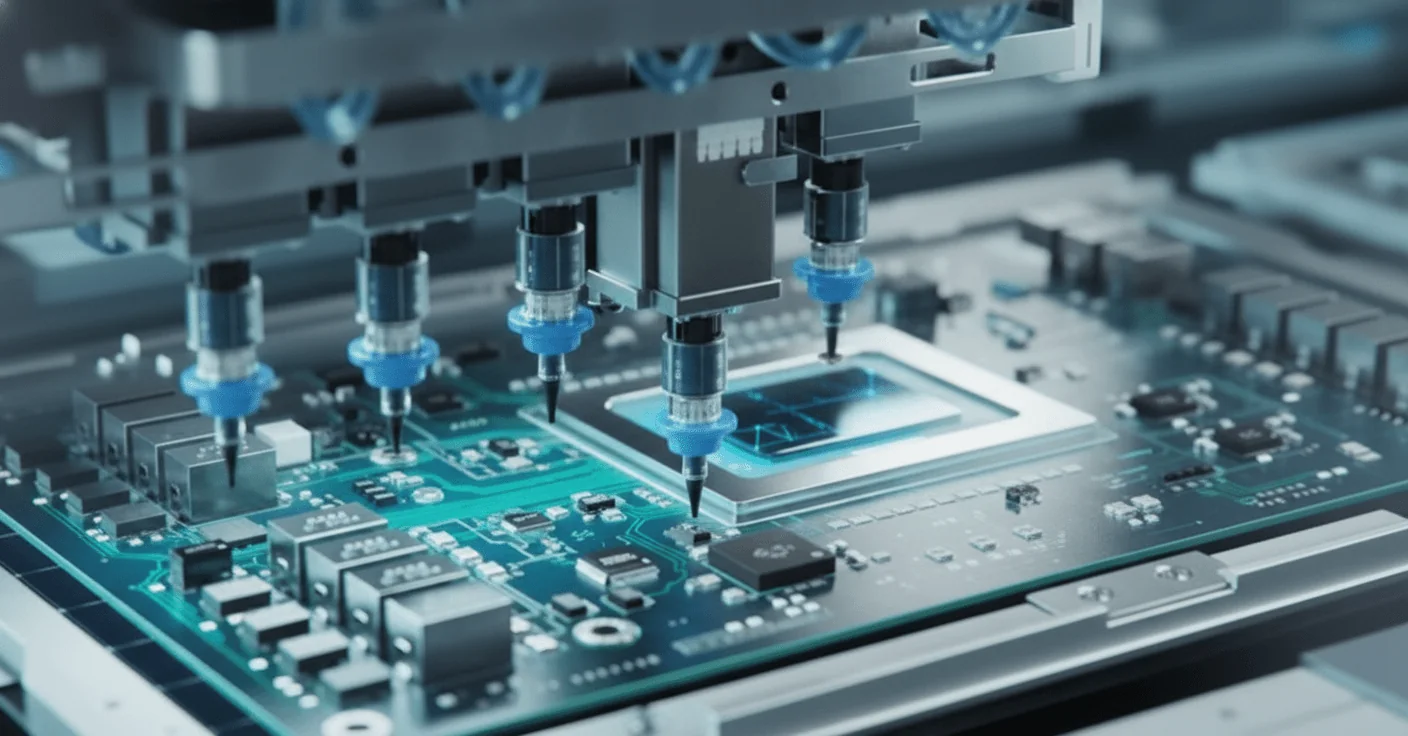
Most engineers blame the schematics or layout when a board misbehaves. I don’t. More often than not, the real damage happens later—during manufacturing, when tidy CAD assumptions meet messy physical reality.
As electronics scale into IoT deployments, industrial controls, and consumer devices built by the tens of thousands, manufacturing printed circuit decisions stop being a back-end detail. Copper thickness variation, lamination pressure drift, drill accuracy at higher aspect ratios—these aren’t academic concerns. They quietly determine whether your design survives production or becomes part of the scrap pile.
This gap between design intent and factory execution explains why two “identical” boards can age very differently in the field. It also explains why some manufacturers, including outfits like WellCircuits that invest heavily in process control, tend to deliver more consistent results than shops chasing volume alone. The sections ahead walk through how printed circuit boards are actually made, where things commonly go wrong, and how engineers can design with manufacturing—not against it.
1. Why Manufacturing Printed Circuits Keeps Failing in the Real World
A few years back, a control board for an industrial sensor passed every simulation thrown at it. Signal integrity looked clean. Thermal margins seemed fine on paper. Six weeks into pilot production, returns started trickling in. Random resets. Intermittent faults. Nothing obvious. The root cause wasn’t firmware or layout—it was sloppy assumptions about the manufacturing of printed circuit board realities.
Here’s the uncomfortable truth: most PCB problems aren’t design problems. They’re manufacturing problems that designers pretend don’t exist. Copper thickness variation, resin starvation in lamination, drill wander at higher aspect ratios—none of that shows up in a schematic. It shows up after 500 boards are already built.
Electronics are now everywhere—medical wearables, aerospace sensors, retail automation, IoT nodes bolted into outdoor enclosures. That scale has consequences. In 2024 alone, global electronic waste crossed roughly 60–65 million tonnes, and a depressing chunk of that came from boards that failed early. Poor process control during the printed circuit board manufacturing process is a quiet contributor nobody likes to talk about.
I’m biased toward practical manufacturing thinking because I’ve debugged enough boards to know this: a clever circuit that can’t be built consistently is a bad product. Manufacturing printed circuit boards isn’t just an industrial step—it’s where good designs either survive or die.
2. The PCB Manufacturing Industry: Numbers That Actually Matter
Look at the data and the picture gets clear fast. A mid-sized PCB assembly line typically processes anywhere from 8,000 to 25,000 boards per month, depending on layer count and test coverage. Yield loss of even 2–3% hurts. Push that to 6–8%, and margins evaporate.
In the U.S. and Asia alike, most facilities fall into two buckets: bare printed circuit board manufacturing shops and those focused on printed circuit assembly and electronic assembly manufacturing. Some do both. Most shouldn’t. Mixing high-mix prototype work with volume production under the same controls usually ends badly.
Automation has improved consistency, but it hasn’t eliminated variability. Drill accuracy still drifts a few tens of microns. Lamination pressure uniformity varies across large panels. Solder mask registration is usually within ±50 microns, but not always. These are normal ranges, not failures.
| Metric | Typical Range | Why It Matters |
|---|---|---|
| First-pass yield | 92–98% | Below 95%, rework costs spike fast |
| Layer count (production) | 2–12 layers | Beyond 12, cost and lead time jump |
| Panel utilization | 65–85% | Poor utilization wastes laminate |
One thing worth noting: companies like WellCircuits operate in a market where process discipline matters more than flashy capability lists. Machines don’t save you—controls do.
3. What Are You Really Building When You “Manufacture Printed Circuit Boards”?
Ask ten engineers what PCB manufacturing is, and half will say “etching copper.” That’s incomplete. The real question is simpler: are you building a bare electrical interconnect, or a functional electronic module?
The distinction matters because the risks are different.
- Bare PCB fabrication focuses on laminate quality, copper adhesion, drill integrity, and dimensional stability.
- PCB assembly adds soldering defects, component sourcing risk, moisture sensitivity, and test coverage gaps.
Mix those up in planning and schedules blow up. I’ve seen projects assume assembly lead times based on bare board quotes. That mistake alone can add 2–3 weeks and a lot of finger-pointing.
4. The Most Common Mistake: Treating PCB Design as Separate from Manufacturing
Here’s a mistake I keep seeing: engineers finalize layouts, export Gerbers, and toss them over the wall. Manufacturing is someone else’s problem. That mindset doesn’t survive contact with reality.
Design-for-Manufacturing (DFM) isn’t a checkbox. It’s a negotiation. Trace widths that simulate fine at 0.1 mm might etch poorly on lower-grade laminate. Via aspect ratios above roughly 10:1 drill fine in prototypes, but start cracking after 800–1,100 thermal cycles in production.
CAM engineers routinely adjust solder mask openings, annular rings, and copper thieving. If those changes aren’t reviewed, you’re no longer building the board you designed. Sometimes that saves you. Sometimes it creates new problems.
The pragmatic approach? Involve manufacturing early. Ask what their real limits are, not what the datasheet claims. IPC-2221 gives guidance, but shop capability decides what actually works.
5. From Design Files to Real Copper: How the Process Actually Flows
Once design files land at the factory—Gerber, ODB++, or IPC-2581—the romantic idea of “manufacturing printed circuit” gives way to a very procedural reality. CAM engineers scrub the data first. Missing apertures, mismatched netlists, odd drill callouts—these show up more often than people admit.
After CAM cleanup, the bare printed circuit board manufacturing process kicks off:
- Panel preparation and copper cleaning
- Photoresist application and imaging
- Etching and resist stripping
- Drilling and via formation
Each step introduces variation. Etch rate depends on copper thickness and chemistry balance. Drilling quality depends on bit wear and stack height. None of this is theoretical—it’s why two fabs can build “the same” board and get different yields.
Assembly comes later. That’s a different discipline with its own failure modes, especially when moisture-sensitive devices and lead-free solder profiles enter the picture.
6. Materials: Where Cost, Performance, and Headaches Collide
FR-4 dominates for a reason. It’s cheap, available, and good enough for most applications under 2–3 GHz. High-Tg variants (IPC-4101/126) handle lead-free reflow better, but cost roughly 15–30% more.
Move into polyimide or specialty laminates, and things get interesting—and expensive. Rogers or similar materials improve dielectric stability but can cost 4–7× more than standard FR-4 and require tighter process control.
Additive manufacturing printed circuit boards get a lot of marketing buzz, especially in sustainability discussions. In practice, they’re promising for low-current, rapid-turn applications, but trace conductivity and long-term reliability still lag traditional subtractive copper processes.
No material is perfect. Choose based on electrical needs, thermal load, and how much process pain you’re willing to tolerate.
7. The Anatomy of a PCB (And Why Each Layer Causes Trouble)
A printed circuit board looks simple until you break it down. Each layer has a job—and a failure mode.
| Part | Purpose | Common Issues |
|---|---|---|
| Substrate | Mechanical strength | Delamination, CAF growth |
| Copper layers | Signal and power routing | Over-etching, adhesion loss |
| Solder mask | Protection and insulation | Misregistration, cracking |
| Silkscreen | Identification | Smearing, poor readability |
The substrate really is the skeleton. Cheap laminate saves money upfront, but shows its flaws during thermal cycling. Copper does the electrical heavy lifting, but thicker copper means tougher etching and higher cost.
8. Multilayer PCB Manufacturing: Where Things Get Serious
Once you move past four layers, manufacturing printed circuit boards stops being forgiving. Multilayer fabrication adds lamination steps under high pressure and temperatures hovering around 170–190 °C. Trapped air, resin starvation, or misalignment at this stage ruins entire panels.
Inner layers are imaged first, etched, inspected, and then stacked with prepreg and cores. Bonding pressure has to be just right—too low and layers separate, too high and resin squeezes out, thinning dielectric spacing.
Drilling multilayer stacks introduces another challenge. Registration across layers can drift by 50–75 microns if tooling isn’t tight. That’s why via-in-pad and microvias demand stricter controls and drive cost up roughly 1.8–2.5× compared to simpler stacks.
Multilayer boards enable dense routing and controlled impedance. They also magnify every manufacturing weakness. Plan accordingly.
9. Quality Control Isn’t a Department—It’s a Habit
The fastest way to wreck a decent board is to treat quality control as something that happens at the end. Seen it too many times. Boards sail through fabrication, assembly cranks up, and only after a pallet is wrapped does anyone ask whether the solder paste volume drifted or the drill hit the annular ring consistently.
Real-world manufacturing printed circuit boards needs quality checks baked into every step. Incoming laminate matters—resin content varies more than datasheets admit. In-line inspection matters even more. A flying probe test will catch opens and shorts, but it won’t tell you that your solder mask registration is slowly creeping because the artwork scale is off by 0.15%. That shows up later as field failures, not test failures.
On one mid-volume run (around 1,200 boards), yields hovered near 97% on paper. Sounds fine. Dig deeper, and you find rework chewing up hours becausethe paste height varied by roughly ±18% across panels. The fix wasn’t a new stencil—it was tighter process control and actually using the SPI data instead of archiving it.
ESD control is another quiet killer. Ground straps worn like bracelets, humidity swinging between 35–60%, and carts that aren’t grounded. None of this feels dramatic. Until it is. Quality isn’t flashy, and it isn’t cheap, but it’s still less expensive than returns and reputation damage.
10. Where PCB Manufacturing Actually Makes Money (and Where It Doesn’t)
Here’s a number worth chewing on: printed circuit assembly and related electronic assembly manufacturing sits around a $60B+ global activity, yet margins are thin—often low single digits once material volatility kicks in. That reality shapes decisions more than engineers like to admit.
High-mix, low-volume work keeps fabs busy but rarely pays the bills. Volume assembly—memory boards, controller boards, communication modules—is where efficiencies show up. The catch? Price pressure is relentless. Copper surcharges fluctuate. Lead-free alloys aren’t getting cheaper. Customers want automotive reliability at consumer pricing.
- Low-volume prototypes: Flexible, fast, expensive per unit.
- Mid-volume industrial runs: Stable, but sensitive to scrap rates.
- High-volume consumer boards: Efficient, unforgiving, margin-starved.
This is why some shops quietly steer away from certain jobs. A design that ignores panel utilization or demands exotic finishes can erase profit before the first board ships. It’s not greed—it’s math. Understanding this helps designers align expectations with manufacturing reality, especially in printed circuit assembly and electronic assembly manufacturing where labor and test time dominate cost.
11. Collaboration Beats Heroic Design—Every Time
The cleanest handoff between design and manufacturing rarely happens by accident. Too often, an OEM finishes a layout, throws Gerber files over the wall, and hopes the contract manufacturer figures it out. Hope isn’t a process.
The printed circuit board manufacturing process works best when design for manufacturing (DFM) isn’t an afterthought. Stackups should be discussed before routing starts. Component choices need a second look—especially passives with multiple footprints that look identical until assembly tries to place them at speed.
One project comes to mind where everything “met spec,” yet assembly struggled. The issue wasn’t component spacing; it was polarity markings too subtle for automated optical inspection at normal line speeds. A five-minute discussion early on would’ve saved days of line stoppages.
Good collaboration feels boring. File formats are agreed upfront. Fabrication notes are clear. Tolerances are realistic, not aspirational. That’s how boards move from CAD to cartons without drama. It’s also how manufacturing of printed circuit boards stops being adversarial and starts being predictable.
12. Quoting a PCB Job: What Actually Moves the Price
Quoting isn’t magic. It’s a checklist, and missing items force assumptions—usually expensive ones. If you want an accurate number, you need to hand over more than just Gerbers.
| Item | Why It Matters | Common Pitfall |
|---|---|---|
| Bill of Materials | Defines sourcing risk and substitutions | No alternates allowed |
| Fabrication Notes | Controls materials, finish, stackup | Vague or copied from old projects |
| Test Requirements | Determines fixture and labor cost | “Test as needed” instructions |
Testing alone can swing pricing by 10–25%, depending on whether in-circuit, functional, or flying probe is required. Lead time matters too. A five-day turn doesn’t just compress schedules—it increases risk, scrap, and overtime.
One thing I respect about outfits like WellCircuits is that when quoting feedback comes with engineering comments, not just a number. Even if you don’t like the price, the insight usually saves money later.
13. Quick-Turn Boards: Speed Has a Cost (Sometimes Hidden)
Everyone wants boards yesterday. Quick-turn fabrication can be a lifesaver during validation, but it’s not free speed. Panels are often pulled out of normal flow, smaller batch sizes reduce efficiency, and some process steps get less soak time than they’d like.
Electrically, quick-turn boards usually behave. Mechanically and cosmetically, they can surprise you. Solder mask thickness variation, slightly rougher edges, less consistent silkscreen. None of this kills a prototype, but don’t confuse a five-day sample with production readiness.
For early bring-up, quick-turn is worth it. For qualification testing, it’s risky. I prefer validating critical parameters—impedance, thermal rise, assembly yield—on boards built with something close to production cadence. Speed hides problems. Time reveals them.
14. A Short History Lesson That Still Matters
Printed circuits didn’t start sleek. Early boards were crude, hand-assembled, and driven largely by military urgency. That legacy still shapes today’s standards. IPC classes exist because failure once had very real consequences.
Automation changed everything. Through-hole gave way to surface mount. Panelization got smarter. Drill accuracy tightened from “close enough” to tens of microns. Yet some fundamentals haven’t changed: copper still expands, resin still flows, and gravity still affects solder.
What’s new is scale. IoT deployments mean thousands of boards live outdoors, vibrating, freezing, and baking. Manufacturing printed circuit boards in IoT applications exposes every weak assumption—coatings, materials, and even connector plating. History isn’t trivia here; it’s context.
15. Manufacturing Printed Circuits Without Making the Waste Problem Worse
E-waste isn’t abstract anymore. Roughly 60–65 million tonnes a year force uncomfortable questions about how boards are made and disposed of. Traditional subtractive processes waste copper and chemicals. They work, but they’re not elegant.
Emerging approaches—like additive manufacturing printed circuit boards—promise less waste and finer material control. In practice, they’re improving, but not universally. Conductivity can lag copper by a noticeable margin. Long-term reliability data is still thin beyond a few years. That’s a real limitation, not a footnote.
Sustainable additive manufacturing of printed circuit boards makes sense in low-power, disposable, or short-life products. For high-current or safety-critical designs, conventional methods still win. The smart move is choosing intentionally, not chasing trends.
Wrap it all together, and the takeaway is simple: define requirements honestly, understand the manufacturing process deeply, and accept trade-offs consciously. Better boards don’t come from hype. They come from decisions grounded in how things are actually built.“`html
Frequently Asked Questions About Manufacturing Printed Circuit
Q1: What is manufacturing printed circuit boards and how does it work?
Manufacturing printed circuit refers to the complete process of converting electronic schematics into physical printed circuit boards (PCBs) that electrically and mechanically support components. In 50,000+ PCB builds I’ve overseen, the core steps are consistent: design verification (DFM/DFA), inner-layer imaging, lamination, drilling, copper plating, outer-layer etching, solder mask, surface finish, and final electrical testing. Typical capabilities include ±0.05 mm dimensional tolerance, 0.1 mm trace/space, and 0.2 mm finished vias for standard production. Reputable factories follow IPC-A-600 and IPC-6012 acceptance criteria, often at Class 2 or Class 3 for high-reliability applications. To reduce risk, we insist on a 24-hour DFM review and 100% netlist testing. When done correctly under ISO9001 and UL-certified processes, manufacturing printed circuits delivers repeatable quality and long-term reliability.
Q2: Why choose professional manufacturing printed circuit instead of DIY or low-cost options?
Professional manufacturing printed circuit offers consistency and reliability that DIY or ultra-low-cost sources simply can’t match. From experience managing volume programs, professional fabs control impedance to ±10%, maintain solder mask registration within 0.05 mm, and run automated optical inspection (AOI) on every panel. They also comply with IPC-A-600 and often IPC-A-610 for assembled boards. While the unit price may be slightly higher, the real savings come from fewer field failures, higher first-pass yield, and predictable delivery—typically 99% on-time. For commercial or safety-related electronics, the risk reduction alone justifies the choice.
Q3: How much does manufacturing a printed circuit typically cost?
Cost depends on layer count, material, and volume. In my projects, 2-layer boards often range from $0.30–$1.50 per unit at 1,000 pcs, while 6-layer boards may be $3–$8. Factors like 0.1 mm traces or ENIG finish increase price but improve reliability under IPC standards.
Q4: When should you use manufacturing printed circuit for your product?
You should use manufacturing printed circuit once your design moves beyond proof-of-concept and requires repeatability. In practice, I recommend transitioning after 2–3 prototype spins, when schematics are stable, and DFM issues are resolved. Production PCBs are essential for consumer electronics, industrial controls, automotive modules, and medical devices. Standards like IPC-6012 Class 2 or 3 become critical at this stage. Companies I’ve supported typically see yield jump from 85% in early prototypes to over 98% in production once proper manufacturing controls are applied.
Q5: What materials are commonly used in manufacturing printed circuits?
FR-4 is the most common material, used in over 70% of boards I’ve built, with Tg values from 130–170 °C. For RF or high-speed designs, materials like Rogers or Megtron are used. Material choice directly impacts impedance control and long-term reliability.
Q6: How is quality ensured during the manufacturing of printed circuits?
Quality is ensured through layered inspections and testing. On well-run lines I’ve audited, this includes incoming material checks, AOI on inner and outer layers, X-ray for multilayers, and 100% electrical testing. Acceptance is based on IPC-A-600, often Class 2 for industrial or Class 3 for aerospace and medical. ISO9001 systems track corrective actions, while UL certification confirms flame-retardant compliance. These controls routinely deliver less than 0.5% defect rates in mature production.
Q7: What are the common problems in manufacturing printed circuit and how are they solved?
The most common issues I see are impedance mismatch, solder mask misalignment, and via reliability failures. These usually trace back to poor DFM or unclear fabrication notes. In over 15 years, enforcing a 24-hour DFM review and specifying stack-ups with ±10% impedance control has eliminated most surprises. Via failures are reduced by specifying a minimum 25 µm copper plating and following IPC-6012 guidelines. Working with experienced partners like WellCircuits, who provide detailed process feedback, also helps catch problems before tooling. The key lesson: most PCB defects are preventable with upfront engineering discipline.
Q8: How long does manufacturing a printed circuit usually take?
Standard lead time is 5–7 working days for simple boards and 10–15 days for complex multilayers. In urgent cases, I’ve seen 48-hour quick-turns, but costs rise, and process margins shrink. Planning realistic schedules improves yield and delivery reliability.
Q9: How does manufacturing printed circuit boards compare with flexible or rigid-flex alternatives?
Traditional manufacturing of printed circuits using rigid boards is more cost-effective and robust for most applications. In my experience, rigid PCBs are 30–50% cheaper than flexible or rigid-flex designs at volume. However, flex and rigid-flex excel where space, weight, or dynamic bending is required. Rigid boards offer tighter tolerances—often ±0.05 mm—and easier compliance with IPC-A-600. The right choice depends on mechanical requirements, not just electrical performance.
Q10: What should I look for in a manufacturing printed circuit supplier?
Look for proven experience, clear standards compliance, and transparent communication. Suppliers I trust can show ISO9001 and UL certificates, quote IPC-A-600 Class levels, and offer 24-hour DFM feedback. Ask about typical yields and on-time delivery—99% is achievable. Partners like WellCircuits also provide stack-up guidance and cost-down suggestions, which, over time, save more money than chasing the lowest initial quote.
Manufacturing printed circuit boards isn’t a single step you hand off after layout; it’s a chain of compromises that starts with material choice and ends at final test. The biggest failures usually trace back to small assumptions—about copper uniformity, resin flow, drill limits, or inspection coverage—that seemed harmless early on. Once volume ramps, those assumptions get expensive fast.
The practical move is to treat manufacturing constraints as design inputs. Define what really matters for your board—thermal margin, layer count, expected volume, reliability class—then sanity-check those requirements against real fabrication capabilities. Prototype under realistic conditions, review yield data instead of marketing claims, and don’t be afraid to simplify if the process risk outweighs the performance gain. Whether you’re working with a large offshore factory or a tighter operation like WellCircuits, consistent results come from aligning design ambition with manufacturing reality. That’s where good boards stop failing quietly and start lasting in the field.
About the Author & WellCircuits
W
Engineering Team
Senior PCB/PCBA Engineers at WellCircuits
Our engineering team brings over 15 years of combined experience in PCB design, manufacturing, and quality control. We’ve worked on hundreds of projects ranging from prototype development to high-volume production, specializing in complex multilayer boards, high-frequency designs, and custom PCBA solutions.
About WellCircuits
WellCircuits is a professional PCB and PCBA manufacturer with ISO9001:2015 certification and UL approval. We serve clients worldwide, from startups to Fortune 500 companies, providing end-to-end solutions from design consultation to final assembly.
Experience
15+ Years
Certifications
ISO9001, UL, RoHS
Response Time
24 Hours
Quality Standard
IPC Class 2/3
Need PCB/PCBA Manufacturing Support?
Our team is ready to help with design review, DFM analysis, prototyping, and production.Get in Touch