
Key Takeaways
- Leading flex PCB suppliers include Nippon Mektron, Zhen Ding Tech Group, and Sierra Circuits, offering both domestic and international manufacturing options
- Key capabilities to evaluate include layer count (single to multilayer), turnaround times (5-20 days), and specialized technologies like HDI and rigid-flex combinations
- Suppliers serve diverse industries from consumer electronics to aerospace, with applications in smartphones, medical devices, and automotive systems
- Quality certifications like IATF 16949:2016 and ISO 14001:2015 are essential indicators of reliable flex PCB suppliers
- Modern suppliers offer complete solutions including design consultation, prototyping, manufacturing, and assembly services under one roof
The global flex PCB market continues expanding as engineers design increasingly sophisticated electronics requiring lightweight, space-efficient interconnect solutions. From the latest cell phones to cutting-edge medical devices, flexible printed circuit boards have become indispensable components enabling compact, reliable designs that would be impossible with traditional rigid board materials.
Finding the right flex PCB suppliers for your project involves navigating a complex landscape of manufacturers offering varying capabilities, from basic single-sided flex circuits to advanced multilayer flex circuits with high density interconnect technology. This comprehensive guide examines the leading suppliers worldwide, their core capabilities, and the critical factors you should evaluate when selecting a manufacturing partner.
Understanding Flex PCB Suppliers
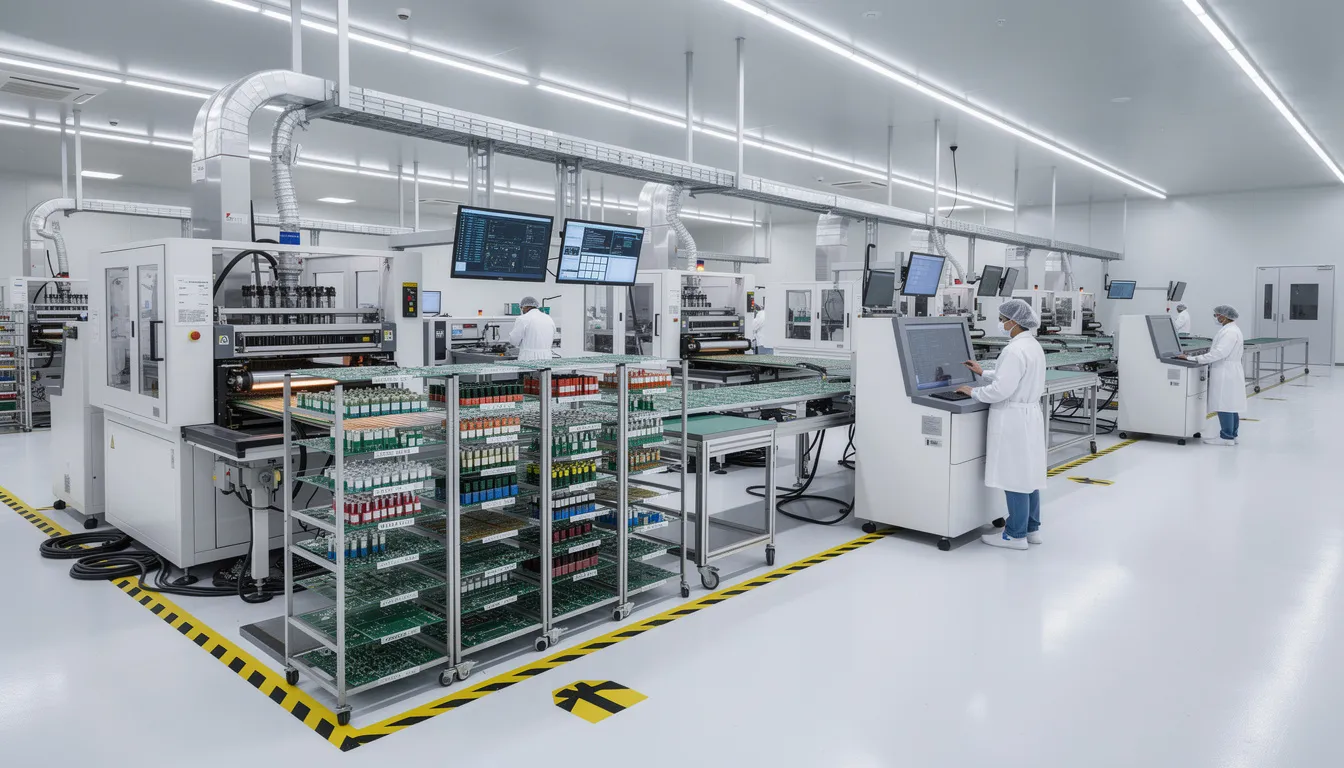
Flex PCB suppliers play a crucial role in the electronics manufacturing ecosystem, serving as specialized partners that bridge the gap between innovative product designs and mass production realities. Unlike traditional printed circuit boards fabricated on rigid FR-4 materials, flexible circuits require expertise in polyimide flex materials, specialized adhesives, and complex lamination processes.
The evolution from traditional rigid PCB manufacturers to specialized flexible circuit providers reflects the growing demand for components that can withstand very high temperatures, repeated flexing cycles, and tight space constraints. Modern suppliers have invested heavily in advanced manufacturing equipment capable of producing multilayer flex designs with trace widths measured in microns and overall thickness reduced to mere fractions of conventional circuit boards.
Core services offered by leading flex PCB suppliers extend far beyond basic manufacturing. Today’s suppliers provide comprehensive design consultation services, helping engineers optimize their designs for manufacturability while ensuring the final product meets performance requirements. This includes guidance on base material selection, copper layer configurations, and the integration of rigid sections in rigid flex pcbs for enhanced mechanical support.
Material expertise represents a fundamental differentiator among suppliers. The most capable manufacturers maintain deep relationships with material suppliers like DuPont and Panasonic, ensuring access to the latest polyimide substrates and specialized adhesives. This expertise becomes critical when designing circuits that must operate at high temperature extremes or survive hundreds of thousands of bending cycles.
Integration of flex, rigid-flex, and HDI technologies under one roof allows suppliers to offer complete solutions for complex projects. Rather than managing relationships with multiple specialty vendors, engineers can work with a single supplier capable of handling everything from prototyping through high-volume production quantities, streamlining project management and reducing potential quality issues.
Types of Flex PCB Suppliers
Domestic US Manufacturers
Sierra Circuits stands out among domestic suppliers by specializing in US-based flex and rigid-flex manufacturing with industry-leading 5-day turnaround capabilities for prototype quantities. Their domestic manufacturing approach provides significant advantages for companies prioritizing rapid iteration cycles during product development phases.
Cirexx brings over 30 years of experience to the flexible circuit market, offering quick-turn flex circuits and sophisticated rigid-flex solutions from their US facilities. Their long-standing presence in the industry has enabled them to develop specialized processes for challenging applications requiring exceptional precision and reliability.
The benefits of working with domestic manufacturers extend beyond simple geography. Faster communication eliminates time zone barriers that can slow project progress, while enhanced IP protection provides peace of mind for companies developing proprietary technologies. Shorter lead times for prototypes and engineering samples enable faster design iteration cycles, ultimately reducing time-to-market for new products.
Typical capabilities among domestic suppliers focus on prototype to medium volume production runs, typically ranging from single units to tens of thousands of pieces annually. Many domestic suppliers excel in providing advanced engineering support, including design-for-manufacturing analysis and materials optimization recommendations that can significantly improve final product performance and manufacturability.
International Suppliers
Asian manufacturers dominate the global flex PCB landscape, with major facilities concentrated in China, Japan, and Taiwan. These suppliers have invested billions in advanced automation and large-scale manufacturing capabilities, enabling them to serve the massive volumes required by smartphone, tablet, and automotive electronics manufacturers.
Cost advantages for high-volume production runs make international suppliers attractive for established products where design stability allows longer lead times. The scale of operations at leading Asian facilities enables them to achieve cost efficiencies impossible for smaller domestic operations, particularly for complex multilayer designs requiring sophisticated equipment and materials.
Advanced automation systems deployed by international suppliers often exceed what’s available domestically, incorporating cutting-edge inspection systems, automated handling equipment, and process control technologies that ensure consistent quality across millions of units. This technological advantage becomes particularly important for high density interconnect applications where tolerances measured in microns determine success or failure.
Many successful companies adopt a hybrid approach, utilizing both US and offshore facilities to optimize cost and service balance. This strategy typically involves domestic suppliers for prototyping and low-volume specialized applications, while leveraging international partners for high-volume production once designs are stable and validated.
Leading Flex PCB Suppliers Worldwide
Top Asian Manufacturers
Nippon Mektron, Ltd represents the gold standard in flexible circuit manufacturing, widely recognized as the world’s largest flex PCB manufacturer with cutting-edge technology and unparalleled quality standards. The Japanese company has built its reputation serving leading smartphone manufacturers and medical device companies requiring the highest levels of precision and reliability.
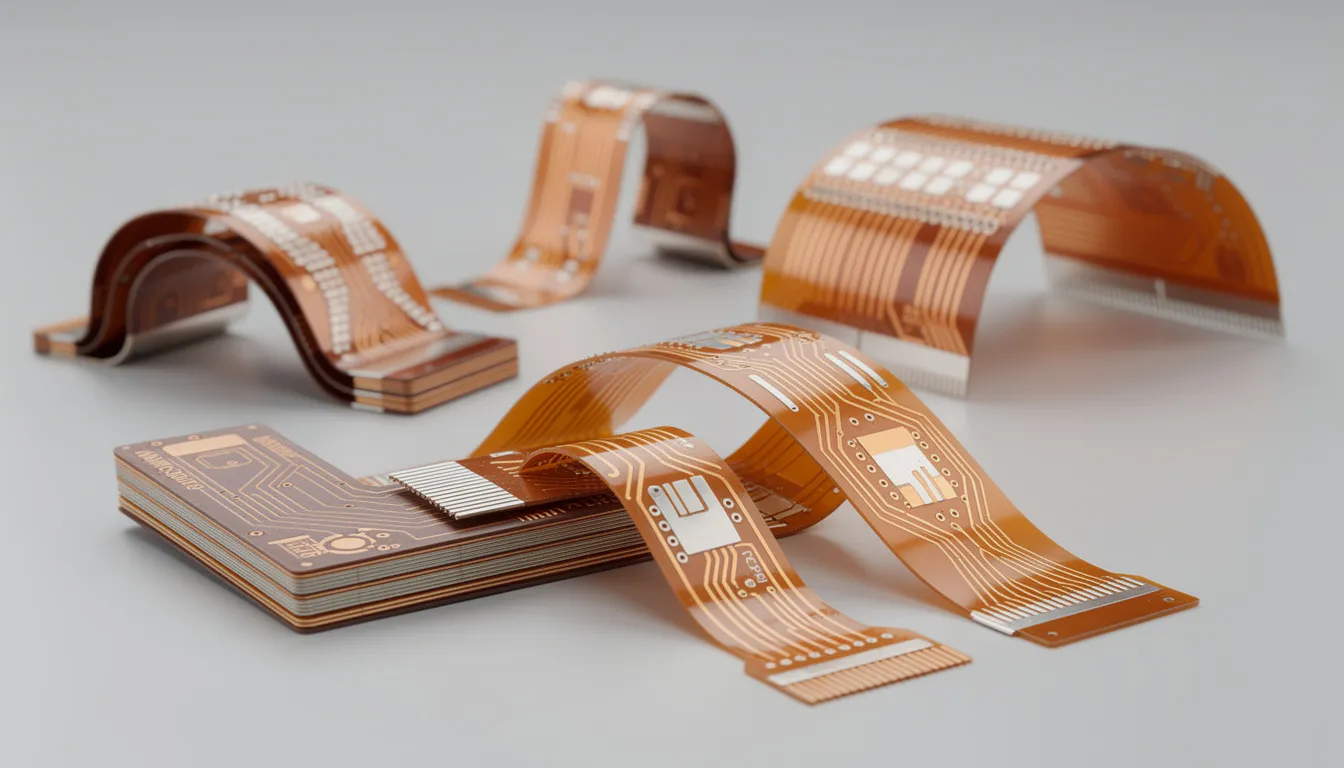
Their expertise spans the full spectrum of flexible circuit technologies, from basic single-sided designs to complex multilayer flex circuits incorporating microvias and blind/buried via structures. Nippon Mektron’s investment in advanced material technologies has enabled them to develop ultra-thin constructions that maintain excellent signal integrity while surviving hundreds of thousands of bending cycles.
Zhen Ding Tech Group has established itself as a powerhouse in high-density flex circuits for communication devices, leveraging advanced precision technology to serve major smartphone and tablet manufacturers. Their comprehensive capabilities extend from flex PCB fabrication through complete assembly operations, offering customers a complete turnkey solution for complex projects.
The company’s strength lies in their ability to handle extremely fine-pitch components and high-density interconnects required by modern consumer electronics. Their advanced SMT processes on flexible substrates have enabled new levels of miniaturization in portable devices while maintaining exceptional reliability standards.
Viasion Technology Co., Ltd offers complete PCBA solutions encompassing design, fabrication, assembly, and testing services under one roof. This comprehensive approach appeals to companies seeking to minimize supply chain complexity while maintaining tight control over quality and delivery schedules.
Their one-stop service model includes engineering support from initial concept development through final product validation, making them particularly attractive for startups and mid-sized companies lacking extensive in-house PCB expertise. Viasion’s emphasis on customer-centric service has helped them build strong relationships across multiple market segments.
Interflex Co., Ltd specializes in high-density, lightweight circuits for displays and automotive applications, leveraging their deep expertise in fine-line lithography and advanced materials. Their circuits enable the slim profiles and sophisticated functionality demanded by modern display modules and automotive electronics systems.
The company’s focus on automotive electronics has positioned them well for the growing demand for flex circuits in electric vehicles and advanced driver assistance systems. Their expertise in high-temperature materials and harsh-environment testing protocols makes them a preferred supplier for critical automotive applications.
Sumitomo Electric Printed Circuits focuses on next-generation interconnection technologies for harsh environments, drawing on the broader Sumitomo Group’s materials science expertise. Their circuits are designed to operate reliably under extreme conditions, including high temperatures compared to standard electronics environments and severe vibration exposure.
Established Global Players
Nitto Denko Corporation brings nearly a century of materials expertise to the flexible circuit market, having been founded in 1918 with deep knowledge of advanced electronic materials and precision manufacturing processes. Their comprehensive material science background enables them to develop specialized solutions for demanding applications.
The company’s expertise in precision circuit formation and advanced materials technology has resulted in innovative products like ultra-thin double-sided FPCs and specialized constructions for imaging applications. Their commitment to environmental harmony has led to the development of halogen-free formulations that meet stringent environmental regulations.
Fujikura Ltd has served the electronics industry since 1885, bringing extensive experience in advanced material technologies and innovative electronic solutions to the flexible circuit market. Their long history has enabled them to develop deep expertise across multiple technology generations and market cycles.
MFLEX (DSBJ Company) operates from their headquarters in Suzhou, China, providing worldwide flexible circuit solutions to customers across multiple continents. Their global perspective and manufacturing scale enable them to serve both regional customers and multinational corporations with complex supply chain requirements.
Career Technology (Mfg.) Co., Ltd operates facilities in Taipei, California, and Finland, demonstrating their commitment to global customer support while maintaining IATF 16949:2016 certification for automotive applications. This geographic diversity enables them to provide local support while leveraging global manufacturing capabilities.
Flexium Interconnect, Inc serves diverse international markets from their base in Kunshan City, focusing on precision engineering and advanced interconnect technologies. Their international customer base has driven continuous investment in advanced manufacturing capabilities and quality systems.
Key Capabilities to Evaluate in Suppliers
Technical Capabilities
Layer count options represent a fundamental capability that determines what designs a supplier can manufacture. Basic suppliers typically handle single-sided and double-sided constructions, while advanced manufacturers offer multilayer capabilities extending up to 8 or more layers with complex rigid flex combinations incorporating both flexible and rigid sections.
Advanced features separate leading suppliers from basic fabrication houses. Micro-vias enable high-density routing in compact spaces, while HDI technology supports the fine-pitch components essential for modern electronics. Ultrathin designs push the boundaries of what’s possible in terms of overall package thickness and weight reduction.
Material expertise encompasses understanding of polyimide substrates, copper trace density optimization, and specialized adhesives for different applications. The best suppliers maintain deep relationships with material manufacturers, ensuring access to the latest developments and the ability to recommend optimal materials for specific applications.
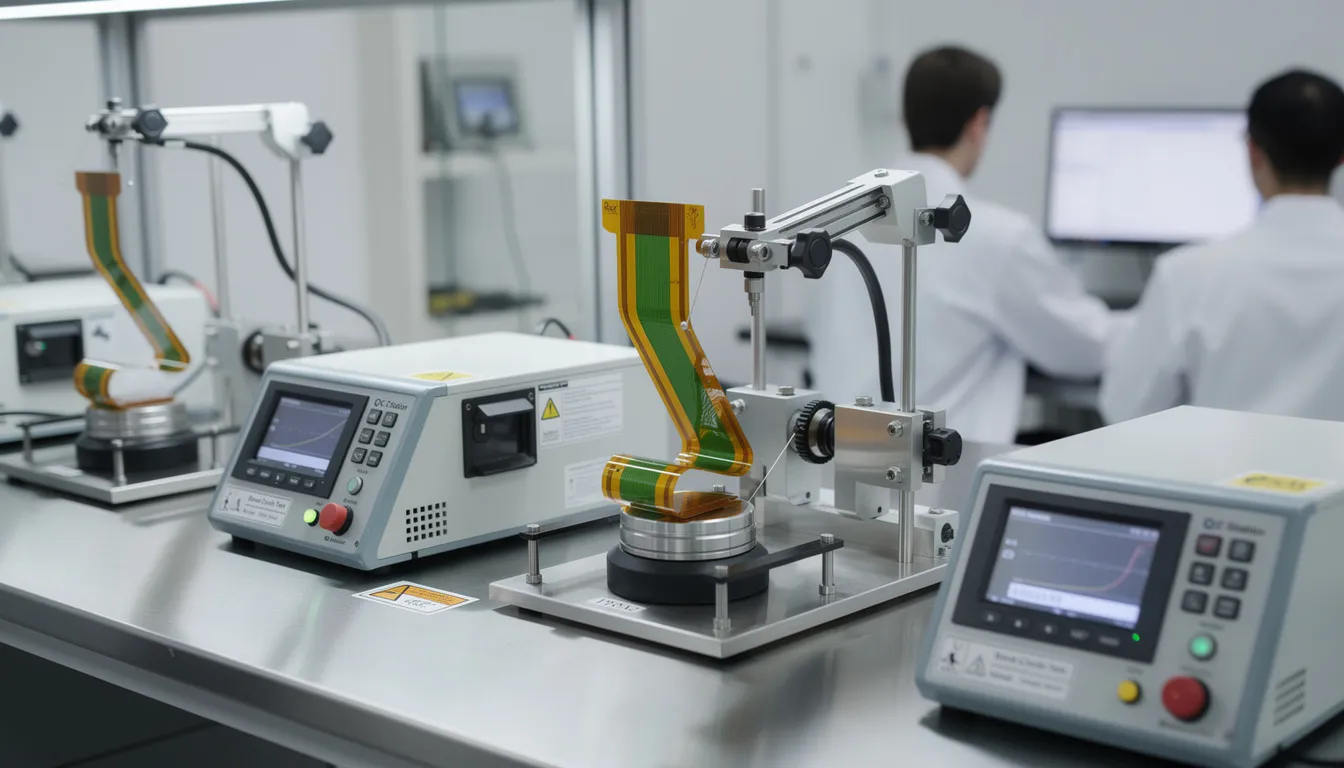
Durability testing capabilities indicate a supplier’s commitment to quality and their understanding of real-world application requirements. Leading manufacturers routinely perform 200,000+ bending cycle tests and validate high-temperature resistance to ensure their products will perform reliably throughout their intended service life.
Manufacturing Specifications
Minimum trace width and spacing capabilities determine how densely circuits can be routed and how small the final product can be made. Advanced suppliers typically achieve trace widths below 50 microns, enabling high-density designs that would be impossible with conventional PCB technologies.
Via technology options include plated through holes for basic interconnections, blind vias that connect specific layers without penetrating the entire stackup, and buried vias that enable complex multilayer routing schemes. The availability of these options directly impacts design flexibility and final product functionality.
Thickness options range from ultrathin constructions measuring less than 100 microns to standard configurations suitable for mechanical support and component mounting. The ability to precisely control thickness while maintaining electrical and mechanical properties separates advanced suppliers from basic fabrication houses.
Surface finishes and protective coverlays must be carefully matched to application requirements. Options include immersion silver for excellent solderability, specialized coverlays for harsh environments, and custom formulations for biocompatible medical device applications.
IPC-2581 compatibility ensures seamless design data exchange between design tools and manufacturing systems, reducing the potential for errors and speeding the transition from design to production. Suppliers supporting this standard demonstrate their commitment to industry best practices and efficient manufacturing processes.
How to Choose the Right Flex PCB Supplier
Selection Criteria
Volume requirements fundamentally influence supplier selection, as capabilities and cost structures vary dramatically between prototype specialists and high-volume manufacturers. Prototype quantities often require suppliers with flexible processes and shorter setup times, while production volumes benefit from automated systems optimized for consistency and cost efficiency.
Lead time requirements must align with project schedules and market demands. Quick-turn capabilities delivering prototypes in 5-10 days serve development projects well, while standard production schedules extending 2-4 weeks may be acceptable for established products where cost optimization takes priority over speed.
Quality certifications provide objective evidence of a supplier’s commitment to consistent processes and continuous improvement. ISO 9001 demonstrates basic quality management, while IATF 16949 indicates automotive industry compliance and ISO 14001 shows environmental management commitment.
Geographic preferences involve balancing cost considerations against communication efficiency, IP protection concerns, and supply chain risk management. Domestic suppliers often provide advantages in terms of responsiveness and legal protections, while international suppliers may offer cost benefits for volume production.
Technical support capabilities become critical for complex projects requiring design optimization and manufacturing guidance. The best suppliers offer comprehensive DFM analysis, engineering collaboration throughout the design process, and ongoing support through production ramp-up phases.
Evaluation Process
Requesting detailed capability documentation and quality certifications provides objective data for supplier comparison. This documentation should include equipment lists, process capabilities, quality metrics, and examples of similar work performed for other customers.
Evaluating past project experience in your specific industry or application reveals whether a supplier truly understands your requirements and potential challenges. Suppliers with relevant experience often identify potential issues early and recommend design modifications that improve manufacturability and reliability.
Assessing engineering support and design optimization services determines how much value a supplier can add beyond basic manufacturing. The best suppliers act as true partners, contributing expertise that improves final product performance while reducing costs and development time.
Reviewing manufacturing equipment, automation levels, and quality control processes provides insight into a supplier’s ability to deliver consistent quality at the required volumes. Advanced automation and comprehensive inspection systems typically correlate with better quality and more predictable delivery performance.
Comparing pricing structures for both prototype and production volumes ensures that supplier selection optimizes total project costs rather than just unit pricing. Some suppliers offer attractive prototype pricing but become uncompetitive at production volumes, while others provide the opposite pricing structure.

Applications and Industries Served
Consumer Electronics
Smartphones, tablets, and laptops represent the largest volume applications for flexible circuits, requiring compact, lightweight interconnect solutions that enable ever-thinner product profiles. The constant pressure for miniaturization in these products drives continuous innovation in flex PCB technology and manufacturing processes.
Modern smartphones typically contain multiple flex circuits connecting the main board to display modules, camera systems, and various sensors. These applications demand high-density routing, excellent signal integrity, and the ability to survive thousands of bending cycles as users operate hinges and folding mechanisms.
Wearable devices like smartwatches present unique challenges, demanding flexible, durable circuits that can conform to curved surfaces while maintaining electrical performance. The combination of mechanical stress from daily wear and exposure to moisture and temperature extremes requires specialized materials and design approaches.
Gaming devices and portable electronics continue pushing the boundaries of what’s possible with flex circuits, incorporating advanced features like wireless charging coils, antenna elements, and high-frequency signal routing into increasingly compact packages.
Medical and Healthcare
Medical devices requiring biocompatible, sterilizable flexible circuits represent a growing market segment with stringent regulatory requirements and zero tolerance for failure. These applications often require specialized materials and manufacturing processes validated for medical use.
Diagnostic equipment with precision sensing and signal integrity needs relies on flex circuits to enable compact, portable designs while maintaining measurement accuracy. The ability to route sensitive signals through flexible interconnects without degradation has enabled new categories of portable diagnostic tools.
Wearable health monitors and implantable device applications push the boundaries of miniaturization while requiring exceptional reliability. These products must operate reliably for years without maintenance, placing extreme demands on materials selection and manufacturing quality.
The medical device industry’s emphasis on traceability and documentation requires suppliers with comprehensive quality systems and the ability to maintain detailed records throughout the manufacturing process.
Automotive and Aerospace
Automotive systems demanding high-temperature resistance and vibration tolerance have driven significant advances in flex circuit materials and design techniques. Modern vehicles contain dozens of flex circuits enabling everything from instrument clusters to advanced driver assistance systems.
The automotive industry’s transition to electric vehicles has created new opportunities for flex circuits in battery management systems, motor controllers, and charging infrastructure. These applications often require circuits capable of handling high currents while maintaining flexibility and reliability.
Aerospace applications requiring lightweight, reliable interconnections have historically driven many advances in flex circuit technology. The extreme environments encountered in aerospace applications demand materials and designs that can withstand temperature extremes, radiation exposure, and severe mechanical stress.
Unmanned vehicle systems with complex, space-efficient circuit requirements represent a growing segment where flex circuits enable sophisticated functionality in highly constrained packages. These applications often combine multiple functions into single assemblies, requiring advanced multilayer designs and precise manufacturing control.
FAQ
What is the typical lead time for flex PCB orders from suppliers?
Lead times vary significantly based on complexity and supplier capabilities. Simple single-layer flex circuits can often be delivered in 1-10 days from specialized quick-turn suppliers, while multilayer flex designs typically require 2-20 days depending on layer count and feature complexity. Rigid-flex combinations generally need 5-20 days due to the additional lamination and processing steps required. Quick-turn services can deliver prototypes in as little as 5 days, while high-volume production typically requires 2-4 weeks depending on specifications and supplier capacity.
How do I determine if I need a domestic or international flex PCB supplier?
Choose domestic suppliers when you need rapid prototyping capabilities, have IP-sensitive projects requiring enhanced security, work with small to medium volumes, or require close engineering collaboration throughout development. Domestic suppliers excel in responsiveness and technical support but typically charge premium pricing. International suppliers are ideal for high-volume production where cost optimization is critical, when advanced manufacturing automation is needed for complex designs, or when your project timeline can accommodate longer lead times in exchange for significant cost savings.
What quality certifications should I look for in flex PCB suppliers?
Essential certifications include ISO 9001 for fundamental quality management systems, IATF 16949:2016 specifically for automotive applications, and ISO 14001:2015 for environmental management. Industry-specific certifications like AS9100 for aerospace applications, ISO 13485 for medical devices, and IPC standards compliance are crucial for regulated industries. Additionally, look for UL recognition for safety-critical applications and supplier-specific quality metrics like defect rates, on-time delivery performance, and customer satisfaction scores.
Can flex PCB suppliers handle both design and manufacturing services?
Many modern flex PCB suppliers offer comprehensive turnkey solutions including design consultation, DFM analysis, material selection guidance, and complete assembly services. Leading suppliers like Sierra Circuits and Cirexx provide full engineering support from initial concept through final testing and packaging. This includes circuit design optimization, material recommendations, cost reduction analysis, and manufacturability reviews. However, capabilities vary significantly among suppliers, so verify specific design services offered and review examples of previous design work relevant to your application.
What should I expect to pay for flex PCB manufacturing services?
Costs vary dramatically based on complexity, volume, and supplier location. Prototype quantities typically range from $100-1000 per unit depending on layer count, size, and features. Production volumes can range from $1-50 per unit, with simple single-layer circuits at the low end and complex multilayer rigid-flex designs at the high end. Domestic suppliers generally charge 20-50% more than international suppliers but offer faster turnaround and enhanced support services. Additional costs may include tooling, setup fees, testing, and assembly services depending on project requirements.