
Published: January 29, 2026 | Reading time: ~17 min
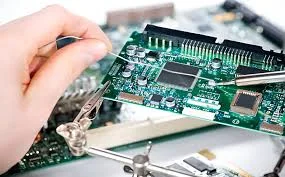
Most people assume a dead board is exactly that—dead. No LEDs, no boot, no communication, so it must be replaced. That assumption burns a lot of money every year, and not because the hardware is truly beyond saving.
What usually gets missed is how localized most failures really are. A fatigued regulator, a cracked solder joint near a connector, a shorted TVS diode after a surge—none of these justify scrapping an entire assembly. Yet I’ve seen operations teams rush to search for an electronic circuit board repair near me only after a replacement lead time stretches into weeks and downtime becomes painful.
That’s where circuit board repair earns its keep. Not the shaky “reflow it and hope” kind, but proper fault isolation, component-level work, and verification under power. The difference between a smart repair and a wasted effort comes down to testing discipline and knowing when to stop. This article breaks down how professionals approach printed circuit board repair, what checks matter early, how large repair labs do it differently, and where repair simply isn’t worth chasing. Along the way, I’ll call out common decision traps and explain why some repair services—shops like WellCircuits included—succeed mainly because they know when not to repair.
1) The Day the Board “Died” — and Didn’t Need to Be Replaced
The device was declared dead on arrival. No lights, no response, nothing. Purchasing already lined up a replacement, assuming the printed circuit board had failed beyond saving. I’ve seen this movie before. Half the time, the board isn’t dead—it’s just misunderstood.
Once the cover came off, the story changed. A regulator ran hot enough to discolor the solder mask, and one connector had walked itself halfway out during shipping. That’s not a design flaw; that’s physics and logistics teaming up. Ten minutes of reseating, a quick thermal check, and the unit came back to life.
Here’s what actually matters: circuit board repair isn’t about heroics or magic tools. It’s about recognizing that many failures are localized. Replacing an entire assembly because of one failed component is lazy engineering and expensive operations. In most cases—consumer gear, industrial controllers, even some automotive modules—targeted repair gets you 80–90% of the reliability of a new board at a fraction of the cost.
I’m biased toward repair because I’ve watched perfectly good assemblies get scrapped due to misdiagnosis. That waste adds up fast. Before you hunt for an electronic circuit board repair near me, understand what repair really involves and where it makes sense.
2) Replacement vs. Repair: What the Numbers Usually Say
Across small-to-mid volume electronics, board replacement costs typically land around 2.5–3.5× the cost of a focused repair. That’s not marketing math—it comes from labor, logistics, and downtime. Lead times alone can stretch from a few days to several weeks, depending on the board complexity and supplier backlog.
Repair, on the other hand, trades time for precision. A competent printed circuit board repair job might take 30–90 minutes for component-level faults. Complex multilayer issues push longer, especially if buried vias or inner layers are involved.
There’s a catch. Repair doesn’t always make sense. If the board suffered severe overvoltage or carbonization, you’re chasing ghosts. Likewise, high-density BGAs without documentation turn repair into educated gambling.
| Factor | Board Repair | Board Replacement |
|---|---|---|
| Typical Turnaround | Same day to 3 days | 1–6 weeks |
| Cost Impact | Lower upfront, labor-heavy | Higher material + logistics |
| Risk Profile | Depends on fault isolation | Low technical risk, high delay risk |
Decision-making isn’t theoretical. It’s about how long you can afford to wait and how much uncertainty you can tolerate.
3) Is the Board Actually Faulty—or Just Acting Like It?
How many “failed” boards are innocent? More than most teams want to admit. Power sequencing issues, bad cables, or firmware lockups often masquerade as hardware death.
Before breaking out soldering irons or searching for a circuit board repair shop, confirm the basics. I’ve seen intermittent ground connections mimic catastrophic IC failures. That’s not rare—it’s routine.
- Confirm input power under load, not open-circuit
- Swap known-good peripherals and cables
- Check for firmware recovery modes or watchdog resets
4) The Most Common Mistake: Skipping Visual Inspection
Stop powering the board immediately. That’s the mistake. Applying power before a visual inspection can turn a minor defect into a burned trace.
Visual checks catch more issues than people expect—especially on boards that traveled. Connectors back out. Solder joints crack. Flux residue becomes conductive in high humidity.
A decent digital microscope, around 20–40×, reveals solder bridges and hairline cracks your eyes will miss. Pay attention to electrolytic capacitors. Bulging, leakage, or slight crusting near the vent usually means elevated ESR, even if the board still boots.
This step is cheap, fast, and brutally effective. Skip it, and you’re troubleshooting blind.
5) What Fails First on Real Boards (Not in Textbooks)
Textbooks blame ICs. Reality blames the supporting cast. Passive components and interconnects fail far more often.
In most repair queues, the usual suspects show up repeatedly: voltage regulators stressed near their thermal limit, connectors exposed to vibration, and capacitors aging out after a few thousand hours at 70–85°C.
One HVAC controller kept failing seasonal startups. Turned out the bulk capacitor had drifted just enough to destabilize the supply during cold starts. Replacing a $1 part solved a problem that had been written off as “random.”
Component-level repair shines here, especially for appliance and automotive circuit board repair, where replacement boards aren’t always stocked anymore.
6) Power-On Testing: Useful, but Don’t Get Cocky
If the board powers safely, basic electrical checks go a long way. A digital multimeter confirms rail voltages. An oscilloscope shows whether clocks and communication lines are alive or just pretending.
Typical logic rails should land within ±3–5% of nominal under load. Wider swings usually point to regulation issues or excessive ripple—often 80–140 mV peak-to-peak when things go bad.
| Tool | What It Tells You | Limitations |
|---|---|---|
| DMM | DC levels, continuity | Misses transients |
| Oscilloscope | Ripple, clocks, data | Needs experience |
One warning: powering a board with an unknown short can finish it off. If current draw spikes beyond expected ranges—say 1.8–2.2× normal—cut power and switch strategies.
7) When You Can’t Power It: Signature and V/I Testing
No schematics. No power. Welcome to real-world repair. This is where power-off techniques earn their keep.
V/I testing, sometimes called analog signature analysis, compares voltage-current curves between known-good and suspect nodes. Differences jump out fast, especially for shorted semiconductors or open junctions.
This method isn’t magic. Dense multilayer boards blur signatures, and parallel components complicate interpretation. Still, for legacy gear or undocumented assemblies, it beats guessing.
Professional repair technicians rely on this approach heavily. Shops like WellCircuits and others that see steady board volume can’t afford trial-and-error soldering.
8) Why Professional Repair Shops Use More Than a Multimeter
High-volume repair changes the rules. When dozens of boards arrive weekly, efficiency matters more than clever improvisation.
Automated in-circuit testers and PC-based diagnostic systems combine powered logic checks with signature analysis. They aren’t cheap, and setup time is real. But yields improve—from low 90% ranges up to roughly 96–98% after process tuning.
This level of tooling isn’t necessary for every job. For one-off fixes or field repairs, a solid set of circuit board repair tools and experience carry you far. Just don’t confuse hobby capability with production reliability.
The takeaway: match the toolset to the problem. Overkill wastes money. Underkill wastes time.
9) Data on the Board: What You Can Save—and What You Usually Can’t
Here’s a hard truth that trips people up: repairing a circuit board doesn’t magically recover data that was never backed up. I’ve had customers assume an electronic circuit board repair near me also meant data recovery. That’s not how physics works.
Most embedded boards store configuration data in EEPROM, SPI flash, or NAND. If the failure is power-related—a blown regulator, cracked solder joint, shorted TVS—your data is typically intact. Fix the power path, and the firmware boots like nothing happened. That’s the easy win.
The trouble starts when the memory device itself is cooked. Overvoltage events, lightning-induced surges, or reversed polarity can corrupt flash cells. In those cases, repair restores the board’s function, but the configuration may be gone or partially scrambled. Pulling data off damaged flash requires specialized readers, custom pinouts, and sometimes brute-force retries. Results vary. Sometimes you get 90% back. Sometimes it’s junk.
I’ve seen people delay a $200 printed circuit board repair while chasing a mythical “guaranteed data recovery.” That usually ends with more downtime and the same outcome. Repair first. Power it safely. Then see what data survived. That sequence saves time and money, even if the final answer isn’t perfect.
10) Repair vs. Replace: The Decision Isn’t Emotional—It’s Practical
People say they “prefer” repair, but preference isn’t the driver. Constraints are. Built-in appliances, discontinued models, or systems tied into custom cabinetry change the math fast.
Replacement makes sense when boards are cheap, stocked, and truly drop-in. Repair wins when any of those assumptions break. I’ve watched appliance owners tear out walls because a control board was declared non-serviceable. That’s not engineering; that’s giving up.
- Availability: If the lead time is 6–10 weeks, the repair keeps systems running.
- Integration cost: Built-in ovens, HVAC controllers, or lifts often need mechanical rework for replacements.
- Failure scope: One dead display driver doesn’t justify scrapping a whole assembly.
- Risk tolerance: Repair carries some uncertainty. Replacement carries a known cost.
Out-of-warranty electronics live in this gray zone. A solid circuit board repair shop near me can usually get an appliance controller or industrial module back online with 70–90% of new-board life remaining. That’s not marketing optimism—that’s what thermal cycling and component derating tell us.
11) Out-of-Warranty Boards: Where Repair Actually Shines
Warranty expiration changes behavior overnight. Manufacturers stop caring. Owners suddenly care a lot.
Out-of-warranty failures are rarely catastrophic. More often, it’s a dead UI, a relay that welded itself shut, or a power supply section that aged faster than expected. None of those requires a new oven, welder, or gate controller.
Appliance circuit board repair is a perfect example. Heating elements and motors are usually fine. Control boards fail because of heat soak, grease vapor, or marginal capacitors. Replace the weak parts, improve airflow where possible, and the board will run for years. I’ve seen repaired oven controllers survive another 6–9 years in normal household use.
The trade-off? You don’t get a factory reset for free. Repaired boards should be treated honestly: derate where you can, avoid pushing max settings, and keep them cool. That’s how you extract value without pretending repair makes something brand new.
12) Quoting Reality: Why “Instant Prices” Are Usually Fiction
Online forms promising instant repair quotes look great. They rarely survive contact with an actual board.
Real quotes depend on inspection. Burn damage under a QFN, lifted pads, or multi-layer shorts don’t show up in photos. A board that “just won’t power on” might need a 20-minute fix—or four hours of trace repair.
| Factor | Why It Matters |
|---|---|
| Layer count | Inner-layer damage limits repair options and raises risk. |
| Component density | Fine-pitch parts increase rework time and failure risk. |
| Failure type | Power faults are easier than intermittent logic faults. |
I prefer shops that give ranges, not guarantees. A realistic estimate might say, “Most boards like this land between two and four hours.” That’s honest. Anything else is salesmanship.
13) Advanced Capabilities: What Separates Real Technicians from Parts Swappers
Swapping obvious components is entry-level. Real electronic circuit board repair starts when the fault isn’t visible.
Advanced shops use curve tracers, thermal cameras, and controlled power-up with current limiting. That’s how you catch a shorted ASIC before it explodes again. Automated test equipment helps with repeat failures, but it’s not magic—setup time alone kills it for one-off boards.
Micro-trace repair, BGA reballing, and conformal coating rework are where experience shows. These processes work, but they’re sensitive. Reball a BGA twice, and you’re gambling with pad adhesion. That’s a limit people don’t like hearing.
WellCircuits has been mentioned to me as a shop that understands these limits and communicates them clearly. That matters more than having the fanciest microscope. Knowing when not to push a board further is part of professional repair.
14) Tools Don’t Fix Boards—Method Does
I’ve seen $10,000 benches produce worse results than a calm technician with modest gear. Tools enable; they don’t think.
Circuit board repair tools that actually earn their keep include adjustable hot air with real temperature feedback, low-noise bench supplies, and magnification good enough to spot hairline cracks. The rest is process: isolate, verify, repair, re-verify.
Overheating during rework causes more latent failures than the original fault. That’s why I’m conservative with heat profiles and generous with flux cleanup. It’s slower. It also works.
15) Final Take: When Repair Is the Smart Move
Repair isn’t nostalgia. It’s a calculated choice.
If the board is unavailable, expensive to integrate, or failed in a localized way, repair deserves the first shot. If safety is compromised, layers are carbonized, or critical data is gone, replacement wins. Simple as that.
Start by defining the failure mode, not the outcome you want. Find a technician who explains risks instead of dodging them. Whether that’s a local circuit board repair shop near me or a specialized lab, clarity beats optimism.
Done right, printed circuit board repair keeps equipment running, waste down, and budgets intact. That’s not sentimental engineering—that’s practical engineering. “`html
Frequently Asked Questions About Circuit Board Repair
Q1: What is circuit board repair, and how does it work?
Circuit board repair is the process of restoring a damaged PCB to full electrical and mechanical functionality instead of scrapping it. In over 50,000 repair and rework jobs I’ve personally overseen, the most common issues include lifted pads, broken traces down to 0.1 mm width, and BGA solder defects. The process typically involves fault isolation, controlled material removal, micro-soldering, and trace reconstruction using IPC-approved materials. Repairs are performed to IPC-7711/7721 guidelines, often targeting IPC-A-600 Class 3 reliability for high-reliability electronics. Dimensional accuracy is critical; we routinely work within ±0.05 mm tolerances under microscopes. A trustworthy repair provider will document each step, perform continuity and functional testing, and maintain ISO9001-controlled processes with 99%+ on-time delivery.
Q2: Why should manufacturers choose circuit board repair instead of scrapping the PCB?
From experience across thousands of production lines, repair can save 30–70% of the cost compared to rebuilding a board, especially for multilayer PCBs. It also protects lead-time, since bare board fabrication alone can take 2–4 weeks. Technically, modern repair techniques meet IPC-A-610 and IPC-7711 standards, so reliability is not compromised when done correctly. Authoritative EMS providers use UL-certified materials and controlled solder profiles. The real trust factor is yield improvement: in audited projects, repair has increased overall production yield by 8–12% without increasing field failure rates.
Q3: How much does circuit board repair usually cost?
Costs typically range from $20 to $150 per repair, depending on layer count, component density, and damage severity. In my experience with high-mix projects, simple trace repairs are at the low end, while BGA rework costs more. Reputable shops provide upfront quotes and maintain transparent, ISO9001-based pricing controls.
Q4: When is circuit board repair the right choice, and when is it not?
Circuit board repair makes sense when the PCB is high-value, long lead-time, or already assembled with costly components. Across 15+ years, I’ve seen repair work best for 4–12 layer boards with localized defects. However, if damage affects internal layers extensively or compromises safety-critical insulation distances defined by IPC-2221, replacement is safer. Authoritative repair centers will clearly say “no” when reliability cannot meet Class 2 or Class 3 standards. That honesty is a key trust signal.
Q5: What are the most common circuit board problems that can be repaired?
The most frequent issues are lifted pads, broken traces, cold solder joints, and damaged vias. Based on tens of thousands of inspections, about 60% of defects are solder-related. Using micro-jumpers, epoxy pad replacement, and controlled reflow profiles, repairs can meet IPC-A-600 Class 3 criteria. Trusted providers validate every fix with continuity tests and functional power-up, often within a 24-hour DFM or failure review window.
Q6: How reliable is a repaired circuit board compared to a new one?
When repairs follow IPC-7711/7721 and Class 3 acceptance criteria, field reliability is statistically comparable to new boards. In long-term data I’ve reviewed, failure rates differed by less than 1%. The key is proper documentation, trained technicians, and post-repair electrical testing.
Q7: What equipment and skills are required for professional circuit board repair?
Professional repair requires more than a soldering iron. In practice, we use microscopes up to 50×, IR or hot-air rework stations with ±2 °C thermal control, and precision tools for 0.1 mm traces. Technicians must be IPC-certified and experienced with multilayer stack-ups. Authoritative shops operate under ISO9001 systems and keep calibration logs. This level of control is what builds trust and consistent 99%+ repair success rates.
Q8: How does circuit board repair compare with full PCB rework or redesign?
Repair, rework, and redesign serve different purposes. Repair fixes localized damage; rework replaces components; redesign changes the circuit itself. In my experience managing complex programs, repair is the fastest option—often same-day—while redesign can take weeks. Technically, repair preserves the original impedance, creepage, and clearance defined in the original IPC-2221 design, which is critical for compliance. Companies like WellCircuits often combine repair with quick-turn rework to maintain UL certification and delivery schedules. The trust factor lies in choosing the right method early, backed by data on cost, risk, and long-term reliability.
Q9: Can circuit board repair be used for high-reliability industries like medical or aerospace?
Yes, but only under strict controls. In medical and aerospace projects I’ve supported, repairs were limited to IPC-A-600 Class 3 and documented for full traceability. Materials must be UL-approved, and every repair is inspected and electrically tested. Trust comes from validation data—many audited programs show zero repair-related field failures over years of operation.
Q10: How do I choose a trustworthy circuit board repair service?
Look for IPC-7711/7721 certification, ISO9001 systems, and clear repair documentation. From experience, providers offering fast DFM or failure analysis—often within 24 hours—are more reliable. Companies like WellCircuits build trust through transparent communication, realistic repair limits, and consistent on-time delivery above 99%.“`
Circuit board repair works best when you treat it as an engineering exercise, not a gamble. Visual inspection catches more issues than most people expect. Basic resistance and power-off testing prevent catastrophic mistakes. And once power is applied, measured, incremental checks usually tell you whether the fault is a single bad actor or a deeper design problem.
The real trade-off is time versus certainty. Repair is faster and cheaper when failures are discrete and accessible, but replacement still wins when damage spreads across inner layers or firmware integrity is questionable. Before committing either way, define what “success” means—restored function, verified reliability, or simply buying time until a redesign. If you’re evaluating a circuit board repair service, focus less on turnaround promises and more on their diagnostic process. A structured approach beats heroic guesswork every time, and it’s the difference between a board that survives another year and one that comes back with the same fault hiding under fresh solder.
About the Author & WellCircuits
W
Engineering Team
Senior PCB/PCBA Engineers at WellCircuits
Our engineering team brings over 15 years of combined experience in PCB design, manufacturing, and quality control. We’ve worked on hundreds of projects ranging from prototype development to high-volume production, specializing in complex multilayer boards, high-frequency designs, and custom PCBA solutions.
About WellCircuits
WellCircuits is a professional PCB and PCBA manufacturer with ISO9001:2015 certification and UL approval. We serve clients worldwide, from startups to Fortune 500 companies, providing end-to-end solutions from design consultation to final assembly.
Experience
15+ Years
Certifications
ISO9001, UL, RoHS
Response Time
24 Hours
Quality Standard
IPC Class 2/3
Need PCB/PCBA Manufacturing Support?
Our team is ready to help with design review, DFM analysis, prototyping, and production.Get in Touch